
The catastrophic supply chain disruptions of 2025 served as a stark and costly lesson for the aerospace industry, exposing the critical vulnerabilities hidden within a global manufacturing model once lauded for its lean efficiency. A system built on precision scheduling and just-in-time logistics fractured under the pressure of skilled labor shortages, raw material delays, and extensive certification backlogs, leaving airlines with grounded fleets and staggering financial losses. A pivotal report from the International Air Transport Association (IATA) quantified the damage at an estimated $11 billion in extra costs, a figure that forced a fundamental reevaluation of production strategies. In the wake of this crisis, Additive Manufacturing (AM), or 3D printing, rapidly evolved from a niche technology for prototyping into a cornerstone of a new, more resilient manufacturing ecosystem, fundamentally altering how the industry approaches production, maintenance, and supply chain security.
A Paradigm Shift From Efficiency to Resilience
The aerospace sector’s long-standing reliance on a highly optimized, globally integrated supplier network proved to be its Achilles’ heel when confronted with the unprecedented challenges of 2025. This model, characterized by minimal inventory and deep dependencies on single-source providers, lacked the flexibility to absorb systemic shocks. The resulting gridlock highlighted a dangerous conflict between cost efficiency and operational resilience, revealing that the industry’s pursuit of the former had created a brittle system unable to withstand significant disruption. The IATA’s “Reviving the Commercial Aircraft Supply Chain” report concluded that the ability to respond to such crises would define the industry’s future leaders, underscoring the urgent need for a more agile and distributed approach to manufacturing that could insulate operations from logistical bottlenecks and geopolitical instability, thereby ensuring continuity and mitigating the immense financial risks of production delays.
In this challenging environment, AM matured into a production-ready solution capable of delivering certified, end-use aerospace components on demand. The 2025 crisis acted as a powerful catalyst, compelling original equipment manufacturers (OEMs) and maintenance, repair, and overhaul (MRO) organizations to accelerate its adoption. Unlike traditional manufacturing processes such as casting, forging, and machining, which often depend on complex, long-distance supply chains, 3D printing enables the localization of production at or near the point of use. This strategic shift directly counters the very risks that paralyzed the industry, offering a powerful tool to regain control over production timelines, reduce dependence on a fragile global network, and build a more robust and responsive manufacturing infrastructure capable of navigating future uncertainties without compromising on quality or safety standards.
The Rise of Distributed Digital Manufacturing
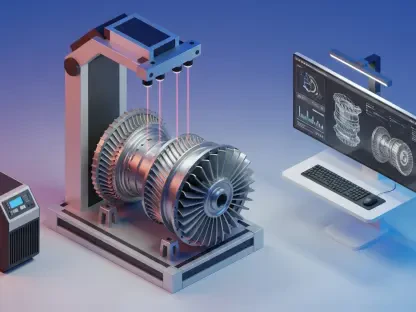
The most transformative trend to emerge from this strategic pivot is the development of distributed digital manufacturing networks, which are effectively “virtual factories” that redefine the concept of a production line. Leading aerospace companies are now establishing centralized, secure digital inventories containing validated files for countless parts. These digital blueprints can be securely transmitted to and printed in any certified facility across the globe—whether in Toulouse, Wichita, or Nagoya—using standardized materials and pre-qualified machines. This sophisticated digital backbone neutralizes geographical risk by creating a redundant and flexible manufacturing ecosystem that is no longer hostage to the vulnerabilities of a single location or transport route. This model also revolutionizes inventory management, replacing immense, costly warehouses of physical stock with agile and secure digital libraries that can be updated instantaneously.
This new digital framework provides profound operational advantages that extend far beyond risk mitigation. By moving from physical to digital inventories, aerospace companies can dramatically reduce carrying costs and eliminate the waste associated with obsolete parts. Furthermore, design modifications and performance upgrades can be implemented immediately across the entire network without the expensive and time-consuming process of retooling physical production lines. This agility allows for continuous innovation and rapid adaptation to changing engineering requirements or regulatory mandates. The inherent digital nature of the AM workflow also generates comprehensive build data for every part produced, seamlessly supporting the rigorous traceability and documentation standards required by regulatory bodies like the Federal Aviation Administration (FAA) and the European Union Aviation Safety Agency (EASA), ensuring compliance while streamlining the certification process.
Tangible Impacts and Measurable Returns
The real-world value of AM was powerfully demonstrated in its application to tooling, where major industry players like Airbus and Boom Supersonic achieved transformative operational gains. These companies transitioned from using heavy, traditionally machined aluminum drill guides to lightweight, 3D-printed alternatives made from advanced materials like Nylon 12CF, a carbon-fiber-reinforced polymer. This shift directly addressed significant ergonomic and safety concerns for technicians, as the new tools were approximately three times lighter, drastically reducing operator fatigue and the risk of workplace injuries. Moreover, the non-marring properties of the polymer material prevented costly surface damage to delicate aircraft wings during assembly, improving both the quality and efficiency of the manufacturing process. The scale of this adoption, with Boom Supersonic deploying over 750 printed guides, confirms its integration as a mainstream production method.
The quantifiable benefits of this transition underscore the technology’s immediate return on investment. Production lead time for a complex drill guide was cut from over a month for a machined tool to just 40 hours for a printed one, representing a monumental leap in manufacturing speed and responsiveness. This efficiency, combined with reduced material waste and less need for rework, resulted in an estimated cost savings of $20,000 per tool. The printed guides also met stringent quality standards, demonstrating laser-scanned accuracy within 0.2 mm and the capability to be produced as large, single pieces over 600 mm in length. These compelling performance metrics provide concrete evidence that 3D printing is not merely an experimental technology but a proven, scalable solution that delivers significant improvements in cost, speed, safety, and precision for critical aerospace applications.
A Proactive Strategy for a Resilient Future
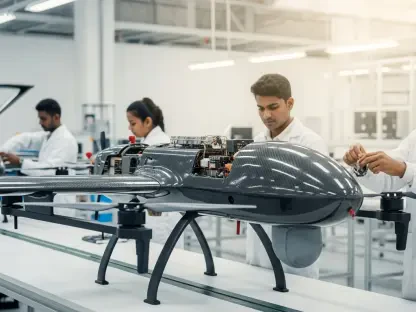
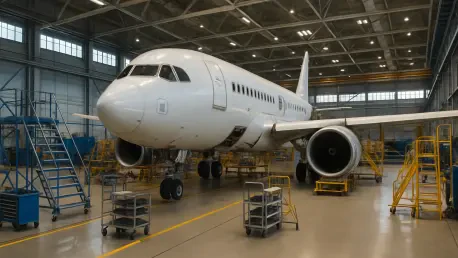
The MRO sector, one of the areas most severely impacted by the supply chain crisis, found a vital lifeline in the rapid deployment of AM. The immense cost of an idle aircraft, which can exceed $100,000 per day in lost revenue and operational expenses, makes MRO timeliness absolutely critical. By integrating 3D printing capabilities, MRO organizations regained control over their repair schedules. Tooling, jigs, and fixtures that once took weeks or even months to procure from external suppliers could now be designed and printed in-house in a matter of hours. This capability became particularly crucial for servicing legacy aircraft, where replacement parts are often hindered by prohibitive minimum order quantities or have been discontinued altogether. Leveraging digital twins and on-demand printing, MROs could recreate these essential components, drastically reducing aircraft-on-ground (AOG) situations and restoring fleet availability.
The lessons learned from the $11 billion disruption of 2025 reshaped the industry’s understanding of value, revealing that efficiency without resilience constituted a false economy. The crisis catalyzed a fundamental shift in focus from owning physical inventory to controlling validated digital part data, positioning companies that mastered the digital thread of manufacturing as the new supply chain leaders. Additive Manufacturing directly addressed the core pressure points of the crisis by offering material agility, simplifying operational logistics, and empowering smaller teams to produce complex, high-quality components with less manual intervention. The industry’s path forward, as advocated by technology pioneers, involved establishing shared standards and collaborative qualification processes to build not just the next generation of aircraft, but a networked, intelligent, and truly resilient manufacturing ecosystem designed to anticipate and absorb any future turbulence.