
The modern vehicle is rapidly shedding its identity as a mere mode of transportation, evolving instead into a highly perceptive, AI-driven environment that knows its occupants better than they might know themselves. This fundamental shift marks a new era for the automotive industry, one where the value of a car is increasingly measured not by its mechanical prowess but by its intelligence. As vehicles transform into sophisticated companions, they promise a future of unparalleled safety and convenience. However, this progress is built on a foundation of constant data collection, forcing a critical conversation about the price of progress and the future of personal privacy on the road.
The Dawn of the Intelligent Cockpit
The automotive sector is undergoing a profound transformation from producing mechanical transport to engineering intelligent, AI-powered partners. This evolution is driven by industry leaders like Nvidia, Bosch, and Gentex, who are pioneering the technologies that form the brain and senses of the modern vehicle. Their innovations are moving the industry away from passive systems and toward proactive, responsive in-cabin experiences that can understand and react to human behavior.
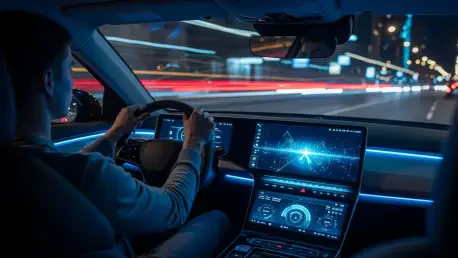
At the heart of this change is the widespread integration of advanced sensors, high-resolution cameras, and powerful onboard processing units, which are quickly becoming the new industry standard. These components work in concert to create a comprehensive digital picture of the vehicle’s interior and its occupants. This technological suite is the foundation for an intelligent cockpit capable of monitoring, learning, and adapting in real time, setting the stage for a more symbiotic relationship between driver and machine.
Charting the Course of In-Car AI
The Rise of the Proactive, Personalized Vehicle
The core trend shaping the future of the in-cabin experience is hyper-personalization. Modern vehicles are being designed to recognize individual occupants, anticipate their needs, and adjust settings based on their emotional and physical states. For instance, a car can now identify a child, know it is her birthday, and automatically play her favorite song without a single command, creating a uniquely tailored environment for every journey.
This level of personalization is made possible by emerging technologies that enable real-time monitoring of driver and passenger well-being. Automotive suppliers are showcasing systems that can detect a wide spectrum of human conditions, from drowsiness and distraction to anger and improper seating posture. This move toward what some industry leaders call a “ChatGPT moment for physical AI” aims to build a more intuitive and responsive vehicle that can make complex, context-aware decisions to enhance both comfort and safety.
Gauging the Growth of a Data-Driven Drive
Market momentum is clearly shifting toward integrating AI not just as a luxury feature but as a key differentiator for safety and overall user experience. Automakers are increasingly leveraging in-cabin intelligence to stand out in a competitive landscape, promising consumers a safer, smarter, and more connected drive. This trend reflects a broader understanding that the next frontier of automotive innovation lies within the vehicle’s software and data-processing capabilities.
As these technologies mature, their adoption is projected to accelerate, moving from high-end concept cars to standard features in mainstream models. The capabilities that once seemed futuristic, such as driver-state monitoring and adaptive cabin environments, are on a clear path to becoming commonplace. This democratization of in-car AI will fundamentally alter consumer expectations and redefine what constitutes a modern vehicle.
Looking ahead, data-centric features are poised to become a primary determinant of a vehicle’s value. The ability of a car to learn, personalize, and protect its occupants through intelligent data analysis will be as critical as its performance and design. This evolution will reshape how consumers choose their vehicles and how manufacturers market them, prioritizing computational power and user-centric intelligence over traditional metrics.
Navigating the Privacy-Safety Paradox
This push toward a fully monitored driving environment creates a fundamental conflict between the need for constant data collection to ensure safety and an individual’s right to personal privacy. While AI-driven systems can prevent accidents by detecting a drowsy driver, they do so by continuously observing and analyzing deeply personal behaviors, raising significant ethical questions about the boundaries of surveillance.
The challenge is amplified by the unique nature of the automobile as a personal space, which many owners consider an extension of their home. Deploying intrusive technologies like always-on cameras and microphones into this private sanctuary can feel invasive to consumers, who may not be fully aware of what data is being collected or how it is being used. This perception of surveillance can undermine the very trust that automakers are trying to build through enhanced safety features.
Nevertheless, the tangible safety benefits offered by these systems are compelling. Technologies that can prevent tragic accidents by alerting a driver who is falling asleep or notifying a guardian if a child is accidentally left in a car present a powerful argument for their implementation. The industry’s challenge, therefore, is to balance these life-saving advantages against the legitimate privacy concerns of a public growing warier of ubiquitous data collection.
Forging the Rules of the Digital Road
Currently, the automotive industry operates in a regulatory vacuum, where clear and comprehensive standards for vehicle data collection, storage, and usage have yet to be established. Unlike other technology sectors, there are no universally accepted “rules of the road” governing how automakers can handle the vast troves of sensitive information generated by intelligent cockpit systems.
This nascent state of vehicle data regulation stands in sharp contrast to the more mature rules that govern smartphones and other personal devices. While consumers have some level of legal protection and control over their data in other areas of their digital lives, the automotive world remains a largely uncharted territory, leaving drivers with little transparency or recourse.
In the absence of formal regulation, the industry points toward self-governance. Companies claim that sensitive data, such as video frames of occupants, is processed locally within the car and then promptly deleted. They also assert that automakers retain ultimate control over how the collected data is utilized. However, without independent oversight and standardized consumer protections, the effectiveness of these self-imposed measures in safeguarding privacy remains a significant concern.
The Road Ahead: Balancing Innovation and Trust
The future trajectory of the automotive industry will be shaped by its ability to successfully resolve the inherent tension between technological advancement and consumer trust. The widespread adoption of in-car AI hinges not only on the technology’s effectiveness but also on the public’s confidence that their personal data will be handled responsibly and ethically.
In this environment, transparent data policies and user-centric privacy controls are poised to become powerful market disruptors and brand differentiators. Automakers that empower customers with clear information and meaningful choices about their data may gain a significant competitive advantage over those that treat privacy as an afterthought. Making privacy a core design principle could be the key to winning over skeptical consumers.
Future growth areas will likely center on the development of AI systems that enhance safety without compromising a user’s sense of security and personal space. The ultimate goal is to create technology that is helpful but not intrusive, offering protection without persistent surveillance. Innovating in a way that respects privacy will be essential for the long-term health and acceptance of the intelligent vehicle ecosystem.
The Verdict: A High-Stakes Drive into the Future
This analysis concludes that the automotive industry is at a critical crossroads, moving decisively toward a safer, AI-driven future while simultaneously confronting profound ethical questions about surveillance and data privacy. The push for the intelligent cockpit is reshaping the definition of a vehicle, but it introduces a complex paradox that pits technological potential against personal boundaries.
The long-term success and mainstream adoption of these advanced systems depend almost entirely on the establishment of robust, transparent data governance frameworks. Without clear rules and consumer consent, the promise of a hyper-personalized, proactive vehicle risks being overshadowed by public distrust and regulatory backlash, stalling innovation before it can reach its full potential.
Ultimately, the recommended path forward requires a dual focus. The industry must continue to pursue technological innovation that saves lives and enhances the driving experience, but it must do so while proactively establishing clear and enforceable privacy protections. Building and maintaining public trust is not an obstacle to progress but the very foundation upon which a truly intelligent and human-centric automotive future must be built.