
A Strategic Partnership Hits an Unexpected Red Signal
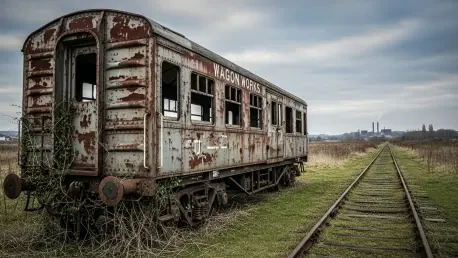
India’s private wagon manufacturing sector, once a key engine driving the nation’s ambitious freight modernization, now finds itself idling at a critical junction. After investing heavily to expand production capacity in response to the government’s call, these companies are facing a sudden and worrying silence on future orders. This article explores the growing uncertainty confronting these manufacturers, examining the disconnect between the successful fulfillment of initial contracts and the lack of a clear procurement roadmap from Indian Railways. At stake is not just the financial health of an entire industry but the very viability of the National Rail Plan’s goal to revolutionize freight transport in India.
The National Rail Plan: Laying the Foundation for Growth
To understand the current predicament, it is essential to look back at the National Rail Plan (NRP), a strategic blueprint unveiled in 2022. The NRP set forth an ambitious vision: to dramatically increase the share of rail in national freight transportation from a modest 27% to a dominant 45% by 2030. A cornerstone of this strategy was doubling the nation’s wagon fleet from approximately 300,000 to 600,000 units within the decade. This clear, long-term objective spurred a massive wave of private sector investment as manufacturers retooled their factories and scaled up operations in good faith, confident in a sustained pipeline of demand from their primary client, Indian Railways.
Unpacking the Current Impasse
Peak Production Meets a Sudden Stop
The public-private partnership initially yielded remarkable results. In 2022, Indian Railways placed a massive order for 117,229 wagons, and the private sector rose to the occasion. Manufacturers successfully met accelerated timelines, ramping up production to an all-time high of 41,929 wagons in the 2024–2025 fiscal year. However, this success story is now overshadowed by a looming crisis. With these initial contracts set to be completed by the end of 2025, the industry is staring into a production void. The anticipated second phase of orders, crucial for maintaining momentum, has not materialized, leaving a highly capable and expanded industrial base at risk of becoming idle.
A Widening Gap Between Strategy and Execution
The current silence from the railway ministry stands in stark contrast to the NRP’s own projections. The plan had clearly outlined a second procurement phase for over 200,000 wagons, slated to begin in 2025–2026. To meet the 2030 targets, this would necessitate annual orders in the range of 40,000 to 46,000 wagons. Industry officials note that for a seamless production pipeline, the bidding process for the 2025–2026 period should have already been initiated. This inaction creates a significant implementation gap, where a well-defined long-term strategy is being undermined by a lack of short-term execution, breeding anxiety and uncertainty among the very partners enlisted to achieve the national goal.
Conflicting Signals and Calls for Clarity
The situation is compounded by differing perspectives from stakeholders. While industry leaders express grave concern over their future, railway ministry officials have adopted a noncommittal stance, stating that wagon requirement assessments are a “continuous process” and new orders will be placed “as needed.” This perspective, while perhaps operationally pragmatic, fails to acknowledge the long-term planning and investment cycles required in heavy manufacturing. Meanwhile, external bodies like the parliamentary Standing Committee on Railways have validated the industry’s role, commending the recent induction of wagons and urging the ministry to promote private investment by setting clear, measurable targets. This external support underscores a consensus that a predictable policy environment is non-negotiable for retaining private sector confidence.
The Fork in the Road: Future Scenarios and Lingering Risks
The industry now faces a critical turning point. If the railway ministry fails to provide a clear procurement roadmap soon, the consequences could be severe. The immense production capacity built at the government’s behest could lie dormant, leading to financial distress and a potential erosion of manufacturing capabilities. Furthermore, this policy unpredictability could deter future private investment not only in wagons but across the broader railway ecosystem. This uncertainty jeopardizes the core objective of the NRP, as sustained wagon induction is fundamental to increasing freight capacity and making rail a more competitive option against road transport. The emerging trend appears to be a shift from a strategic, plan-led approach to a reactive, needs-based one, which introduces significant risk into a capital-intensive industry.
Navigating the Uncertainty: A Strategic Path Forward
The primary takeaway from this analysis is that a breakdown in communication and forward planning is threatening a vital national objective. To get back on track, a clear and decisive course of action is needed. The most critical step is for the railway ministry to issue a transparent, multi-year procurement schedule that aligns with the NRP’s stated goals. This would restore investor confidence and allow manufacturers to plan their operations effectively. For their part, industry bodies should continue to engage proactively with the government, presenting data-driven arguments on the economic and strategic importance of maintaining production continuity. This situation serves as a powerful reminder that successful public-private partnerships depend not only on a grand vision but also on consistent, reliable execution.
Keeping the Wheels of Progress Turning
The current standoff between India’s wagon makers and the railway ministry is more than just a contractual dispute; it is a test of the nation’s commitment to its long-term infrastructure goals. After private players delivered on their promise to build capacity, the onus is now on the government to hold up its end of the strategic bargain. Freight operations are the financial lifeline of Indian Railways, and enhancing this capacity is essential for economic growth and sustainability. To ensure the National Rail Plan does not run out of steam, the government must send an unambiguous signal that its partnership with the industry is a long-haul journey, not just a short sprint.