
The successful inauguration of a sophisticated landing gear components machining facility in Mundhwa, Pune, represents a transformative moment for the Indian aerospace sector by bridging the gap between heavy industry and high-technology engineering. Finalized in March 2026, this development marks a significant expansion of the strategic partnership between Bharat Forge and the French-German giant Liebherr-Aerospace & Transportation SAS. This facility serves as a cornerstone for regional industrial growth, signaling India’s increasing capability to handle high-complexity manufacturing that meets the most stringent global aviation standards. The primary focus of this development is the establishment of a state-of-the-art manufacturing hub dedicated to high-precision landing gear components. This facility is a joint venture in spirit and operation, integrating advanced machining centers that can produce critical hardware for both civil and military aviation while satisfying international quality protocols.
Industrial Synergy: The Mundhwa Facility and Strategic Partnerships
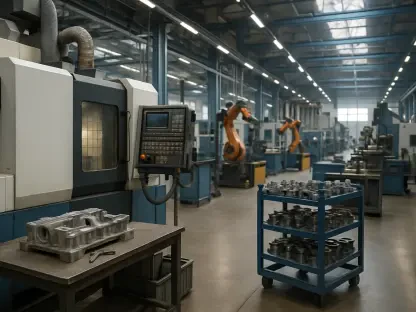
The establishment of this manufacturing hub highlights a sophisticated integration of global engineering expertise and domestic industrial capacity. By utilizing high-precision machining centers, the facility can transform raw forgings into flight-ready components that meet the exact specifications of international aerospace regulators. This process involves intricate milling and turning operations where the tolerances are measured in microns, reflecting a level of technical maturity previously rare in the domestic market. The partnership with Liebherr provides access to proprietary manufacturing methodologies that ensure the Pune plant operates at the same level of excellence as European aerospace centers. This synergy allows for the production of critical structural elements that are essential for the safe operation of modern aircraft, thereby placing the region at the forefront of the global aerospace manufacturing map and attracting further investments into the local technological ecosystem.
Beyond the immediate technical capabilities, the facility distinguishes itself through the attainment of comprehensive Original Equipment Manufacturer (OEM) approvals. Securing these certifications is a rigorous process that requires demonstrating consistent quality control and adherence to global safety standards over extended production cycles. For Bharat Forge, this achievement represents a move away from being a mere sub-component supplier toward becoming a Tier-1 partner for major global aircraft programs. The ability to manage such high-level certification processes internally suggests that the Indian aerospace industry is maturing at a rapid pace. This shift allows the joint venture to compete for high-value contracts that were previously dominated by established Western firms. By proving that high-complexity aerospace hardware can be reliably produced in Mundhwa, the partnership sets a new benchmark for industrial excellence and reliability within the competitive international aviation market.
Vertical Integration: Moving Beyond Traditional Forging
This collaboration underscores a vital shift in the organizational business model, transitioning from a traditional forging-centric approach to becoming a comprehensive, full-stack aerospace provider. The expanded portfolio now encompasses a wide range of critical products, including aero-engine components for modern propulsion systems and airframe structures that provide aerodynamic integrity. By focusing on specialized landing gear sub-systems, the company is positioning itself to manage the entire lifecycle of aviation hardware, from the initial raw forging to the final precision assembly and testing phases. This strategy of vertical integration reduces dependence on external vendors and streamlines the supply chain, which is increasingly important in an era of global logistical volatility. Furthermore, the inclusion of turbine and compressor components, forged rings, and shafts ensures that the company can serve multiple segments of the aircraft manufacturing process, providing a one-stop-shop solution.
The Pune facility specifically addresses the precision machining required to ensure that landing gear components can withstand the immense stress and temperature fluctuations inherent in flight. During takeoff and landing, these parts are subjected to extreme kinetic energy and structural loads that demand flawless metallurgical integrity and surface finishing. In the aerospace industry, the margin for error is nonexistent, necessitating the use of advanced machining centers to meet these rigorous safety requirements without compromise. By integrating these capabilities, the facility ensures that every part produced is capable of enduring thousands of flight cycles under diverse environmental conditions. This technical resilience is achieved through a combination of advanced materials science and cutting-edge subtractive manufacturing techniques. Such a focus on high-durability hardware not only enhances aircraft safety but also lowers long-term maintenance costs for airline operators who rely on these essential components.
Global Supply Chains: India as a High-Tech Manufacturing Hub
The establishment of this facility aligns with a broader global trend where major aerospace OEMs are diversifying their supply chains and looking toward India as a high-tech manufacturing hub rather than just a source of raw materials. Industry leaders increasingly agree that global competitiveness requires the ability to provide high-value, finished components that are ready for immediate installation on the assembly line. Furthermore, the planned addition of an advanced aerospace ring mill highlights a forward-looking strategy designed to support critical aero-engine programs from 2026 to 2030 and beyond. This expansion indicates a commitment to staying ahead of technological curves, particularly as the demand for more fuel-efficient and lighter aircraft continues to grow. By localizing the production of complex rings and discs used in jet engines, the partnership effectively reduces lead times and provides a more resilient alternative to traditional European or North American supply routes.
Executive leadership from both organizations viewed the Mundhwa facility as a milestone that validated their ability to scale manufacturing for international demand while maintaining a culture of innovation. For Bharat Forge, the project represented a significant value-add for global customer relationships, demonstrating that the company could evolve alongside the needs of its partners. From the perspective of Liebherr, the plant was seen as a site for cutting-edge engineering practices that could eventually influence global operations. This strategic alignment ensured that the facility remained perfectly in sync with the evolving requirements of the global aerospace industry, fostering a culture of manufacturing excellence. The collaboration proved that when global expertise is combined with localized industrial scaling, the resulting synergy can produce world-class results. It established a blueprint for future international partnerships, suggesting that high-tech manufacturing is no longer confined to traditional industrial heartlands.
Strategic Outlook: Building a Resilient Aerospace Ecosystem
The inauguration of the Mundhwa facility established a new trajectory for the Indian aerospace sector by demonstrating that high-precision manufacturing and global standards were achievable through strategic cooperation. This project successfully integrated advanced machining capabilities with rigorous OEM protocols, which effectively lowered the barriers to entry for other domestic high-tech initiatives. The partnership between Bharat Forge and Liebherr functioned as a catalyst for local skill development, creating a specialized workforce capable of operating the world’s most advanced aerospace machinery. By proving that complex landing gear components could be produced with zero-defect reliability, the venture encouraged other global players to reconsider their manufacturing footprints. This shift toward localized, high-value production was instrumental in creating a more balanced and resilient global aerospace supply chain that benefited from diverse geographical manufacturing hubs and reduced logistical risks.
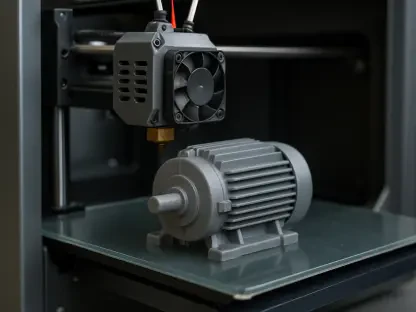
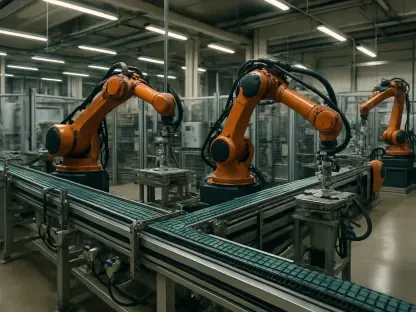
Looking toward the future, the success of this facility suggested that the next logical step involved the integration of digital manufacturing and sustainable production practices into the aerospace sector. To maintain this momentum, industry stakeholders recognized the need to invest in additive manufacturing and advanced composite materials to complement the existing machining capabilities. The transition from 2026 toward more automated and data-driven production environments was identified as a priority for maintaining a competitive edge in the global market. Furthermore, expanding the scope of the partnership to include maintenance, repair, and overhaul services could provide a comprehensive support system for the aircraft components produced in Pune. By continuing to prioritize innovation and vertical integration, the Indian aerospace industry positioned itself to not only manufacture parts but to lead in the design and development of the next generation of aviation technology, ensuring long-term growth and technical sovereignty.