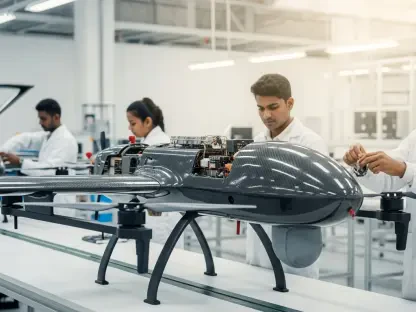

The global defense landscape has reached a pivotal juncture where the ability to maintain independent aerial surveillance and strike capabilities is no longer a luxury but a fundamental requirement for national survival. As of 2026, the Indian Ministry of Defence has accelerated its commitment to achieving full self-reliance in the unmanned aerial systems sector by 2030. This ambitious roadmap seeks to overhaul the existing manufacturing framework, transitioning the nation from a consumer of high-end foreign technology into a self-sustaining powerhouse of indigenous production. By prioritizing sovereign control over every aspect of drone architecture, the government aims to insulate the military from the unpredictability of international supply chains. This shift is not merely about industrial growth; it represents a comprehensive strategy to ensure that national security remains uncompromised by the shifting sands of global diplomacy.
Historical Shifts: Breaking the Cycle of Foreign Dependence
For decades, the backbone of India’s aerial reconnaissance and combat capabilities relied on advanced platforms purchased from international partners. These acquisitions provided immediate operational advantages, yet they introduced a profound “black box” dependency that restricted the ability of local forces to modify or repair equipment without foreign assistance. Recent geopolitical friction in various global theaters demonstrated that reliance on external entities for spare parts and software updates could paralyze a military during a crisis. This realization sparked a decisive pivot in defense policy, moving away from simple procurement and toward a mandate for indigenous design.
The historical reliance on foreign intellectual property often meant that technical improvements were subject to the approval of original equipment manufacturers. Such constraints hindered the rapid adaptation required in modern electronic warfare. Consequently, the current strategy emphasizes the necessity of owning the intellectual property rights for all critical hardware and software. By fostering a domestic environment where engineering teams can innovate without external oversight, the defense establishment is building a more resilient and responsive technological base that serves the specific tactical needs of the region.
Market Analysis: Deconstructing the Roadmap to Sovereignty
Security Imperatives: Shielding the Digital Frontier
One of the most significant drivers of the current push for self-reliance is the need to eliminate digital vulnerabilities in unmanned systems. Foreign-coded software and imported microchips often carry hidden risks, including the potential for remote hijacking or data breaches. To address these concerns, a rigorous evaluation system has been established to scrutinize the origin of every electronic component. By domesticating the entire technology stack, the military ensures that its communication links and navigation systems are impervious to external interference. This focus on cybersecurity is essential for maintaining the integrity of aerial operations in contested environments where electronic jamming is a constant threat.
Industrial Foundations: The Race for Critical Subsystems
The transition toward full manufacturing requires more than just assembling components; it demands the local production of high-value subsystems like high-performance engines and precision sensors. Currently, the market is shifting its focus toward developing advanced battery chemistries and specialized flight controllers that were previously sourced from global suppliers. Ensuring that these parts are manufactured within the country allows for a more stable supply chain and reduces the lead time for production. Ownership of these critical technologies is the only way to ensure that production can be scaled up rapidly during times of heightened tension without needing clearance from foreign governments.
Economic Integration: Scaling Innovation Through Collaboration
While the technical challenges are vast, market fragmentation within the domestic drone sector presents its own set of hurdles. Many smaller enterprises possess innovative ideas but lack the financial backing to compete on a global scale. The government is addressing this by creating a more cohesive ecosystem where small startups and established defense contractors can collaborate more effectively. By streamlining the procurement process and addressing concerns regarding the reliability of locally made hardware, the industry is moving toward a mature market structure. This collaborative approach is designed to produce the economies of scale necessary for Indian drones to eventually become competitive in the international export market.
Future Projections: Technological Convergence and Policy Shifts
Looking ahead toward the end of the decade, the industry expects a significant evolution in both regulatory frameworks and technological capabilities. The upcoming modifications to the Defence Acquisition Procedure are likely to provide substantial advantages to companies that can demonstrate a high level of indigenous content. Financial mechanisms, such as expanded production-linked incentives, will continue to de-risk investments for private players entering the drone space. These policy shifts are expected to stimulate a surge in dual-use technology, where military-grade drone advancements find practical applications in the logistics and agricultural sectors, creating a robust and diverse economic engine.
Furthermore, the integration of artificial intelligence into drone swarms and autonomous navigation will likely define the next phase of development. As domestic companies master the basics of flight and propulsion, the focus will shift toward enhancing the cognitive capabilities of these systems. This technological leap will require a steady pipeline of skilled professionals who are proficient in both aerospace engineering and advanced computing. The convergence of these fields will ensure that the domestic industry remains at the cutting edge of global innovation, providing the military with tools that are both sophisticated and entirely secure.
Strategic Recommendations: Strengthening the Domestic Ecosystem
To reach the 2030 milestone, it is essential for manufacturers to prioritize the acquisition of intellectual property over short-term assembly contracts. Investing in original research for software stacks and sensor suites will provide a long-term competitive advantage that cannot be replicated by simply importing kits. Professionals in the sector should seek to bridge the gap between traditional mechanical engineering and modern software development to create integrated systems that are more efficient. This holistic approach to design will be the key to overcoming the remaining technical barriers in high-performance drone manufacturing.
Additionally, the government must ensure that the policy environment remains consistent and predictable for long-term investors. Incentivizing the localization of motor manufacturing and high-precision moulds will require a sustained commitment to funding and infrastructure development. By discouraging the “easy route” of component imports and rewarding those who take the difficult path of ground-up innovation, the state can foster a truly sovereign industry. Maintaining this strategic focus will allow the nation to build a defense sector that is not only self-reliant but also capable of leading the global market in the years to come.
Final Reflection: Securing the Skies Through Resilience
The movement toward full drone self-reliance was a strategic necessity that redefined the relationship between national security and industrial capacity. By systematically dismantling the structures of foreign dependence, the defense sector established a foundation of technological sovereignty that was previously thought unattainable. The journey required a radical shift in how components were sourced and how software was developed, ensuring that every asset remained under domestic control. These efforts successfully shielded the nation from the volatility of global supply chains and the risks of digital interference. Ultimately, the commitment to indigenous innovation provided the military with a secure and resilient aerial capability that stood the test of time.