
The relentless hum of urban gridlock often feels like an inescapable tax on human productivity, yet high above the stagnant queues of cars, a silent fleet of electric rotors is preparing to rewrite the rules of the city. While most urban commuters remain trapped in the gridlock of city streets, a quiet revolution is taking flight at the IIT Madras Discovery Campus. The inauguration of The ePlane Company’s massive prototyping facility in Thaiyur marks a definitive shift from academic theory to industrial reality. This isn’t just another tech startup; it is a specialized manufacturing powerhouse designed to prove that the sky is no longer a limit, but a scalable solution for the world’s most congested cities.
This 60,000-square-foot facility serves as the nerve center for a new era of Indian aerospace. By housing the entire development cycle—from initial design to final assembly—under one roof, the company has created an ecosystem where innovation moves at the speed of flight. The campus provides a dedicated space for engineers to iterate on the complex physics of vertical lift without the delays of outsourced production. It is a tangible commitment to the idea that urban air mobility must be built on a foundation of rigorous, local manufacturing.
Why the Vertical Transition Is No Longer Optional for Global Megacities
The traditional “two-dimensional” approach to urban planning has reached a breaking point, with ground-level infrastructure unable to keep pace with rapid urbanization. As cities expand horizontally and vertically, the capacity for new roads or tunnels becomes physically and economically exhausted. Urban Air Mobility (UAM) has transitioned from a futuristic concept to a necessary transport layer as cities seek to bypass terrestrial congestion. In this context, the development of electric vertical take-off and landing (eVTOL) aircraft represents a critical move toward sustainable, time-efficient logistics.
Current road networks simply cannot provide the speed required for modern emergency services or high-priority logistics. The transition to the third dimension allows for a “decoupling” of travel time from ground conditions, ensuring that a cross-city trip takes the same amount of time regardless of the hour. Moreover, the shift to electric propulsion addresses the environmental concerns that have long plagued the aviation industry, offering a path toward zero-emission urban transit that fits within the green mandates of modern municipalities.
Engineering the e200X: Compact Design for Dense Urban Landscapes
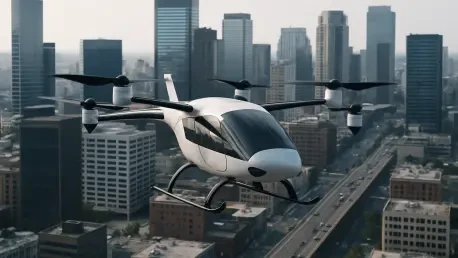
The ePlane Company is distancing itself from international competitors by prioritizing a compact physical footprint, ensuring their aircraft can function where others cannot. While many global players are developing large aircraft that require expansive landing pads, the e200X is engineered with a different philosophy. Measuring just 8 meters by 10 meters, the e200X is uniquely suited for the cramped environments of modern metropolises, enabling “rooftop-to-rooftop” operations that utilize existing infrastructure like parking garages and commercial buildings.
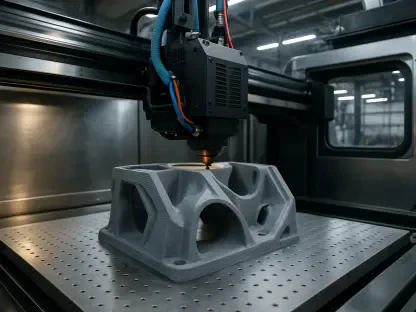
The new facility houses specialized wings for composite fabrication and electric powertrain assembly, allowing for a seamless transition from raw material to flight-ready aircraft. This integrated approach is vital for maintaining the strict weight tolerances required for electric flight. Furthermore, with dedicated avionics laboratories and a Ground Test Vehicle (GTV) facility, the company can validate complex flight control systems and conduct tethered hover tests. These internal testing protocols ensure that every subsystem is optimized for the high-frequency cycles of urban air taxi operations.
From Academic Insight to Industry Authority: The Path to Certification
The success of eVTOL technology relies heavily on the marriage of high-level engineering and strict regulatory compliance. Born within India’s premier technical ecosystem, the company leverages a deep bench of academic expertise from IIT Madras to solve the “battery-weight-to-propulsion” ratio that plagues electric aviation. This pedigree provides a level of scientific rigor that is essential when pitching new technologies to skeptical regulators and the public alike.
Founder Satya Chakravarthy emphasizes that the company is not just building hardware but is actively working with the Directorate General of Civil Aviation (DGCA) to define the very safety standards for Indian eVTOL flight. The Thaiyur facility serves as an empirical hub, providing the rigorous testing data required to achieve Type Certification, which is the gold standard for airworthiness. By collaborating on these benchmarks, the company helped establish the legal and safety framework that will eventually govern all players in the Indian air mobility market.
A Phased Framework for Implementing Urban Air Mobility
The ePlane Company followed a strategic roadmap to ensure their technology moved from the testing site to the public sphere in a safe and logical manner. The initial rollout focused on high-stakes logistics, particularly air ambulance services and organ transport. In these scenarios, the speed of an eVTOL was literally the difference between life and death. By proving the reliability of the e200X in the medical sector, the company established the necessary public trust and operational history required for broader applications.
The transition toward cargo and freight allowed the team to refine autonomous systems in controlled commercial environments. This middle phase served as a bridge, stripping away the complexities of passenger transport while scaling the manufacturing process. Finally, the project moved toward the democratization of flight, where the ultimate goal involved making a cross-city trip as affordable as a standard ground-based ride-share. This systematic progression ensured that the infrastructure for vertiports and charging stations matured alongside the aircraft, providing a holistic solution for the 21st-century city.