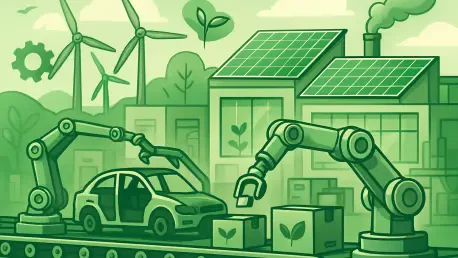

With the industrial sector facing mounting pressure to decarbonize, manufacturing expert Kwame Zaire joins us to dissect the landmark partnership between CEAT and CleanMax. This collaboration showcases a powerful trend where large corporations are moving beyond simple renewable energy purchases to sophisticated, long-term hybrid power solutions. We’ll explore the strategic advantages of the group captive model, the technical synergy of combining wind and solar for energy-intensive operations, and how such deals create a ripple effect, transforming a company’s entire sustainability roadmap from the factory floor to the final product.
Your 59 MW hybrid project utilizes a group captive model to supply power to CEAT’s plants. What are the key financial and operational benefits of this model for both a large manufacturer and an energy provider, and what are the critical steps to structuring such an agreement?
The group captive model is a brilliant financial and operational tool because it aligns the interests of both the energy consumer and the producer. For a manufacturer like CEAT, the primary benefit is securing a long-term, predictable, and often lower, cost of energy, insulating them from volatile grid prices. Operationally, they get clean power without the immense capital outlay and technical burden of developing and running a 59 MW power plant themselves. For an energy provider like CleanMax, this model guarantees a stable, creditworthy buyer for the power generated, which is absolutely critical for financing and de-risking such a large-scale project. The critical first step in structuring this is a deep-dive needs analysis, followed by forging a strong partnership and negotiating a detailed Power Purchase Agreement that clearly outlines tariffs, tenure, and performance metrics for the life of the project.
Combining wind and solar is intended to deliver a more consistent power output. Can you explain the technical synergy that allows a hybrid system to achieve a higher plant load factor for an energy-intensive facility compared to a standalone solar or wind project?
The technical synergy is all about smoothing out the intermittency of renewables. Imagine the energy needs of a tire plant in Halol or Kanchipuram—it’s a constant, heavy draw. A standalone solar project is fantastic during peak daylight hours but does nothing at night. Wind, on the other hand, can often be stronger overnight or during different seasons. By combining them in one system, you create a much more consistent and reliable power profile around the clock. This blending of generation patterns is what achieves a higher plant load factor, meaning the facility is producing power more of the time. This stability is crucial; it ensures the manufacturing operations have a steady stream of green electricity, minimizing reliance on the grid and making the transition to renewables far more practical for heavy industry.
With this initiative, CEAT is projected to reach nearly 60% clean energy use. What operational changes are required to integrate this new power source, and how does this milestone influence the company’s roadmap for its broader sustainability goals, such as in packaging and distribution?
Reaching nearly 60% clean energy is a massive operational shift, not just a line item on a report. Internally, it requires sophisticated energy management systems to seamlessly balance this new hybrid source with any remaining grid power, ensuring the plants never experience a disruption. But the real influence is strategic. This isn’t just about electricity; it’s a powerful proof point that validates their entire sustainability journey. When a company successfully tackles its biggest emissions source—its manufacturing operations—it creates incredible momentum. It signals to every department, from procurement to logistics, that sustainability is a core business driver. This milestone makes it easier to push for further advancements in biodegradable packaging or reducing distribution emissions, because the company has already proven it can execute complex, large-scale green initiatives.
This deal is expected to reduce carbon emissions by 1 lakh tonnes annually. Beyond the environmental impact, how do these projects create tangible cost efficiencies at key manufacturing facilities, and how does that translate into a competitive advantage for producing low-carbon footprint tires?
The environmental impact is huge, but the business case is just as compelling. The tangible cost efficiencies come from locking in energy costs for the long term. For an energy-intensive business like tire manufacturing, electricity is a major operational expense, and this deal effectively takes a huge chunk of that expense and makes it stable and predictable. This financial certainty provides a massive advantage over competitors who are still exposed to fluctuating market prices. This translates directly into a competitive advantage in two ways. First, it lowers the cost of production. Second, and perhaps more importantly, it allows them to market a “low-carbon footprint tire.” In today’s market, both consumers and large corporate clients are demanding greener supply chains, and being able to prove you are a benchmark in the industry is a powerful sales and branding tool.
What is your forecast for the adoption of hybrid renewable energy projects by large-scale industrial consumers?
I am incredibly bullish on this. The CEAT and CleanMax deal is not an outlier; it’s a blueprint for the future of industrial energy consumption. We are going to see an aggressive acceleration in the adoption of hybrid projects by large-scale consumers. The financial and operational logic is simply too strong to ignore. As technology costs continue to fall and corporate sustainability mandates become more stringent, these well-structured collaborations will become the standard. The next evolution will be the widespread integration of battery storage into these hybrid systems, allowing manufacturers to move even closer to 100% renewable energy and achieve true energy independence for their operations.