
The thunderous roar of a jet engine represents more than just mechanical power; it is the culmination of a massive, multi-year industrial transformation currently sweeping across the United States. GE Aerospace is now executing a massive $1 billion capital infusion into its domestic infrastructure, a move designed to overhaul the backbone of American flight. This is not merely an expansion of floor space, but a calculated modernization of 30 communities across 17 states. By upgrading the very tools that build the world’s most popular aircraft engines, the company is positioning itself to lead the next era of commercial and military aviation.
A Billion-Dollar Bet on the Future of American Flight
This investment serves as a definitive statement on the importance of domestic manufacturing during a period of rapid technological change. The initiative focuses on integrating high-tech solutions into legacy plants, ensuring that older facilities can meet the stringent requirements of modern aerospace engineering. By refreshing these sites, the company ensures that local economies remain integral to the global supply chain.
Beyond the physical hardware, the strategy emphasizes long-term sustainability and operational excellence. The focus remains on creating a resilient network capable of withstanding global economic shifts. This massive commitment ensures that the United States remains a primary hub for aerospace innovation, blending traditional manufacturing prowess with cutting-edge digital integration.
Navigating the Surge in Global Aviation Demand
As air travel returns to record levels, the pressure on engine manufacturers to deliver reliable, high-performance propulsion systems has never been higher. The CFM LEAP engine, which powers the backbone of modern narrow-body fleets like the Boeing 737MAX and Airbus A320, sits at the heart of this demand. This investment addresses critical bottlenecks by enhancing production capacity for these specific units.
Furthermore, the surge in demand is not limited to the civilian sector. Military defense branches require rapid hardware delivery to maintain global security and readiness. By streamlining the assembly of both commercial and defense engines, the company reduces lead times and ensures that operators have the necessary equipment to maintain connectivity and safety on a global scale.
Strategic Allocation Across States and Technologies
The $1 billion initiative is a multi-faceted expansion that touches every corner of the manufacturing process. A significant $200 million is being funneled into high-pressure turbine durability and reverse bleed systems to extend engine life and reduce downtime for operators. These technical improvements directly translate to lower costs for airlines and fewer disruptions for passengers traveling across the country.
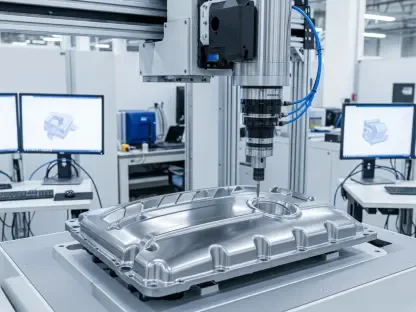
Geographically, the investment transforms the Cincinnati headquarters into a hub for advanced 3D metal printing while pumping millions into specialized facilities in Massachusetts, Kentucky, North Carolina, and Indiana. This physical expansion is matched by a human one, with a push to hire 5,000 new employees in high-skill engineering and manufacturing roles. These jobs represent the next generation of the American industrial workforce.
Strengthening the Ecosystem Through Supplier Support and Lean Operations
Internal upgrades are only half the battle; the company is also dedicating $100 million to stabilize its external supplier base by providing necessary tooling and equipment. This holistic strategy recognizes that a manufacturer is only as strong as its weakest link. By supporting smaller vendors, the company creates a more robust and predictable production flow that benefits the entire industry.
This synergy is driven by “FLIGHT DECK,” a proprietary lean operating model designed to eliminate waste and maximize efficiency. The results have been measurable, with reports showing a 40% improvement in material input and a significant surge in engine deliveries throughout 2025. This disciplined approach ensures that capital is used effectively to drive actual output rather than just increasing overhead.
Implementing a Scalable Framework for Manufacturing Excellence
To maintain this momentum, a specific framework was deployed that other industrial giants may soon mirror. This involved integrating additive manufacturing—specifically 3D metal printing—directly into the assembly line to bypass traditional supply chain delays. By combining aggressive workforce recruitment with a “supplier-first” financial model, a resilient manufacturing loop was created to adapt to fluctuating market demands.
The focus shifted toward a future where modularity and speed define success in the aerospace sector. Engineers prioritized the development of self-sustaining production cells that could be replicated across different regions. This transition allowed for a more flexible response to emerging technologies, ensuring that the domestic industrial footprint remained both competitive and technologically advanced for the decade to come.