
Kwame Zaire has spent years at the intersection of heavy industrial manufacturing and high-tech electronics, carving out a reputation as a strategist who understands the grit of the factory floor as much as the nuances of the boardroom. Currently, he is closely observing the massive shift in the Indian industrial landscape, particularly the rise of integrated manufacturing hubs. With Aequs pushing boundaries through its massive $814 million aerospace order book and a bold pivot into consumer electronics, Zaire offers a seasoned perspective on how companies can balance the slow, methodical pace of aerospace with the rapid-fire demands of the electronics market.
In this discussion, we explore the financial discipline required to manage multi-year revenue cycles, the strategic logic behind prioritizing debt reduction over aggressive expansion, and the technical complexities of building a domestic aero-engine ecosystem.
The aerospace order book currently stands at $814 million with contracts typically spanning five to seven years. How do you manage the three-to-four-year revenue realization cycle, and what specific operational steps are required to ensure these long-term commitments translate into steady, predictable cash flow?
Managing a multi-year cycle of this magnitude requires a rigorous alignment between shop-floor execution and financial milestones. Since the revenue cycle typically spans three to four years, the primary focus is on maintaining high delivery precision to trigger the progress payments inherent in these five-to-seven-year contracts. Operationally, we treat the $814 million order book as a series of cascading deliverables where raw material procurement and machining cycles must be perfectly synchronized to avoid capital being trapped in work-in-progress. By anchoring our consolidated revenues—of which aerospace contributes nearly 80% to 85%—on these long-term agreements, we create a predictable baseline that allows us to absorb the shorter-term volatility of other segments.
Capacity utilization in the consumer electronics segment is currently around 31%, with a recent ₹230 crore investment targeted at debt reduction and capital expenditure. How will this capital infusion specifically accelerate the path to profitability, and what milestones must be reached to justify further scaling?
The path to profitability in electronics is strictly a volume game, and the current 31% utilization rate indicates significant headroom for growth without needing massive new floor space. This ₹230 crore infusion is strategic because it clears the deck of expensive debt, immediately improving our bottom line by reducing interest outflows. Over the last 24 months, we have already poured more than ₹600 crore into this vertical, so the immediate milestone isn’t just “more machines,” but rather filling the existing capacity to a point where fixed costs are fully covered. Once we see utilization climb toward the 50% to 60% mark, the inherent operating leverage will kick in, transforming what is currently a loss-making segment into a significant contributor to our growth.
While aerospace maintains steady 20% EBITDA margins, the electronics vertical is still scaling toward profitability. How are you leveraging precision machining expertise from aerospace to improve electronics manufacturing efficiency, and what specific technical hurdles have you encountered when cross-pollinating these two very different industries?
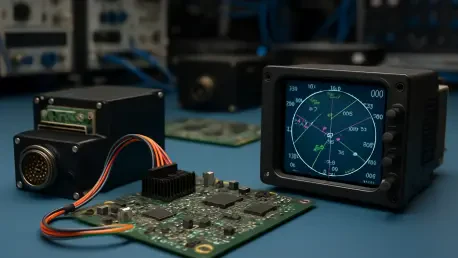
The “secret sauce” is taking the uncompromising quality standards of aerospace machining—where we maintain steady 20% EBITDA margins—and applying that discipline to the high-speed environment of consumer electronics. The biggest technical hurdle is the sheer difference in “tact time”; in aerospace, you might spend hours on a single high-value component, whereas electronics demand thousands of units with zero defects. We are overcoming this by using our precision engineering DNA to design more robust, automated assembly processes that reduce waste and rework. By cross-pollinating these skills, we ensure that as the electronics segment scales, it does so with the same structural integrity that allowed our aerospace division to grow by 38% last quarter.
A significant portion of the ₹650 crore raised through the IPO was prioritized for debt repayment rather than immediate aggressive expansion. What is the strategic rationale behind this conservative capital allocation, and how does the remaining funding for joint ventures support your long-term growth targets?
Choosing to use the majority of the ₹650 crore IPO proceeds for debt reduction is about creating a “fortress balance sheet” that can withstand global market shifts. We allocated about ₹70–75 crore specifically for capex and another ₹75 crore for strategic joint ventures because we want to grow through partnership and shared technology rather than just brute-force spending. This conservative approach leaves us with roughly ₹100–150 crore for general corporate purposes, providing the liquidity needed to jump on emerging opportunities. By optimizing our existing capacity before taking on new leverage, we ensure that our future growth is funded by operational cash flow rather than high-interest borrowing.
The new manufacturing unit in Hosur shifts focus toward aero engines and landing gear systems rather than traditional aerostructures. What unique technical capabilities are required for this engine-focused ecosystem, and how do you plan to develop the necessary local talent and supply chain over the next decade?
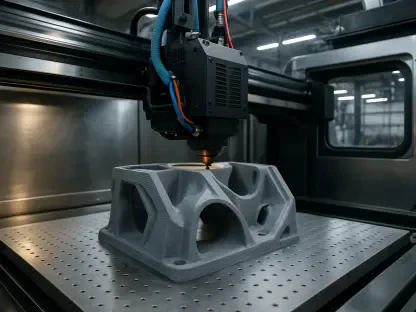
Moving into aero engines and landing gear systems represents a massive step up in metallurgical complexity and precision requirements compared to standard aerostructures. These components operate under extreme thermal and mechanical stress, which requires specialized high-value machining and unique coating processes that we are now bringing to our Hosur facility. Our decade-long plan involves creating a dedicated ecosystem in Tamil Nadu that mirrors the success of our Belagavi hub but with a focus on engine-specific supply chains. We are investing heavily in local talent development because the specialized skill set required for engine components simply doesn’t exist at scale in the region yet.
With aerospace growth projected at over 20% and electronics potentially doubling in the next fiscal year, how are you preparing your infrastructure for such rapid scaling? Could you walk through the step-by-step process of balancing high-volume electronics production with the stringent quality requirements of aerospace?
Preparing for a year where aerospace grows by 20% to 30% while electronics potentially doubles requires a two-speed management system. Step one is the physical separation of high-volume lines from low-volume, high-complexity lines to prevent “quality bleed” or logistical bottlenecks. Step two involves integrating a unified digital tracking system that applies aerospace-level traceability to our electronics components, ensuring that even as volumes surge, we don’t lose the data-driven oversight that protects our margins. Finally, we are focusing on improving plant utilization from the current 31% in electronics, which allows us to scale output significantly without the immediate chaos of new construction.
What is your forecast for the Indian aerospace and consumer electronics sectors?
I anticipate a decade of “industrial decoupling” where India becomes a primary global alternative for high-end manufacturing, leading to a sustained 20% to 30% growth rate in the domestic aerospace sector. The consumer electronics market will likely see even more explosive growth, potentially expanding by 50% to 100% in the next fiscal year alone as local supply chains mature and import substitution intensifies. For companies like Aequs, the success will depend on their ability to maintain the high-margin discipline of aerospace—staying close to that 20% EBITDA mark—while successfully navigating the high-volume ramp-up of the electronics world. The winner in this landscape will be the one who can bridge the gap between heavy engineering and fast-moving tech with a clean, debt-optimized balance sheet.