
We are joined today by Kwame Zaire, a renowned manufacturing expert whose work in production management and predictive maintenance has made him a leading voice in the industrial and automotive sectors. We will delve into SATRAC Engineering’s recent inauguration of its state-of-the-art facility in Sriperumbudur, a move poised to reshape commercial vehicle manufacturing in South Asia. Our conversation will explore the tangible benefits of their investment in robotic automation, the strategic thinking behind their aggressive nationwide expansion, and how this initiative aligns with both national manufacturing goals and global export ambitions.
Your new Sriperumbudur facility features advanced robotic welding systems. Could you elaborate on how this technology improves structural integrity and productivity compared to traditional methods, and what specific metrics you use to measure these gains?
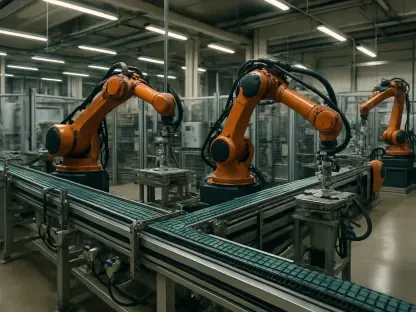
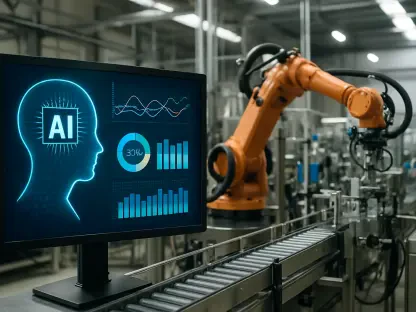
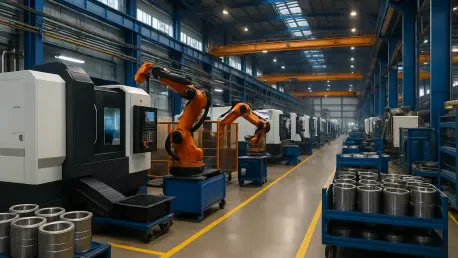
It’s a genuine leap forward, not just an incremental step. When you move from manual to robotic welding, you’re trading variability for absolute consistency. A human welder, no matter how skilled, will have slight variations from the first weld of the day to the last. A robot, however, executes the perfect weld every single time, enhancing structural integrity in a way that is profoundly reliable. This commitment to engineering precision is what builds uncompromising safety and durability into the very DNA of each vehicle. In terms of metrics, we look at throughput—the ability to hit that 800-unit-per-month capacity—as a direct result of this efficiency. We also see a drastic reduction in rework and quality control flags, which tells us the process is robust from the start.
With the Chennai plant’s capacity exceeding 800 units per month, how will this increased output specifically address the high demand from the logistics and infrastructure sectors, and what challenges do you anticipate in scaling up your supply chain to match this production?
That figure—800 units a month from a single plant—is a direct response to the pulse of India’s economy. The logistics and infrastructure sectors are not just growing; they’re exploding with demand for high-quality, dependable equipment. This capacity allows SATRAC to significantly shorten turnaround times, getting trailers and tippers onto the roads and into construction sites faster than ever before. The main challenge in scaling is creating a supply chain that is as advanced and resilient as the factory itself. It requires a synchronized dance of sourcing high-grade steel, components, and electronics, and ensuring they arrive just in time. Any bottleneck there would ripple through the entire 3.5 acres of production space, so building robust partnerships and forecasting models is absolutely critical to feeding a facility of this magnitude.
Operating two major plants in Chennai and Bengaluru gives you a combined capacity of over 1,500 units monthly. Can you walk us through how you coordinate between these facilities to optimize workflow, serve distinct regional markets, and leverage the strengths of your Japanese parent company?
Having dual hubs in Chennai and Bengaluru creates a powerful strategic footprint in South India. The combined capacity of over 1,500 units a month provides immense flexibility. We can balance production loads between the two, ensuring one plant isn’t overwhelmed while the other is underutilized. This also allows for specialization; one facility might focus on a particular line of special-purpose vehicles while the other handles high-volume trailers, optimizing tooling and expertise. The influence of the Japanese parent company is crucial here, providing a foundation of world-class manufacturing processes and a relentless focus on quality management systems. This global benchmark is implemented across both sites, ensuring a consistent standard of excellence whether a product rolls out of Chennai or Bengaluru.
You plan to establish new facilities in Jamshedpur, Pune, and Gujarat. What is the strategic rationale behind selecting these specific locations, and how will this phased expansion across key industrial corridors enhance your delivery speed and market penetration?
This expansion plan is a masterclass in strategic geography. It’s not about just building factories; it’s about creating a national network. Jamshedpur places you in the heart of India’s eastern industrial and mining belt. Pune is a central hub for the automotive and manufacturing sectors in the west. And Gujarat, with its massive ports and industrial estates, is a critical logistics gateway. By establishing a presence in each of these key corridors, you slash delivery times and logistics costs for your customers in those regions. This phased approach, with a new unit every 30 months, allows for methodical, sustainable growth, deepening market penetration and fostering stronger regional engagement one corridor at a time.
The expansion supports the ‘Make in India’ initiative and global export ambitions. What practical steps are you taking to ensure your products meet international manufacturing standards, and how will the Sriperumbudur plant function as a hub for both domestic and export markets?
The ‘Make in India’ initiative is about more than just local production; it’s about making in India for the world. The practical steps are baked right into the new facility’s design. The use of advanced robotic welding, integrated design systems, and world-class quality management aren’t just for show—they are the core requirements for meeting stringent international standards. The Sriperumbudur plant, being the largest and most technologically advanced, is perfectly positioned to be the flagship for this ambition. It will serve as a center of excellence, producing vehicles that not only meet the demands of India’s growing infrastructure but are also built to the specifications required by global markets, directly supporting the export goals of its Japanese parent company.
What is your forecast for the commercial vehicle body-building segment in India over the next five years?
I am exceptionally bullish on this segment. The growth we’re seeing is not a temporary spike; it’s a sustained upward trend driven by foundational economic shifts. With the government’s continued focus on infrastructure development, the modernization of the logistics sector, and the overall industrial expansion, the demand for high-quality, durable trailers and truck bodies will only intensify. Companies that invest in technology, scale, and quality, as we’re seeing here, are the ones that will not only meet this demand but also drive the industry forward. We can expect to see a greater emphasis on specialized vehicles, improved safety standards, and manufacturing processes that are on par with global benchmarks. The next five years will be transformative, and India is on track to become a major hub for commercial vehicle manufacturing excellence.