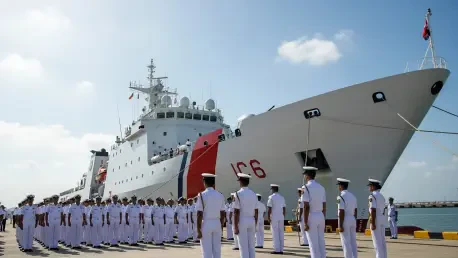

The vast expanse of the Indian Ocean, a critical artery for global trade and a delicate cradle of marine biodiversity, faces the compounding pressures of environmental degradation and complex security threats, demanding a new generation of maritime stewardship. Responding to this critical need, the Indian Coast Guard has officially inducted the ICGS Samudra Pratap, a state-of-the-art vessel that represents a monumental advancement in the nation’s maritime security, environmental protection, and indigenous defense manufacturing capabilities. The formal commissioning ceremony, led by Defense Minister Rajnath Singh on January 5, 2026, celebrated the ship not just as a new asset but as a powerful embodiment of India’s growing self-reliance and its unwavering commitment to safeguarding its extensive maritime domain. This landmark addition to the fleet introduces a modern, multi-faceted approach to naval design, operational strategy, and national security, setting a new benchmark for the region.
A Leap in Indigenous Defense and Strategic Capability
A Symbol of Self-Reliance
The ICGS Samudra Pratap serves as a powerful and tangible testament to the success of India’s Atmanirbhar Bharat (self-reliant India) initiative, signaling a decisive shift in the nation’s defense procurement and manufacturing landscape. Constructed by the state-owned Goa Shipyard Limited (GSL), this vessel is not only the first of its kind to be indigenously designed but also holds the distinction of being the largest ship currently in the Indian Coast Guard’s fleet. During the commissioning ceremony, Defense Minister Rajnath Singh emphasized the ship’s high degree of local content, which proudly exceeds 60 percent. He lauded this achievement as a clear and unambiguous indicator of the growing maturity and sophisticated capability of India’s domestic defense industrial ecosystem. The vessel’s induction is seen as a major milestone, moving the country closer to its strategic goal of achieving comprehensive self-sufficiency in critical defense technologies and reducing its historical dependence on foreign suppliers for advanced military hardware. This achievement reflects years of targeted investment and policy focus.
This commissioning is not merely a singular achievement but a stepping stone toward a more ambitious future for Indian shipbuilding and defense production. Minister Singh articulated the government’s clear and ambitious vision to elevate the indigenous content in all future shipbuilding projects to an impressive 90 percent. This goal underscores a long-term strategic commitment to fostering a robust, innovative, and self-sustaining defense sector capable of meeting the nation’s security needs while also positioning India as a potential exporter of high-quality defense platforms. The Samudra Pratap, therefore, transcends its role as a new maritime asset; it stands as a symbol of successful industrial policy, showcasing the nation’s burgeoning prowess in complex naval engineering and systems integration. Its successful development and induction send a strong message about India’s diminishing reliance on foreign defense technology and its emergence as a formidable player in global defense manufacturing. This vessel represents a new chapter in the nation’s journey toward complete strategic autonomy.
A Versatile Multi-Mission Asset
While its primary designation is that of a pollution control vessel, the ICGS Samudra Pratap has been meticulously engineered as a highly versatile, multi-mission platform capable of addressing a wide spectrum of maritime challenges. This design philosophy reflects a modern approach to naval assets, where flexibility and adaptability are paramount. The ship is equipped with a suite of advanced pollution-detection systems for the early identification of oil spills, a critical feature for rapid response. It also carries specialized pollution-response boats designed for the effective containment and cleanup of environmental hazards at sea. Its efficient recovery systems are engineered to mitigate environmental damage swiftly and decisively, offering crucial protection for India’s fragile and economically vital marine ecosystems, including sensitive coral reefs and vital mangrove forests. This environmental protection capability is fundamental to safeguarding the livelihoods of millions in coastal communities who depend directly on the health and sustainability of the marine environment for their survival and prosperity. The vessel is a guardian of the nation’s blue economy.
Beyond its crucial environmental duties, the ship is a formidable asset for a comprehensive range of maritime operations, solidifying the Indian Coast Guard’s role as a multi-faceted security force. It is outfitted with modern, high-capacity firefighting equipment, enabling it to combat complex and dangerous maritime fires on other vessels, a vital capability for ensuring safety along busy shipping lanes. Furthermore, its design incorporates a helicopter hangar and comprehensive aviation support facilities, allowing for the operation of aircraft for extended surveillance, long-range search-and-rescue missions, and detailed aerial monitoring of India’s vast maritime zones. This integrated aviation capability significantly extends its operational reach and effectiveness. A key design feature is the vessel’s ability to operate with high efficiency even in rough sea conditions, a crucial factor for improving real-life operational response and ensuring its availability for critical missions year-round, irrespective of weather challenges. This robust all-weather capability makes it a reliable and indispensable tool for national security.
Broader Implications for National and Regional Security
Protecting the Blue Economy and the Indo-Pacific
Defense Minister Rajnath Singh expertly framed the vessel’s role within a broader strategic context, emphasizing that the protection of the marine environment is both a “strategic necessity and a moral responsibility,” particularly in an era marked by the escalating impacts of climate change. The ICGS Samudra Pratap is a direct and powerful instrument to fulfill this profound responsibility, significantly strengthening India’s capacity to act as a diligent steward of its invaluable marine resources. The ship’s diverse functions are intrinsically linked to the health and vitality of the Blue Economy, which sustains a significant portion of the coastal population through sectors like fisheries, aquaculture, and maritime tourism. By safeguarding marine biodiversity and preventing environmental disasters, the vessel underpins the economic security of the nation. Its deployment enhances the Indian Coast Guard’s ability to conduct robust maritime law enforcement, counter-trafficking operations, and timely search-and-rescue missions, thereby reinforcing India’s commitment to regional stability and security.
The commissioning of such a capable, domestically-built ship underscores India’s growing role as a responsible and proactive maritime power, deeply committed to ensuring a safe, secure, and clean maritime domain for all nations. India’s comprehensive approach to maritime security, bolstered by assets like the Samudra Pratap, contributes significantly to stability across the vital Indo-Pacific region. By enhancing its capacity to monitor its exclusive economic zone and respond to various contingencies, India not only protects its own interests but also helps maintain the freedom of navigation and the rule-based international order that are essential for global trade and prosperity. This vessel is more than just a piece of hardware; it is a clear projection of India’s strategic intent and its dedication to being a net security provider in one of the world’s most critical maritime crossroads. Its presence is a reassurance to partner nations and a deterrent to those who might seek to disrupt regional peace and security.
A Milestone for Gender Inclusivity
The commissioning ceremony of the ICGS Samudra Pratap also marked a significant and historic social milestone for the Indian Coast Guard and the nation’s armed forces as a whole. In a pioneering and widely celebrated move, the vessel will have two women officers posted onboard, a first for the service. Defense Minister Rajnath Singh celebrated this landmark development, stating that it reflects substantial and meaningful progress toward creating a more inclusive and genuinely gender-neutral work environment within the armed forces. He emphasized that the role of women has evolved dramatically, moving beyond traditional support functions to positions where they now serve as “frontline warriors,” undertaking the same demanding operational duties as their male counterparts. This appointment is a powerful testament to the breaking of long-standing barriers and the recognition of merit and capability irrespective of gender. The minister’s public acknowledgment of this achievement underscores its importance at the highest levels of government.
The minister went on to praise the two appointed officers, hailing them as “role models for future generations” and as beacons of inspiration for countless young women across the country who aspire to serve the nation in uniform. This historic first signals a clear and unwavering institutional commitment to empowering women in all facets of national defense, from strategic planning to frontline operational command. The presence of these officers on a state-of-the-art vessel like the Samudra Pratap sends a powerful message about the modernization not only of military hardware but also of the ethos and culture within the Indian armed forces. This progressive step is expected to encourage greater participation of women in maritime roles and further accelerate the process of complete gender integration across all branches of the military. The event was attended by a host of dignitaries, reflecting the national importance of this social and military landmark, a moment that celebrated progress and inclusivity.
A Legacy of Innovation and Progress
The induction of the ICGS Samudra Pratap into the Indian Coast Guard’s fleet was a multifaceted event that represented more than just the addition of a new ship. It was a clear demonstration of India’s advanced shipbuilding capabilities, a validation of its long-term policy of self-reliance in defense, and a significant step forward in its ability to protect its extensive maritime interests. The vessel’s sophisticated multi-role design, which seamlessly blends environmental protection with security operations, has set a new standard for future naval acquisitions. Moreover, the historic posting of two women officers on board has established an important precedent for gender inclusivity, reflecting a modern and progressive vision for the nation’s armed forces. This commissioning did not just enhance the operational capacity of the Coast Guard; it also bolstered India’s standing as a responsible and capable maritime power committed to security and stability in the crucial Indo-Pacific region. The legacy of this event will be measured not only in the missions the ship undertakes but also in the industrial and social progress it has come to symbolize.