
The rapid evolution of modern combat has transformed the sky into a primary battleground where the traditional superiority of heavy armor and manned aircraft is no longer guaranteed. At the National Defense Industries Conclave in New Delhi, the Indian government established a definitive shift in its military strategy, placing domestic drone production at the center of its national security agenda. This high-level gathering serves as a critical catalyst for the country’s ambitious roadmap to become a global powerhouse for indigenous unmanned aerial vehicle (UAV) production by 2030. Leadership has articulated a vision where strategic autonomy is a non-negotiable requirement, signaling that the era of relying on foreign platforms for border security is coming to an end.
A Strategic Mandate for Indigenous Defense Capabilities
The urgency behind this push for self-reliance is deeply rooted in the volatile nature of global conflict observed in recent years. Engagements in Eastern Europe and the Middle East have demonstrated that traditional military hierarchies are being upended by the cost-effective and lethal precision of unmanned systems. Historically, India has relied on foreign imports for high-end defense equipment, a vulnerability that often complicates diplomatic maneuvering during regional crises. By recognizing that drones and counter-drone systems are now indispensable assets, the administration is moving away from this legacy of dependence to ensure that supply chain disruptions do not compromise national readiness.
Lessons from the Modern Battlefield and Historical Context
Transitioning from a consumer to a creator requires a fundamental change in how the defense establishment views technology acquisition. In the past, the focus was often on procuring the most advanced ready-made systems from global vendors, but the current “mission mode” approach prioritizes internal development. This shift is essential for maintaining a credible deterrent in a landscape where geopolitical rivals can throttle the supply of spare parts or software updates. Consequently, the defense ministry is now treating drone technology not just as a tool for surveillance, but as a sovereign capability that must be insulated from external political pressures.
Overcoming Structural Barriers to Achieve Strategic Autonomy
Moving Beyond Assembly: Component-Level Sovereignty
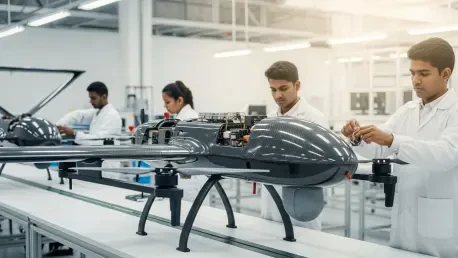
For years, the domestic drone industry functioned largely as an assembly hub, relying on foreign-made engines, flight controllers, and high-density power cells. The current mandate aims to dismantle this model in favor of deep-tech manufacturing where every critical component is designed and produced within the country. This comprehensive strategy is specifically intended to eliminate dependencies on external suppliers, particularly those from geopolitical competitors. By controlling the entire stack of hardware and proprietary software, the nation ensures that its defense systems are free from backdoors or vulnerabilities inherent in foreign-sourced technology.
Empowering the MSME Ecosystem: Private Sector Integration
A key pillar of this industrial transformation involves the integration of Micro, Small, and Medium Enterprises (MSMEs) and agile start-ups into the national defense supply chain. Unlike traditional bureaucratic procurement, the new development strategy encourages active collaboration between the public sector and private firms. By fostering a robust ecosystem, the government provides the necessary capital and regulatory support for smaller players to innovate. Furthermore, bridging the gap between experimental research and mass production remains a priority, allowing academic breakthroughs in aerodynamics to be rapidly transitioned into scalable manufacturing solutions.
Integrating Cutting-Edge Technology: The Digital Defense Frontier
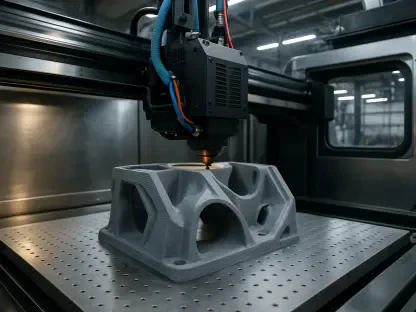
The drive toward self-reliance is inextricably linked to the adoption of fourth-industrial-revolution technologies like artificial intelligence and robotics. The Ministry of Defense is prioritizing the inclusion of additive manufacturing, commonly known as 3D printing, to streamline production and enhance drone capabilities. The use of digital twins allows engineers to simulate performance and wear in a virtual environment before a single unit is built, significantly reducing development costs. These innovations do more than just build better drones; they modernize the entire defense infrastructure, making it more resilient, data-driven, and competitive on a global scale.
The Technological Horizon and Future Industry Shifts
As the industry progresses toward its 2030 goals, the market is expected to undergo a radical transformation toward swarming technology and autonomous operations. We are likely to see a shift where multiple drones operate as a single cohesive unit, alongside the development of sophisticated counter-drone systems capable of neutralizing electronic warfare threats. Regulatory frameworks are also evolving to support the export of Indian-made defense technology to friendly nations. Experts predict that as the domestic supply chain stabilizes, the country will emerge as a cost-effective alternative to Western and Chinese manufacturers, potentially reshaping the global defense trade landscape.
Key Strategies for Stakeholders in the Defense Sector
To capitalize on this momentum, stakeholders must adopt a multi-pronged approach to innovation and production. Private defense firms and start-ups should focus on securing intellectual property rights for critical components and investing in research and development. For policymakers, the priority lies in maintaining a stable and transparent procurement environment that encourages long-term investment. Actionable strategies include investing in specialized vocational training to create a workforce skilled in advanced composite materials and AI programming. Furthermore, companies should leverage government-backed testing facilities to ensure their products meet the rigorous standards required for modern conflict zones.
Securing Sovereignty through Technological Leadership
The transition toward full self-reliance in drone production marked a pivotal moment in the nation’s journey toward becoming a global defense leader. By addressing the vulnerabilities of foreign supply chains and embracing a “mission mode” for domestic manufacturing, the government did more than just build machines; it secured its future autonomy. Stakeholders moved quickly to invest in specialized vocational training and established new standards for high-intensity conflict endurance. Moving forward, the focus shifted to maintaining the momentum of these internal breakthroughs to ensure that homegrown technology remains at the cutting edge of global security requirements.