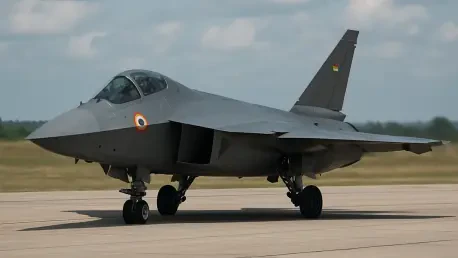

The thunderous roar of a new generation of stealth fighter jets is on the horizon for India, but for the first time, its development may be propelled by the innovation and agility of the nation’s burgeoning private industry. In a landmark decision that redefines its defense procurement strategy, the Indian government has shortlisted three private sector conglomerates to manufacture the country’s most ambitious aerospace project to date: the Advanced Multirole Combat Aircraft (AMCA). This move signifies a pivotal moment, steering a critical national security program away from traditional state-run enterprises and toward a new public-private partnership model. The outcome of this high-stakes selection will not only determine the future of the Indian Air Force (IAF) but also shape the landscape of India’s defense industrial base for decades.
A Turning Point in the Sky Is Indias Private Industry Ready
The AMCA program represents far more than just the acquisition of a new aircraft; it is the linchpin of India’s strategy to maintain air superiority in an increasingly complex geopolitical neighborhood. As a fifth-generation fighter, the AMCA is designed to be a formidable platform incorporating stealth, advanced sensor suites, and next-generation weaponry. Its successful development and induction are crucial for the IAF to counter the growing capabilities of regional adversaries who are also investing heavily in advanced aerial platforms. The reliance on a private partner to build such a technologically sophisticated system is a calculated risk, betting on the sector’s efficiency and innovation to deliver a world-class fighter jet on time and within budget.
This strategic pivot is deeply rooted in the government’s broader “Atmanirbhar Bharat” (Self-Reliant India) initiative, which aims to reduce the nation’s long-standing dependence on foreign military hardware. For decades, India has been one of the world’s largest arms importers, a vulnerability that exposes it to supply chain disruptions and geopolitical pressures. By entrusting the AMCA’s manufacturing to a domestic private entity, the government seeks to cultivate a robust indigenous defense ecosystem capable of designing, developing, and producing cutting-edge military technology. The AMCA, therefore, serves as the ultimate litmus test for India’s aspirations of achieving true strategic autonomy in the defense sector.
A New Paradigm in Defense a High-Stakes Competition
After a meticulous evaluation process, three of India’s leading private firms have emerged as the final contenders: Tata Advanced Systems, Larsen & Toubro, and Bharat Forge. Each of these companies brings a formidable track record in engineering, manufacturing, and systems integration, having already established themselves as key players in the defense supply chain. Their selection from an initial pool of seven bidders underscores their technical and financial readiness to undertake a project of this magnitude, setting the stage for a final decision expected within the next few months.
Conspicuously absent from the shortlist is the state-owned behemoth Hindustan Aeronautics Limited (HAL), the traditional custodian of India’s military aircraft manufacturing. This exclusion was not a reflection of HAL’s capabilities but a strategic decision based on the tender’s stringent criteria. A key clause in the evaluation process penalized bidders with a large existing order book, a move designed to ensure the chosen partner could dedicate its full capacity and focus to the demanding and time-sensitive AMCA program. This suggests a desire to avoid potential delays that could arise from a manufacturer juggling multiple large-scale projects.
The path to the shortlist was a gauntlet of rigorous assessments. Bidders were scrutinized on their technical expertise, particularly their prowess in complex systems integration, a critical skill for assembling a fifth-generation fighter. Their financial strength was also a key determinant, ensuring they possessed the capital to sustain long-term investment in the program. Furthermore, the evaluation committee assessed each company’s existing manufacturing infrastructure and their ability to absorb the advanced design blueprints developed by the government’s Aeronautical Development Agency (ADA), demanding proven experience in the end-to-end lifecycle of complex platforms.
Forging the Future Expert Views on the Public-Private Shift
This shift toward the private sector for a flagship defense program is being widely analyzed as a strategic masterstroke. Experts note that leveraging the agility and streamlined management practices of private companies could help overcome the bureaucratic hurdles and cost overruns that have sometimes plagued state-led defense projects. The government’s vision appears to be a synergistic one, where the state retains control over design and development while the private sector brings its efficiency in manufacturing and supply chain management to the forefront.
From an industrial standpoint, the shortlisted firms are well-positioned to take on this challenge. Tata Advanced Systems has extensive experience in aerostructures, having supplied components to global giants like Boeing and Airbus. Larsen & Toubro is a leader in heavy engineering and has made significant inroads into defense systems, including naval platforms and missile launchers. Bharat Forge, a global leader in metallurgy and forging, has diversified aggressively into defense components and specialized vehicles. Their collective experience in precision engineering and large-scale project management provides a strong foundation for building the AMCA.
It is crucial to understand that this is not a complete privatization but a collaborative venture. The Aeronautical Development Agency, the government body that designed the AMCA, will continue to lead the project. The selected private firm will act as the primary manufacturing partner within a Special Purpose Vehicle (SPV), working hand-in-glove with the ADA to translate the aircraft’s advanced blueprints into a fully operational combat platform. This model aims to combine the best of both worlds: public sector design expertise and private sector manufacturing prowess.
The AMCA Roadmap From Blueprint to Air Dominance
The immediate future of the AMCA program is centered on a ₹15,000 crore prototype development phase. The selected partner will collaborate with the ADA and HAL to manufacture the first five prototypes. This crucial stage will serve to validate the aircraft’s design, test its performance envelope, and refine the manufacturing processes before committing to full-scale production. Success in this phase is non-negotiable, as it will lay the foundation for the entire program.
The long-term vision for the AMCA is ambitious. The Indian Air Force has already projected an initial requirement for 120 aircraft, which will form the backbone of its fighter fleet from the mid-2030s onward. The first deliveries are anticipated to commence around 2035, with the program’s value expected to grow exponentially as more advanced variants are developed and further orders are placed. This long-term commitment provides a powerful incentive for the private partner to invest in creating a world-class aerospace manufacturing ecosystem in India.
The AMCA is engineered to be a technological marvel, representing a quantum leap for India’s aerospace capabilities. Its design incorporates quintessential fifth-generation features like a low-observable stealth airframe to evade enemy radar and advanced sensors for long-range targeting. Moreover, it is being built with the future of aerial combat in mind, integrating Artificial Intelligence (AI) for enhanced pilot decision-making and Manned-Unmanned Teaming (MUM-T) capabilities, which will allow it to control and operate alongside autonomous drone swarms as a “loyal wingman.”
The decision to entrust the AMCA’s future to a private manufacturer marked a definitive turn in India’s journey toward defense self-reliance. It was a calculated policy choice that prioritized specialized focus and industrial agility over traditional procurement routes. The final selection from among the three formidable contenders did more than just anoint a manufacturing partner; it signaled the birth of a new national champion in the aerospace and defense sector. This strategic pivot was seen as a foundational step in building a resilient and technologically advanced military-industrial complex, one capable of securing India’s skies for generations to come.