
A Strategic Push to Supercharge India’s Automotive Ambitions
India’s automotive sector stands at a critical juncture, poised between its legacy as a production hub and its aspiration to become a global leader in advanced manufacturing and innovation. At the heart of this transformation is the Production-Linked Incentive (PLI) scheme, a bold industrial policy designed to catalyze domestic production, foster self-reliance, and accelerate the transition to next-generation mobility. This article delves into the scheme’s performance, analyzing its impact on investment, industry participation, and the push for localization. By examining the data and early outcomes, we seek to answer the pivotal question: Is the Auto PLI scheme the game-changing catalyst India needs to secure its place at the forefront of the global automotive landscape?
From Assembly Lines to Innovation Hubs: The Context for Change
For decades, India’s manufacturing story was one of potential rather than dominance. The automotive sector, while robust, often relied heavily on imported components for advanced systems, creating vulnerabilities in the supply chain and limiting value addition within the country. The global shift toward electric vehicles (EVs) and connected technologies presented both a threat and a monumental opportunity. Recognizing this, the government launched the Auto PLI scheme not merely to increase production numbers, but to fundamentally reshape the ecosystem. The policy was engineered to overcome historical dependencies, incentivize investment in cutting-edge technologies, and build a resilient, localized supply chain capable of competing on a global scale. Understanding this strategic backdrop is crucial to appreciating the scheme’s ambitious goals and measuring its true success.
Deconstructing the Scheme’s Early Triumphs and Triumphs
Surpassing Expectations: The Overwhelming Investment Influx
The most compelling evidence of the PLI scheme’s initial success lies in its extraordinary ability to attract capital. Established with a target of securing ₹42,500 crore in investments over a five-year period, the program is on a trajectory to shatter that goal. Participating manufacturers have already pledged investments exceeding ₹35,000 crore, achieving a significant portion of the total target in just the first two years. This rapid influx of capital is a powerful vote of confidence from the industry, signaling a collective belief in the policy’s stability and the long-term potential of India’s manufacturing ecosystem. Government officials are optimistic that with more companies expected to qualify, the final investment figure will comfortably eclipse the original target, driving a corresponding surge in production and economic activity.
Broad-Based Buy-In: From Industry Giants to Emerging Players
Beyond the impressive financial figures, the scheme’s success is also reflected in the breadth of industry participation and the government’s commitment to rigorous compliance. A total of 82 applicants, spanning established vehicle manufacturers and critical auto component makers, have engaged with the program. Of these, 72 have formalized their investment commitments, demonstrating widespread industry buy-in. The scheme’s credibility is reinforced by its stringent eligibility criteria, which mandate a minimum of 50 percent Domestic Value Addition (DVA). To date, 18 companies have met these high standards, including legacy giants like Tata Motors and Mahindra & Mahindra, as well as new-age pioneers like Ola Electric. This diverse mix of beneficiaries proves the policy’s relevance across both traditional and emerging automotive segments, while the government’s intent to enforce compliance against non-performing applicants underscores the seriousness of the initiative.
The Localization Imperative: Building a Self-Reliant Supply Chain
A core objective of the PLI scheme is to deepen the domestic manufacturing ecosystem and reduce reliance on imports. Early results indicate significant progress on this front, particularly in the passenger vehicle segment, which has recorded the highest levels of DVA. A tangible outcome of this push is that approximately 80,000 electric cars have qualified under the scheme’s DVA and investment criteria since 2023, a clear indicator of its success in promoting the local production of advanced automotive solutions. Perhaps most importantly, the positive effects are cascading throughout the economy. Government officials have highlighted that Micro, Small, and Medium Enterprises (MSMEs) are emerging as the “biggest beneficiaries,” suggesting the scheme is successfully fostering a robust, multi-tiered domestic supply chain and creating a powerful ripple effect of growth.
Accelerating the Future: Paving the Way for Advanced Automotive Tech
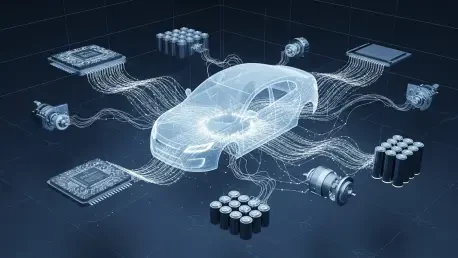
The Auto PLI scheme is more than just a short-term production booster; it is a strategic investment in the future of mobility. By tying incentives to advanced automotive technologies, the policy is actively steering the industry toward electric vehicles, hydrogen fuel cells, and connected car solutions. This forward-looking approach is designed to position India not just as a follower but as a leader in the global automotive transition. The foundation being laid today—stronger local supply chains, increased R&D, and greater manufacturing capacity for high-tech components—is expected to attract further global investment and transform India into a hub for next-generation automotive innovation, ensuring its relevance in the decades to come.
Strategic Wins and a Roadmap for Sustained Growth
The analysis reveals several major takeaways: the Auto PLI scheme has successfully exceeded investment expectations, secured broad-based industry commitment, and made tangible progress in boosting localization and advanced technology manufacturing. For policymakers, the key is to maintain this momentum through consistent and predictable policy, ensuring that the framework remains attractive for long-term investment. For businesses, the opportunity is clear: leverage the supportive environment to deepen R&D capabilities, forge stronger domestic supply chain partnerships, and scale up production of high-value components. The scheme provides the runway, but sustained growth will depend on the industry’s ability to innovate and compete globally.
The Verdict: A Resounding Step Towards Manufacturing Leadership
Recapping the evidence, the Auto PLI scheme has proven to be a highly effective policy instrument, delivering on its primary objectives with remarkable speed and efficiency. It has catalyzed unprecedented investment, strengthened the manufacturing backbone, and accelerated the nation’s journey toward self-reliance in a critical sector. While the term “game-changer” is often overused, the scheme has demonstrably altered the trajectory of India’s automotive industry for the better. The ultimate verdict rests on long-term outcomes, but the initial results strongly suggest that this is not just another incentive program—it is a foundational pillar in India’s ambition to become a true global manufacturing powerhouse.