
The rapid expansion of the Indian automotive industry, which currently stands as the world’s third-largest vehicle market, is facing a sudden and formidable challenge as escalating regional hostilities in the Middle East threaten to destabilize the very energy corridors that sustain high-volume manufacturing. While domestic consumer demand for personal and commercial vehicles remains at an all-time high, the shadow of conflict between Iran and Israel is trickling down to factory floors through the disruption of essential fuel supplies. This article explores how localized warfare thousands of miles away creates a ripple effect, specifically through the choking of maritime transit and a resulting shortage of industrial natural gas. By examining the dependency of the automotive supply chain on stable imports, the analysis aims to uncover whether this conflict will serve as a temporary speed bump or a more permanent roadblock for India’s ambitious industrial trajectory.
A Legacy of Growth Confronting Energy Dependency
To understand the current crisis, one must look at the meteoric rise of the auto sector, which has been fueled by a burgeoning middle class and favorable government policies. Historically, the industry has transitioned from simple assembly to sophisticated manufacturing that maximizes efficiency through lean operations. However, this growth has been built on a foundation of heavy reliance on imported natural gas, primarily sourced from Qatar and channeled through the sensitive Strait of Hormuz. Past disruptions in the Middle East occasionally caused manageable price spikes, but the current scale of the Iran-Israel conflict poses a direct threat to the physical transit of fuel. This vulnerability highlights a critical gap in a domestic strategy that has prioritized production volume over energy security.
The Energy Bottleneck and the Industrial Priority Dilemma
The Natural Gas Crisis in High-Heat Manufacturing
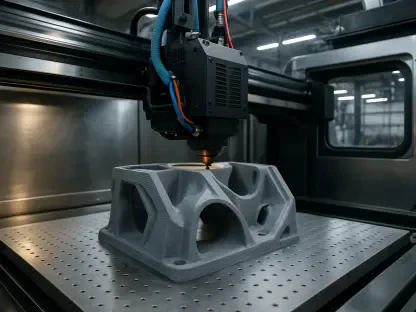
A critical aspect of automotive production is its absolute dependence on natural gas for high-heat processes such as metal forging, casting, and paint shop operations. Unlike standard electricity, which can sometimes be supplemented by coal or solar power, these specific thermal processes require the precision and intensity provided by gas. As the conflict jeopardizes shipments, the government has been forced into a difficult position, prioritizing gas supplies for residential and essential services over industrial use. This policy has left automotive factories scrambling, as natural gas is not just a utility but a raw necessity for maintaining the structural integrity of vehicle components.
The Vulnerability of Small and Medium Enterprises
The ripple effect of energy shortages is felt most acutely within the smaller tiers of the supply chain—the small and medium-sized enterprises that form the backbone of the automotive ecosystem. Unlike major original equipment manufacturers, these smaller players lack the capital reserves to pivot quickly to alternative energy sources or to withstand prolonged production halts. When suppliers like Kirloskar Ferrous or Hindalco are forced to reduce output due to energy constraints, it creates a choke point that eventually starves larger companies like Mahindra & Mahindra and Tata Motors of essential parts. Even the most financially robust manufacturers cannot produce vehicles if a single specialized component is missing from the line.
The Breakdown of Just-in-Time Logistics
Beyond energy, the regional conflict introduces complexities in global logistics that challenge the modern manufacturing philosophy of just-in-time delivery. Disruptions in the Strait of Hormuz do not only affect gas; they delay the arrival of specialized sensors and raw materials that are part of a globalized assembly line. While some large-scale manufacturers attempt to project an image of normal operations through negotiations with vendors, data suggests that actual factory utilization rates are dipping. Misunderstandings about the resilience of these chains often overlook the fact that shipping reroutes add weeks to delivery schedules, making the lean manufacturing model a liability during periods of geopolitical instability.
Navigating a Landscape of Forced Contraction and Innovation
The future of the sector will likely be shaped by a shift from rapid expansion toward stabilization and defensive planning. Industry analysts are already recalibrating their expectations; production growth forecasts have been notably downgraded from 7.4% to 6.3% for the current period. Looking ahead, a dual trend is emerging: a regulatory push toward greater energy self-reliance and an economic shift where manufacturers prioritize high-margin vehicles to offset the rising costs of supply chain volatility. Technological innovations in electric melting and hydrogen-based forging may eventually provide a solution, but these transitions require significant time, suggesting that the immediate future will be defined by how well the industry manages a survival mode during global unrest.
Strategic Adaptations for an Uncertain Market
The major takeaway for stakeholders is that the auto boom is no longer guaranteed by domestic demand alone; it is now tethered to global stability. For businesses, the primary recommendation is to diversify energy portfolios and move away from a single-source dependency on imported natural gas. Consumers should prepare for longer waiting periods and potential price hikes as manufacturers pass on the increased costs of logistics and energy. In a real-world scenario, this means that both investors and professionals must look beyond local sales figures and closely monitor the energy-to-output ratio of parts suppliers to gauge the true health of the industry.
Safeguarding the Momentum of India’s Automotive Future
The Iran-Israel conflict exposed deep-seated vulnerabilities in the energy-intensive supply chain of the automotive sector. Maintaining the earlier momentum required a strategic overhaul of how energy was sourced and utilized within the manufacturing landscape. Stakeholders realized that the reliance on imported fuel could transform a regional conflict into a long-term domestic slowdown if left unaddressed. Ultimately, the resilience of the industry depended on its ability to decouple production capabilities from the volatility of Middle Eastern energy corridors. The transition toward energy diversification and localized sourcing became the defining factor in preserving the growth of the market.