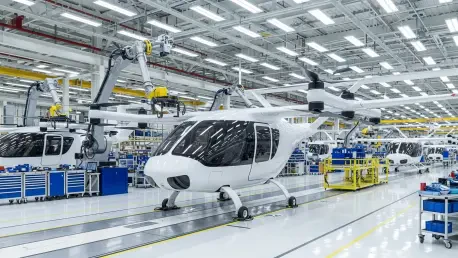

In a decisive move signaling a major acceleration in the race to commercialize air taxis, Joby Aviation has secured a second, vast manufacturing facility in Dayton, Ohio, laying the groundwork to significantly scale its production of electric vertical take-off and landing (eVTOL) aircraft. The acquisition of the 700,000-square-foot plant, which is described as being ready for immediate use, is a cornerstone of the company’s ambitious plan to double its manufacturing rate to four aircraft per month by 2027. This expansion does not merely add floor space; it establishes a critical node in an expanding multi-state production network that now spans from the company’s headquarters in California to the heart of America’s aerospace corridor. Operations at the new site are slated to commence within the 2026 calendar year, marking a tangible step toward bringing a new form of aerial mobility to the masses. This strategic investment underscores a shift in the advanced air mobility (AAM) industry from conceptual design and prototyping to the complex realities of mass production.
A Strategic Pivot to Mass Production
The acquisition represents a pivotal transition for Joby, firmly shifting its operational focus from a decade of intensive research and development to the demanding discipline of high-volume manufacturing. This evolution was articulated by founder and CEO JoeBen Bevirt, who noted the company is now concentrated on translating its engineering achievements into the production scale the market is now demanding. The move is presented not as a speculative expansion, but as a direct response to anticipated orders for its commercial passenger and defense-oriented aircraft. This strategic action is the latest in a series of calculated steps designed to construct a robust, vertically integrated manufacturing ecosystem. Over the past year, the company has methodically laid the foundation for this growth by completing an expanded facility in Marina, California, initiating propeller blade production at its first Ohio site, proactively procuring essential capital equipment, and actively hiring personnel to support the implementation of continuous, round-the-clock manufacturing operations.
This new Dayton facility is poised to become a central pillar in the company’s operational strategy, enabling a rapid acceleration of its production timeline. The plant’s “ready for immediate use” status bypasses the lengthy delays typically associated with new construction, allowing Joby to begin installing equipment and launching operations within months. This rapid operationalization is critical for meeting the company’s aggressive production targets and solidifying its position in the competitive AAM market. Furthermore, the expansion deepens the company’s commitment to vertical integration, a strategy that grants greater control over the supply chain, production quality, and intellectual property. By developing a multi-state manufacturing footprint, with centers of excellence in both California and Ohio, Joby is also building operational resilience and tapping into distinct pools of specialized talent. This distributed network is designed not only to support near-term goals but also to provide the scalable infrastructure necessary for future growth as the air taxi market matures from a nascent concept into a global transportation reality.
Revitalizing America’s Aerospace Heritage
This expansion is being carefully framed within a powerful narrative that connects Joby’s futuristic aircraft with Ohio’s storied legacy in aviation history and the contemporary political drive for American reindustrialization. Corporate and political leaders have consistently drawn a direct line from the Wright Brothers’ pioneering flights in Dayton to Joby’s modern-day efforts, positioning the company as the natural heir to a century of American aerospace innovation. CEO JoeBen Bevirt explicitly referenced this heritage, noting that Dayton has “long been the epicenter of aerospace innovation” and that his company is proud to build “the next generation of flight” in such a historically significant location. This narrative serves a dual purpose: it legitimizes Joby’s presence in the region by rooting it in a respected tradition, and it frames its advanced technology not as a disruption, but as a continuation of a distinctly American story of progress and ingenuity, resonating with both local pride and national identity.
Beyond the historical homage, the acquisition is being championed as a landmark achievement for the broader “Made in America” movement. The announcement has become a platform for highlighting the revitalization of the domestic manufacturing sector, with political figures emphasizing the creation of thousands of high-paying, blue-collar jobs and the symbolic reversal of decades of industrial outsourcing. Senator Bernie Moreno directly credited the development to a “manufacturing renaissance,” linking the success to both political leadership and private sector initiative. This sentiment was echoed by Joby’s leadership, with Bevirt stating, “The reindustrialization of Ohio has become central to Joby’s story,” and reinforcing the importance of ensuring that such transformative aircraft are built within the United States. The consistent emphasis on domestic production and job creation positions Joby not just as a technology company, but as a key player in a larger economic and political narrative focused on strengthening the nation’s industrial base for the 21st century.
The Bedrock of Government and Policy Support
Joby’s decision to significantly deepen its investment in Ohio was profoundly influenced by an exceptionally supportive and collaborative governmental environment at both the state and federal levels. This ecosystem is presented as a critical enabler of the company’s capacity for rapid scaling. At the state level, a coordinated effort by entities such as JobsOhio and the Dayton Development Coalition has cultivated what J.P. Nauseef, President and CEO of JobsOhio, described as a “powerful and collaborative environment.” This partnership extends beyond simple incentives, encompassing workforce development, infrastructure support, and streamlined regulatory processes. Governor Mike DeWine further underscored the state’s commitment by aligning its “world-class advanced manufacturing workforce” directly with Joby’s needs, ensuring access to the specialized talent required to build its complex aircraft. This proactive and integrated approach from state economic development agencies has created a fertile ground for the advanced air mobility industry to take root and flourish.
This robust state-level backing is complemented by significant momentum in national policy, which is creating a clear and favorable regulatory pathway for the entire AAM sector. The recent announcement of a new national strategy for advanced air mobility by US Secretary of Transportation, Sean Duffy, provides a “clear policy roadmap” that reduces uncertainty and encourages private investment. This strategic framework is set to be put into practice with the launch of the eVTOL Integration Pilot Program (eIPP) in 2026. This program is designed to validate operational use cases and flight routes across the country, allowing for the de-risking and acceleration of air taxi integration into the national airspace well before final Type Certification is achieved. Furthermore, this supportive environment is the result of long-term legislative groundwork, with local representatives like Michael Turner having laid the foundation years earlier through provisions in the National Defense Authorization Act (NDAA) that first brought Joby’s operations to the region.
Acknowledging the Path Forward
The announcement of the new Ohio facility, while overwhelmingly positive, was accompanied by a standard yet crucial “Forward-Looking Statements” disclaimer that provided essential context about the inherent risks of pioneering a new industrial sector. This formal acknowledgment tempered the celebratory tone with a realistic assessment of the numerous hurdles that remained on the path to commercial service. It was made clear that the acquisition itself was subject to closing conditions and that the company’s ultimate success depended on navigating a complex array of factors. These challenges included the monumental task of successfully launching its air taxi service in a novel market, the ability to manufacture aircraft in the projected volumes and on the ambitious schedule it had set, and the capacity to effectively compete in an increasingly crowded field of AAM developers. Moreover, the company’s future was contingent upon securing future rounds of capital, protecting its vital intellectual property from rivals, and adapting to a regulatory landscape that was still evolving. This candid outline of potential obstacles underscored that this manufacturing expansion, while a historic milestone, truly marked the beginning of a more demanding phase focused on execution, certification, and market acceptance.