
The successful return of humans to deep space hinges on a vessel capable of surviving the most hostile environments known to science while maintaining the delicate biological needs of a crew. Unlike the low Earth orbit missions of previous decades, the Orion spacecraft is engineered to withstand extreme radiation and the searing heat of a high-velocity atmospheric reentry. This vehicle represents a radical departure from the localized operations of the International Space Station, serving instead as the backbone for a new age of lunar and Martian exploration.
Evolution of the Orion Multi-Purpose Crew Vehicle
While the Apollo missions proved that lunar travel was possible, the Orion Multi-Purpose Crew Vehicle (MPCV) serves as the modern architectural evolution of that foundational legacy. It moves beyond the single-use philosophy of the past by incorporating a modular design that allows for easier upgrades to avionics and hardware. This flexibility is essential for the Artemis program, which aims to establish a permanent human presence on the Moon rather than a series of brief visits.
The transition to this platform signals a shift in the global technological landscape toward long-term sustainability in deep space. By utilizing a design that can interface with the Lunar Gateway and various commercial landers, Orion acts as the primary ferry for missions toward the lunar south pole. This capability is unique because it combines the ruggedness of a deep-space explorer with the sophisticated docking and maneuverability required for complex orbital logistics.
Primary Technological Components and Architecture
The Crew Module and Life Support Systems
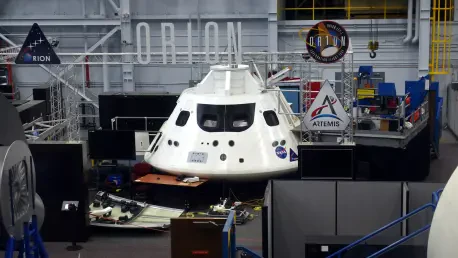
The interior of the Crew Module is a marvel of spatial efficiency, offering a pressurized environment for a four-person team. Within this capsule, the atmospheric control and thermal protection systems must work in perfect harmony to regulate internal temperatures against the vacuum of space. While the habitation features like seating and consoles are more ergonomic than their predecessors, the real innovation lies in the specialized waste management hardware, though recent missions have shown this remains a complex engineering hurdle.
The European Service Module and Propulsion
Attached to the capsule is the European Service Module (ESM), which functions as the craft’s primary power and propulsion hub. Its distinctive four-wing solar array configuration provides the electricity needed to run life support and navigation systems simultaneously. Beyond propulsion, the ESM is responsible for the crucial regulation of air and water, essentially acting as the umbilical cord that sustains the crew module during transit through the deep space void.
Guidance, Navigation, and Communications
Modern avionics allow Orion to process data at speeds far exceeding those of the space shuttles. The spacecraft utilizes advanced flight computers and high-speed communication arrays to maintain contact with Earth at lunar distances. Most notably, its optical navigation systems enable the craft to orient itself using celestial bodies, providing a necessary layer of autonomy should communication with Mission Control be severed during a critical maneuver.
Latest Developments in Deep Space Systems
Recent iterations of the spacecraft have prioritized the integration of crew-specific interfaces and ultra-high-resolution imagery hardware. These upgrades allow astronauts to monitor system health in real-time while capturing data that is vital for lunar geological surveys. Furthermore, there is a visible trend toward miniaturization, where lighter sensors and more efficient data processors allow the craft to carry more scientific payload without increasing fuel consumption.
Real-World Applications and Mission Implementations
Orion’s role in the Artemis program is multifaceted, serving as both a transport vehicle for lunar flybys and a high-velocity re-entry testbed. Recent missions have demonstrated its ability to swing around the lunar far side, reaching distances from Earth that surpass the records set during the 1970s. These flights are not merely technical demonstrations; they represent a more inclusive era of exploration, featuring diverse crews that include international partners and non-traditional backgrounds.
Operational Challenges and System Limitations
Despite its sophisticated design, Orion has faced practical hurdles, particularly regarding the reliability of external waste management lines. During live missions, engineers observed that ice blockages can impede the “lunar loo,” forcing crews to rely on backup protocols. Additionally, the psychological and physical strain of living in cramped quarters for extended periods remains a concern. Addressing these limitations, such as heat shield durability and environmental control consistency, is paramount for the safety of future multi-year missions.
Future Outlook for Deep Space Exploration
The roadmap for deep space exploration envisions Orion transitioning from simple lunar flybys to complex orbital insertions near the lunar south pole. This progression will likely see the spacecraft acting as a precursor for Mars transit vehicles, testing the long-term viability of habitation modules. As these systems mature, they will likely catalyze the commercial space sector, prompting private companies to develop compatible infrastructure for a burgeoning lunar economy.
Final Assessment of Orion Systems
The evaluation of the Orion systems revealed a spacecraft that successfully balanced heritage engineering with modern digital sophistication. While technical glitches in the plumbing and environmental hardware highlighted the difficulties of deep-space habitation, the structural integrity of the craft remained beyond reproach. These missions established a new baseline for distance and endurance, proving that the modular architecture could handle the stresses of a 250,000-mile journey. Ultimately, the technology demonstrated a clear path toward sustainable lunar operations, suggesting that the lessons learned from these early hurdles provided the necessary data to refine human survival strategies for the eventual transit to Mars.