
The transition from terrestrial traffic jams to a fluid, three-dimensional urban airspace is no longer a localized experiment but a full-scale industrial shift toward sustainable aviation. This evolution marks a departure from traditional reliance on fossil fuels, aiming to integrate high-speed, point-to-point transit into the daily lives of city dwellers. The review focuses on the current capabilities of these systems, specifically analyzing how weight, power, and regulatory frameworks intersect to determine the viability of air taxis in the modern era.
Evolution of Electric Vertical Takeoff and Landing Systems
The core of this technology lies in distributed electric propulsion, a system that spreads energy across several independent motors rather than a single large engine. This design philosophy eliminates single points of mechanical failure, which is a major safety concern in traditional rotorcraft design. By leveraging the context of Urban Air Mobility (UAM), developers have created a framework where silent, electric flight can finally coexist with dense city planning.
These systems represent a sustainable alternative to traditional helicopters, offering a quieter and more cost-effective solution for short-range travel. Within the broader technological landscape of global aviation, the emergence of eVTOLs signifies a move toward decentralized transportation networks. This shift allows for more flexible routing that does not depend on massive runways or extensive airport infrastructure.
Technical Architectures of Modern Passenger eVTOLs
High-Capacity Propulsion and Heavy-Lift Capabilities
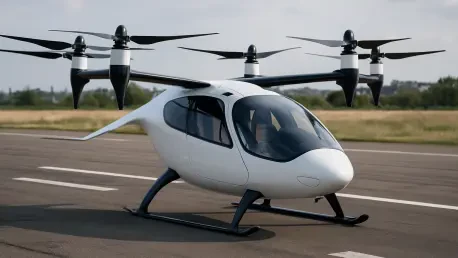
The AutoFlight Matrix serves as a benchmark for heavy-lift capabilities, proving that electric motors can indeed support a five-ton airframe. By distributing torque across multiple rotors, the aircraft achieves the vertical thrust necessary for a ten-passenger load without the mechanical complexity of a traditional gearbox. This scalability is essential for making air taxis a viable mass-transit solution rather than a niche luxury for a few individuals.
Aerodynamic Design and Flight Endurance Parameters
Flight endurance remains the primary metric for commercial success in the low-altitude sector. Achieving an hour-long duration involves balancing battery energy density with a 20-meter wingspan that provides significant glide efficiency. This high-aspect-ratio design allows the vehicle to transition from a vertical hover to a fixed-wing cruise, where power consumption drops dramatically as the aerodynamic lift of the wings takes over the primary lifting duties.
Recent Innovations in the Low-Altitude Economy
The Chinese market has become a primary catalyst for the low-altitude economy, moving faster than many Western counterparts in heavy-payload testing. This trend highlights a strategic shift toward larger, multi-passenger platforms that can serve as a genuine alternative to regional rail or bus systems. Innovation in this sector is driven by the need to optimize energy consumption while increasing the payload-to-weight ratio of the airframes.
Real-World Implementations and Operational Demonstrations
Recent demonstrations in Kunshan have proven that these aircraft can operate at noise levels significantly lower than traditional combustion engines. This acoustic signature is vital for public acceptance, as it allows for vertiports to be placed in residential areas without causing noise pollution. As the technology moves from small-scale logistics to human transport, the emphasis has shifted from simple automation to passenger comfort and rapid takeoff cycles.
Regulatory Obstacles and Infrastructure Requirements
Certification remains the most significant bottleneck for the industry today. While companies aim for full design and operator approval by 2027, the path is obscured by a lack of unified global safety protocols. Beyond the aircraft itself, the development of specialized landing infrastructure and designated low-altitude corridors is essential for managing dense air traffic safely. Public safety concerns regarding battery stability and autonomous flight logic continue to be at the forefront of the regulatory debate.
Future Projections for Urban Air Mobility Integration
Looking ahead, the transition from experimental flights to commercial services will likely hinge on breakthroughs in battery density and charging speed. A synchronized ecosystem, where aircraft communicate with smart city infrastructure, will eventually replace the current isolated prototype model. This integration will enable a seamless transportation network where air taxis provide the “final mile” of transit in the most efficient way possible.
Final Assessment of eVTOL Technology Maturity
The evaluation revealed a distinct disconnect between the maturity of flight hardware and the readiness of governmental oversight. While the engineering surpassed previous expectations for weight management and noise reduction, the lack of operational infrastructure suggested that widespread adoption would occur in stages. The analysis concluded that the focus must now move toward creating standardized safety ecosystems to bridge the gap between technical feasibility and daily public use. Early adopters focused on building the hardware, but the second phase of development required a robust legal and physical framework. It was determined that the technology was technically sound, yet the socio-political environment remained the final frontier for total integration.