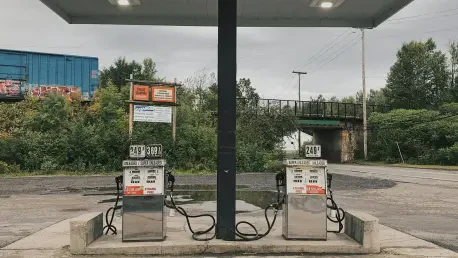

The rhythmic clicking of a gasoline pump tallying up seventy, eighty, and ninety dollars has transformed from a mundane chore into a source of profound economic anxiety for millions of American households. For decades, the internal combustion engine served as the undisputed backbone of personal mobility, but the current climate of extreme price volatility is fundamentally altering the consumer psyche. What was once a gradual trend toward alternative fuels has accelerated into a definitive mass migration as drivers seek to insulate their bank accounts from the erratic swings of global energy markets.
This transition represents more than a simple change in technology; it is a profound reimagining of the relationship between the individual and the energy they consume. While environmental concerns remain a significant factor for many, the primary engine of the current shift is undeniably financial. The realization that a single geopolitical event thousands of miles away can instantly jeopardize a family’s monthly budget has made the predictability of the electrical grid increasingly attractive to the average commuter.
Breaking the Cycle of Gas Station Sticker Shock
The next time a driver pulls up to a fueling station and finds that the price per gallon has jumped twenty or thirty cents overnight, they are witnessing the primary catalyst for the largest automotive transition in a century. These sudden spikes, often triggered by supply chain disruptions or international tensions, create a sense of powerlessness among those tethered to fossil fuels. By opting for electrified transport, a growing number of motorists are choosing to step away from this cycle of uncertainty entirely, favoring a more stable and localized energy source.
This shift is not merely a reaction to a single bad week at the pump; it is a calculated move toward long-term financial predictability in an increasingly unstable global economy. Modern consumers are beginning to view gasoline not as a necessary utility, but as a luxury commodity prone to manipulation and scarcity. By decoupling their daily commute from the price of Brent Crude, households are effectively reclaiming control over their largest recurring discretionary expense.
Furthermore, the psychological burden of “sticker shock” is driving a permanent change in purchasing behavior that persists even when fuel prices temporarily dip. Once a consumer begins to investigate the cost-per-mile of an electric alternative, the inherent inefficiency of internal combustion becomes difficult to ignore. The current market environment has acted as a high-pressure laboratory, proving to millions that the traditional fueling model is no longer compatible with modern financial stability.
Understanding the Tug-of-War: Global Oil and Domestic Power
The modern driver is currently caught between two vastly different energy systems: the erratic, globally traded oil market and the regulated, domestic electrical grid. Recent conflicts in the Middle East and Eastern Europe have underscored a hard truth—as long as a vehicle relies on internal combustion, its owner’s wealth remains tethered to international stability. This dependency leaves the American middle class vulnerable to the decisions of foreign cartels and the outcomes of distant territorial disputes.
In contrast, residential electricity prices are shielded by regulatory cycles and a diverse power mix that includes nuclear energy, domestic renewables, and natural gas. Because utility companies operate under state-level oversight, price changes are typically incremental and announced months in advance, providing a buffer that the oil market lacks. This distinction is transforming the electric vehicle from a luxury tech gadget into a strategic economic hedge for the pragmatic driver.
This domestic power structure also offers a level of resilience that oil cannot match. While a refinery shutdown or a blocked shipping lane can cause immediate localized gas shortages, the electrical grid draws from a decentralized array of sources. This diversification ensures that even as demand for power increases, the system remains anchored to domestic production and regulated pricing models, offering a sanctuary of stability in a world of volatile commodities.
The Economic Pivot: Balancing Upfront Premiums Against Life-Cycle Savings
Data from market researchers like Edmunds shows a direct, repeatable correlation between pump pain and consumer interest, with research into electrified models recently spiking to over 22% of all activity during fuel surges. While the “green premium” remains a hurdle—with many electric models costing approximately $6,000 more than their gas-powered counterparts—the long-term math is becoming impossible to ignore. Every mile driven on electricity widens the savings gap, especially as the national grid becomes more efficient and less reliant on high-cost fuels.
The long-term value proposition of an electric vehicle extends far beyond the absence of gasoline. Maintenance costs are significantly lower due to the reduction in moving parts, and the lack of oil changes, transmission repairs, and exhaust system upkeep adds up to thousands of dollars over the life of the car. Unlike a gas engine, which is fixed in its efficiency from the day it leaves the factory, an electric vehicle actually becomes more cost-effective as utility providers integrate better technology and cheaper renewable sources into the grid.
As the secondary market for electric vehicles matures, the total cost of ownership is becoming the primary metric for savvy buyers. Prospective owners are no longer looking just at the sticker price but are instead calculating the five-year and ten-year financial impact. This shift in perspective has allowed the electric vehicle to move from the periphery of the market to the center of the conversation for families looking to maximize their long-term purchasing power.
Inside the Shift: Expert Insights on Energy Security and Market Maturation
Economists like Erich Muehlegger of UC Davis have noted that electric vehicle owners are effectively insulated from the price shocks that plague traditional commuters, offering a level of household stability that gas simply cannot provide. This insulation is a form of personal energy security that ripples through the economy, as steady transportation costs allow for more predictable consumer spending in other sectors. Industry analysts view this transition as a matter of national security, suggesting that decoupling transportation from global oil reduces the nation’s overall vulnerability to foreign conflicts.
However, market experts like Kevin Ketels warned that this newfound independence required a careful build-out of domestic supply chains to be truly effective. The goal was to ensure that a reliance on foreign oil was not simply traded for a reliance on foreign battery components. To address this, the focus shifted toward domestic lithium mining and battery manufacturing, which aimed to create a completely closed-loop energy economy within North American borders.
The maturation of the market also involves the psychological normalization of charging infrastructure. As public and private charging stations became as ubiquitous as traditional pumps, the “range anxiety” that once stalled adoption began to evaporate. Experts agreed that the current wave of adoption was driven by a combination of technological readiness and a collective exhaustion with the old energy status quo, signaling a permanent change in the American automotive landscape.
Building a Personal Roadmap for the Transition to Electrified Transport
Navigating the move to electric transport required a comprehensive shift in how consumers calculated value, moving away from immediate acquisition costs and toward a total operational budget. Successful early adopters began their journey by analyzing the fuel spread, which is the difference between local gasoline prices and kilowatt-hour rates. By determining their specific break-even point based on their annual mileage, these drivers were able to justify the initial investment through clear, data-driven financial projections.
Prospective buyers also evaluated the availability of domestic incentives and tax credits that helped mitigate the upfront price disparity. These programs served as a vital bridge, making the transition accessible to a broader demographic and accelerating the decommissioning of less efficient internal combustion vehicles. Researching home charging infrastructure became the final step in securing energy independence, effectively turning a residential garage into a private gas station that operated while the owner slept.
The transition was ultimately solidified by a commitment to long-term operational predictability rather than immediate gratification. Consumers who prioritized the stability of the domestic grid positioned themselves to thrive regardless of the next global energy crisis. By adopting a roadmap focused on efficiency and localized power, the American driver successfully navigated the end of the petroleum era and entered a period of unprecedented transportation stability. In the end, the move toward electrification was not just a response to high prices, but a strategic decision to leave the era of fuel-based volatility in the past.