
Global tensions and increasingly sophisticated air defense systems have necessitated a total reimagining of how the world’s most advanced stealth bombers are designed, built, and maintained. The B-21 Raider emerges as the centerpiece of this transformation, signaling a critical pivot for the U.S. Air Force. By moving away from legacy manufacturing toward a high-speed, digital-first production model, the program ensures long-term strategic dominance while setting a new benchmark for aerospace engineering. This shift explores digital breakthroughs and open systems architecture that define the modern industrial landscape.
The Digital Backbone of Modern Aerospace Manufacturing
Metrics of Efficiency: Data-Driven Growth
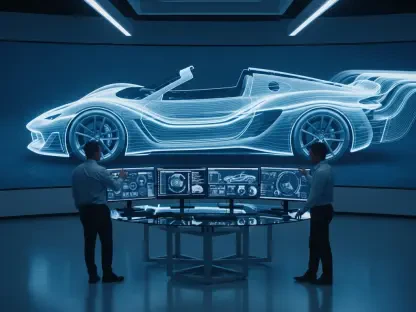
Northrop Grumman’s $5 billion investment in digital infrastructure has fundamentally altered the production timeline by facilitating advanced “digital twin” technology. This virtual mirroring allows engineers to simulate every aspect of the aircraft before a single piece of metal is cut. Consequently, software certification timelines have dropped by 50%, enabling rapid deployment of critical mission updates.
Performance correlation remains high as initial flight tests consistently outperform digital projections. This validation of virtual modeling suggests that the gap between design and reality has narrowed significantly. By relying on high-fidelity simulations, the program reduces the need for costly physical prototypes and ensures that the aircraft meets rigorous standards from the outset.
Practical Applications: Stealth Assembly
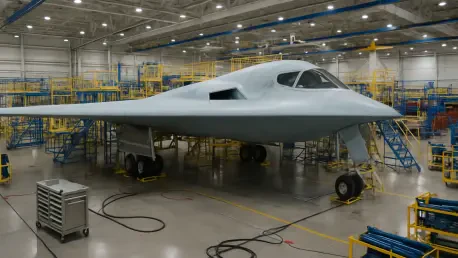
At the Palmdale facility in California, digital designs transition into physical airframes with unprecedented precision. Technicians utilize augmented reality headsets to visualize complex internal wiring and structural components during the build process. This integration eliminates assembly errors and streamlines the workflow for a workforce tasked with maintaining the highest levels of stealth integrity.
The Combined Test Force further enhances this process by integrating government and industry teams into a seamless feedback loop. Instead of waiting for post-production evaluations, the program identifies and resolves issues during the assembly phase. This collaborative environment ensures that the transition from the factory floor to the flight line is as efficient as possible.
Expert Perspectives: The Digital Thread and Procurement
Strategic Value: Open Systems Architecture
Industry leaders emphasize the “digital thread” that connects design, manufacturing, and sustainment throughout the life of the platform. A primary advantage of this approach is the Open Systems Architecture, which allows for modular hardware and software upgrades. This design philosophy ensures the B-21 remains relevant against evolving threats without requiring a complete structural overhaul.
Supply Chain Logistics: A Resilient Base
Managing a complex web of 400 providers across 40 states requires a sophisticated logistics strategy to maintain production momentum. Experts note that a resilient industrial base is vital for sustaining the high-rate production necessary for strategic deterrence. By stabilizing the supply chain, the program mitigates the risks of component shortages and ensures a steady delivery cadence.
Future Outlook: Sustainment and Strategic Deterrence
Long-Term Maintainability: Efficiency in Flight
The Raider is expected to achieve higher mission-capable rates than its predecessors, the B-2 and B-1. By prioritizing ease of maintenance from the design phase, the Air Force aims to lower operating costs while increasing the frequency of sorties. This focus on sustainment ensures that the fleet remains ready for rapid deployment in contested environments.
Technological Evolution: Integration of AI
As autonomous systems become more prevalent, the B-21 will likely serve as a hub for “loyal wingman” platforms and artificial intelligence. These integrations will expand the bomber’s sensor reach and combat effectiveness. However, the ongoing race to outpace adversary detection capabilities remains a constant challenge that requires continuous technological refinement.
Synthesizing Innovation and Strategic Readiness
Digital engineering and modularity redefined the B-21 production cycle, establishing a blueprint for future defense acquisitions. The program successfully demonstrated that collaborative testing and virtual modeling could compress development timelines without sacrificing quality. These pillars ensured that the aircraft arrived as a mature platform ready for immediate operational integration.
The strategic landscape demanded a shift toward a more agile and transparent manufacturing process. By prioritizing open architecture and digital twins, the initiative provided a scalable solution for maintaining a technological edge. The resulting infrastructure paved the way for a more resilient nuclear triad and a stronger national defense posture.