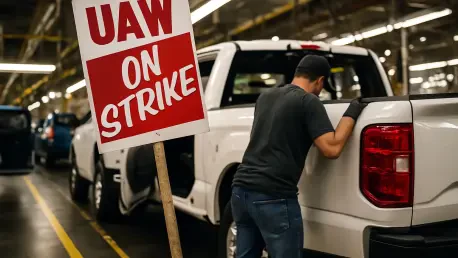

The historic “impenetrable fortress” of the American South is finally showing deep structural cracks as organized labor secures its most significant foothold in generations. While the region has long been defined by its rigid right-to-work laws and a cultural aversion to collective bargaining, the recent 96% ratification vote at Volkswagen’s Chattanooga plant signals a monumental shift. This overwhelming consensus among 5,500 workers suggests that the ideological walls protecting anti-union sentiment are being dismantled by a new generation of industrial laborers seeking economic parity.
The Changing Landscape of Southern Labor Markets
Statistical Growth and Ratification Trends
The sheer scale of the Chattanooga victory has redefined what is possible for labor in the South, moving beyond mere participation toward absolute dominance in the workplace. A staggering 96% approval rating for the new contract indicates that worker dissatisfaction has reached a tipping point, especially when compared to the narrow defeats seen in 2014 and 2019. This massive mandate provided the UAW with the leverage to secure a 20% wage hike and immediate bonuses of $6,500, creating a high-water mark for manufacturing compensation in Tennessee.
Moreover, the trajectory of membership drives has accelerated significantly since the 2024 representation vote. Unlike previous decades where interest would fizzle out after a single election, current momentum is sustained by tangible financial results that resonate with families facing rising living costs. This data suggests that the “Southern discount” for labor is rapidly evaporating as workers realize their collective value in a high-demand market.
Real-World Applications and Case Studies
The four-year deal for Atlas and ID.4 production at Volkswagen serves as a living proof of concept for union efficacy in a high-tech environment. By codifying benefits and wages, the agreement has transformed the facility from a site of corporate paternalism into a model of collaborative industrial relations. However, the path has not been entirely linear; in contrast, the Mercedes-Benz drive in Alabama faced stiffer opposition and cultural hurdles, highlighting that regional success still requires navigating localized political pressures.
Neighboring non-unionized competitors like Toyota, Hyundai, and BMW are already reacting to these developments with uncharacteristic speed. To deter their own staff from following the Chattanooga example, many of these OEMs have preemptively raised wages and enhanced benefit packages. This “shadow effect” of unionization proves that even without a formal contract, the UAW’s presence is exerting upward pressure on the entire Southern automotive corridor.
Strategic Perspectives from Industry Stakeholders
Corporate and Labor Leadership
Labor leadership is currently viewing the Chattanooga contract as the primary springboard for a $40 million organizing push intended to sweep across the remaining Southern states. By demonstrating that a major global player like Volkswagen can thrive under a union contract, organizers have stripped away the “job killer” narrative often used by local politicians. Meanwhile, Volkswagen’s corporate strategy has shifted toward a messaging of “shared commitment,” attempting to balance global profitability with the reality of a localized, empowered workforce.
Economic Analysts and Market Impact
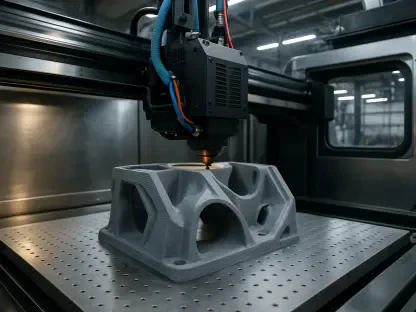
Economic experts are closely monitoring how reduced healthcare premiums and codified job security will alter the broader “business-friendly” reputation of the South. Traditionally, this reputation was built on low costs and minimal regulation, but the new model suggests a pivot toward high-skill, high-stability environments. As industrial labor becomes more expensive, analysts predict a greater emphasis on automation and advanced manufacturing techniques to maintain global competitiveness without sacrificing worker standards.
Future Projections for the Automotive Sector
The Domino Effect and EV Risks
Whether the Chattanooga victory triggers a total domino effect across Southern OEMs depends largely on the upcoming votes at rival plants. The transition to Electric Vehicle (EV) production acts as a double-edged sword in this environment, as it introduces new risks regarding job security and the need for intensive retraining protections. Workers are increasingly viewing unions not just as a means to higher pay, but as a necessary shield against the technical disruptions inherent in the shift away from internal combustion engines.
Broader Industrial Implications
A “New South” industrial model is emerging, where high-tech manufacturing and unionized labor coexist to form a more resilient economic base. This evolution suggests that the region can move past its history of low-wage competition to become a global leader in sophisticated, sustainable production. If labor and management can maintain this delicate balance, the Southern automotive corridor may soon become the most stable and productive manufacturing hub in North America.
Summary and Final Outlook
The milestones achieved through the Volkswagen-UAW agreement fundamentally altered the economic expectations for thousands of families across the Tennessee Valley. This shift in the power balance required multinational automakers to recognize the Southern workforce as a sophisticated partner rather than a cheap resource. As the industrial landscape transformed, both management and labor were forced to adopt more collaborative strategies to navigate the complexities of modern manufacturing. Stakeholders had to prioritize long-term stability over short-term cost-cutting to ensure the region’s continued growth in a competitive global market.