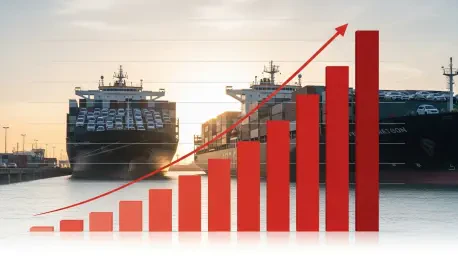

Thousands of gleaming new sedans and SUVs line the expansive docks of Shanghai and Shenzhen, waiting for a journey that signifies a tectonic shift in the global industrial balance of power. While domestic showrooms across China are seeing fewer visitors, the nation’s ports are busier than ever, moving a staggering 748,000 passenger cars abroad in a single month. This 82.4% year-on-year surge in exports represents a massive defiance of gravity, occurring even as the internal Chinese market faces its fifth consecutive month of contraction.
The industry is witnessing a historical pivot where the “New Energy” sector—comprising battery electric and plug-in hybrid vehicles—has seen exports explode by 140%. This signals a permanent shift in how Chinese manufacturers view the global stage, transforming from domestic providers into international heavyweights. This expansion highlights a strategic redirection of resources toward foreign shores to mitigate the impact of a slowing local economy.
The Domestic Chill: Why Local Demand Is Freezing Over
To understand the export boom, one must first look at the cooling climate at home, where sales have dipped by nearly 20%. The once-voracious appetite of the Chinese consumer has been dampened by a prolonged slump in the property sector and the scaling back of long-standing government subsidies that previously fueled the electric vehicle revolution.
This internal pressure has triggered a ruthless price war among local giants like BYD and Geely Auto. Consequently, international markets have become more than just an opportunity for growth; they are now a necessary survival strategy to offload excess inventory and maintain profitability in an increasingly crowded field. This focus on foreign buyers helps sustain manufacturing volume despite the lack of local buyers.
Geopolitical Catalysts: The Global Energy Squeeze
The rapid adoption of Chinese vehicles abroad is being accelerated by external forces that have made traditional internal combustion engines increasingly expensive to operate. Energy shocks and rising fuel costs, often exacerbated by regional conflicts, have created a sense of urgency in markets like Europe, Latin America, and Southeast Asia.
Previously hesitant consumers in these regions are now pivoting toward Chinese electric models as a hedge against gas price volatility. This shift allowed Chinese brands to leverage global instability to cement their status as the world’s leading suppliers of affordable “New Energy” transportation, filling a gap left by more expensive competitors.
Expert Forecasts: The 20% Growth Trajectory
Industry analysts, including specialists from UBS, maintain that the robust overseas expansion is more than a temporary trend; it is a structural transformation. This shift is capable of completely offsetting domestic weakness by tapping into diverse global demographics. With predictions suggesting total export volumes will grow by 20% or more throughout the year, experts see a clear narrative of resilience.
The consensus suggests that by successfully navigating global energy volatility, Chinese automakers effectively outmaneuvered traditional Western legacy brands. This strategy allowed them to dominate the burgeoning electric vehicle market while others struggled with supply chain transitions and high manufacturing costs.
Capitalizing on the Shift: Frameworks for Global Automotive Dominance
For manufacturers to sustain this momentum, they employed specific strategies that targeted the infrastructure gaps and economic pain points of foreign markets. This included focusing on regions with high fuel-to-income ratios and prioritizing “New Energy” portfolios that appealed to climate-conscious regulators.
By aligning production capabilities with the specific energy needs of emerging economies, these companies moved beyond simple manufacturing. They became essential partners in the global transition to sustainable mobility, ensuring that future growth was rooted in localized logistical networks and robust charging infrastructure investments. This proactive approach turned a domestic crisis into a global blueprint for market leadership.