
The gleaming chrome and flawless paint of a professionally restored classic car often obscure the monumental effort and financial investment required to achieve such perfection, leading many enthusiasts to underestimate the true cost of resurrecting automotive history. Unlike the condensed, drama-filled narratives presented on television and social media, a genuine restoration is a slow, methodical, and often unpredictable journey that demands thousands of hours of specialized labor. The sticker shock associated with these projects is not a result of arbitrary pricing but a direct reflection of a complex process that is more akin to artisanal craftsmanship and forensic investigation than a standard mechanical repair. The final price tag represents the culmination of meticulous disassembly, the painstaking correction of decades of decay, the challenging acquisition of rare components, and the application of skills that are rapidly becoming a lost art.
The Dominance of Labor in the Restoration Equation
The primary driver behind the high cost of any professional restoration is the sheer volume of highly skilled human labor involved. While a modern vehicle repair might be measured in dozens of hours, a comprehensive, frame-off restoration routinely consumes between one and two thousand hours of dedicated, hands-on work. This is a slow and deliberate process, starting with a meticulous teardown where every nut, bolt, and component, often seized by age and corrosion, must be carefully documented and removed without causing further damage. With specialized shop rates ranging from $85 to well over $300 per hour, the labor cost alone can easily escalate to between $90,000 and $200,000 before a single part or ounce of paint is purchased. This fundamental reality underscores that the client is not merely buying parts and materials; they are investing in thousands of hours of focused, irreplaceable craftsmanship.
This intensive labor commitment is perhaps most pronounced during the final stages of the build. The “last 10 percent” of the project—the exhaustive process of perfecting panel gaps, aligning intricate trim pieces, calibrating all mechanical and electrical systems, and meticulously hunting down every last squeak and rattle—is notoriously time-consuming, often accounting for up to 40 percent of the total project hours. It is this painstaking attention to detail that separates a competent build from a world-class, award-winning restoration. This phase demands an extraordinary level of patience and precision, transforming the vehicle from a collection of assembled parts into a cohesive, flawlessly functioning work of art. The hours spent here are what ensure the car not only looks perfect but also drives and feels as good as, or often better than, it did when it first left the factory floor, justifying the significant investment.
Unearthing Decades of Hidden Problems
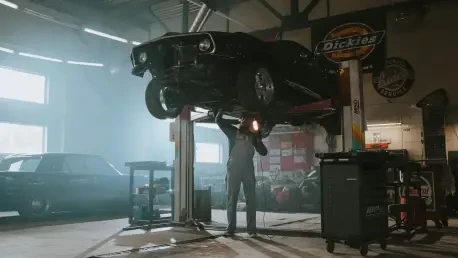
Every classic car is a time capsule, concealing a unique history of use, neglect, and often, subpar repairs that are only revealed upon complete disassembly. This initial teardown phase serves as a critical “moment of truth,” where the vehicle’s true condition is laid bare. Pervasive rust hidden beneath layers of paint and body filler, poorly repaired collision damage from decades past, and makeshift fixes like pop-riveted patch panels are the norm, not the exception. The process then becomes forensic, as technicians must act as detectives to uncover and systematically rectify these deep-seated issues. Rust repair, in particular, is a thankless but structurally essential task that can consume hundreds of hours of cutting, welding, and fabricating. While this foundational work is not visually glamorous, it is absolutely critical for the vehicle’s long-term safety and integrity.
The logistical challenge of sourcing parts and high-quality materials further complicates the restoration process and contributes significantly to the overall expense. The assumption that components for vintage vehicles are readily available is a common misconception. In reality, many original parts have been out of production for decades, creating a difficult market of rare and expensive new-old-stock items. While reproduction parts offer an alternative, their quality can be wildly inconsistent, often requiring hours of skilled labor to trim, reshape, and modify them to fit correctly. This turns a seemingly affordable component into a costly installation. Moreover, the supply chain for these specialized parts is frequently slow and unpredictable, with manufacturers sometimes waiting for a minimum number of orders before initiating a production run, causing project delays that tie up valuable shop space for weeks or months.
The Value of Scarcity and Commitment
A critical factor driving up restoration costs is the dwindling pool of technicians who possess the necessary old-world skills. The craft of a restoration specialist is fundamentally different from that of a modern automotive technician. It relies on artisanal abilities such as manual metal shaping, precision welding and fabrication, custom wiring from scratch, and the ability to apply a perfect paint finish without the aid of factory automation. These are skills honed over many years of dedicated practice and mentorship. As fewer individuals enter the trade and master these traditional techniques, the experts who possess this level of craftsmanship become an increasingly rare and valuable resource. Consequently, high-end restoration shops are not just billing for labor; they are billing for a level of expertise and experience that is a scarce and irreplaceable commodity in today’s automotive industry.
Ultimately, the cost of a restoration reflects the profound commitment a shop makes to a single, bespoke project. No two restorations are identical; each vehicle’s unique history necessitates a custom approach filled with constant problem-solving and creative adaptation, making a standardized, assembly-line process impossible. This inherent customization is fundamentally inefficient and expensive when compared to modern mass production. Furthermore, a single vehicle can occupy a service bay, specialized tools, and a master technician’s undivided attention for months or even years. Throughout this extended period, the shop must cover its fixed overhead costs, including facility rent, utilities, insurance, and payroll. This long-term allocation of the shop’s capacity and resources is necessarily factored into the project’s pricing structure, ensuring the business can sustain its operations while dedicating itself to resurrecting a piece of automotive art for future generations to appreciate.