
In a striking demonstration of strategic confidence, a leading luxury automaker has managed to secure its highest-ever revenue in India while simultaneously reporting a marginal decline in the total number of vehicles sold. This apparent contradiction is not a misstep but the centerpiece of a meticulously crafted plan by Mercedes-Benz to redefine its presence in one of the world’s most dynamic automotive markets. The company is betting its future not on the number of cars it sells, but on the unparalleled value and exclusivity of the vehicles that carry its iconic three-pointed star. This shift signals a profound understanding of India’s evolving economic and cultural landscape, where the definition of luxury is rapidly moving beyond mere acquisition to a more nuanced appreciation of performance, craftsmanship, and sustainability.
The Evolving Landscape of India’s Luxury Car Market
India’s luxury automotive sector is no longer a niche segment but a burgeoning powerhouse on the global stage, demonstrating a consistent and robust growth trajectory. As wealth generation accelerates across the nation, an expanding cohort of high-net-worth individuals is entering the market, eager to invest in premium mobility. This surge is transforming India from a market of potential into one of strategic priority for global luxury brands. The competitive dynamics are fierce, with established German marques and other international players vying for dominance in a market characterized by increasing sophistication and brand awareness.
The modern Indian luxury consumer is a distinct and discerning figure. Unlike previous generations, this demographic is digitally native, globally aware, and driven by a desire for experiences over simple ownership. Their purchasing decisions are influenced not just by a brand’s heritage but by its technological innovation, performance credentials, and commitment to environmental responsibility. This profile is shaped by rising disposable incomes that allow for aspirational purchases and a cultural shift that embraces personal expression and a high-quality lifestyle. Consequently, demand is gravitating toward vehicles that offer cutting-edge features, bespoke customization, and a clear statement of personal success.
The Strategic Pivot Analyzing the Top-End First Approach
Shifting Gears from Volume to Unprecedented Value
Mercedes-Benz has initiated a fundamental strategic pivot in India, consciously moving away from a volume-centric model to a value-focused approach centered on premiumization. The core of this “Top-End First” strategy involves prioritizing its most exclusive and high-margin products: the Top-End Vehicles (TEVs) like the S-Class and Maybach, the high-performance AMG portfolio, and its advanced Battery Electric Vehicles (BEVs). This represents a calculated decision to concentrate resources on the most profitable segments of the market.
This strategic realignment is a direct response to evolving consumer preferences. The market has shown a growing appetite for vehicles that deliver more than just transportation; today’s luxury buyers in India seek exclusivity, unparalleled performance, and a commitment to sustainability. By focusing on its most aspirational models, Mercedes-Benz aligns its offerings with these key purchasing drivers. The deliberate deprioritization of the entry-level segment is not an admission of weakness but a strategic move designed to fortify the brand’s premium positioning, enhance its equity, and secure a more resilient and profitable business model for the future.
By the Numbers How Premiumization Drove Record Performance
The financial results from 2025 offer compelling evidence of this strategy’s success. Despite delivering 19,007 units, a slight decrease from the previous year, the company achieved its highest-ever revenue in India. This outcome clearly demonstrates that prioritizing high-value sales over sheer volume can yield superior financial performance. The focus on profitability per unit has proven to be a more effective measure of success than total units sold, validating the shift toward the upper echelons of the luxury market.
A deeper analysis of the sales figures reveals where the growth is concentrated. The TEV segment, which constitutes a significant 25 percent of total sales, grew by a robust 11 percent. The demand for performance was even more pronounced, with the Mercedes-AMG portfolio experiencing a remarkable 34 percent surge in sales. The brand’s electrification efforts also gained significant traction, with BEV sales increasing by 12 percent. These figures paint a clear picture of a successful transition, where growth in high-margin segments more than compensates for the planned reduction in the entry-level space, which saw a corresponding 20 percent decline.
Overcoming Barriers in a Complex and Competitive Arena
Operating in the Indian luxury market presents a unique set of challenges, chief among them being the high import tariffs levied on completely built units (CBUs). These duties can significantly inflate the final price of a vehicle, making the most exclusive models less accessible. Furthermore, complex global supply chains often result in extended waiting periods for imported vehicles, a point of friction for eager customers. These barriers have historically limited the growth potential for ultra-luxury offerings in the country.
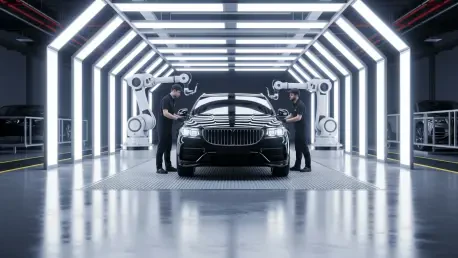
To navigate these obstacles, Mercedes-Benz has adopted a potent strategic solution: local production. The recent announcement to begin assembling the Mercedes-Maybach GLS in Pune is a landmark decision. This move drastically reduces the logistical complexities and tariff burdens associated with CBU imports, enabling the brand to shorten delivery timelines and improve price positioning. Moreover, the company is proactively tackling the challenge of a nascent EV infrastructure by launching its MB.Charge Public network. This initiative, providing access to over 9,000 fast-charging points, is designed to build consumer confidence and create a supportive ecosystem for its growing portfolio of electric vehicles.
Navigating India’s Regulatory Maze from Tariffs to Green Incentives
The regulatory environment in India plays a critical role in shaping the strategies of luxury automakers. The country’s taxation structure, particularly the significant difference in customs duties between fully imported CBUs and locally assembled kits, heavily influences manufacturing decisions. A brand’s ability to navigate this complex maze of tariffs and taxes is directly linked to its competitiveness and long-term viability in the market.
Government policies related to emission standards and incentives for electric vehicles further add to the strategic calculus. As India pushes toward a greener automotive future, brands must align their product portfolios and manufacturing processes with evolving environmental regulations. Mercedes-Benz’s dual focus on expanding its BEV lineup and localizing production demonstrates a keen awareness of this landscape. By investing in local assembly for models like the Maybach GLS, the company not only mitigates tariff impacts but also signals a deep commitment to the Indian market, positioning itself to better leverage potential future incentives for domestic manufacturing.
Building Tomorrow’s Ecosystem a Glimpse into the 2026 Vision
Looking ahead, Mercedes-Benz has charted an ambitious course for 2026, underpinned by an aggressive product offensive and a massive investment in customer experience. The company plans to introduce 12 new products, a diverse portfolio that will include all-new models, significant facelifts, and a further expansion of its BEV range. This rapid product cadence is designed to maintain market excitement and cater to the diverse tastes of India’s luxury clientele.
Supporting this product onslaught is a substantial ₹450 crore investment dedicated to enhancing the customer journey. This capital will fund the expansion of the brand’s physical retail footprint with 15 new luxury touchpoints and the comprehensive modernization of 15 existing outlets. This commitment to physical retail is complemented by a vision for a holistic customer ecosystem. The nationwide rollout of the MB.Charge network and the introduction of innovative digital financing solutions aim to create a seamless, convenient, and truly premium ownership experience from the initial point of contact through the entire lifecycle of the vehicle.
The Final Analysis a Calculated Bet on India’s Affluent Future
The evidence overwhelmingly suggests that Mercedes-Benz’s strategy in India is a deliberate and astute maneuver to capture and dominate the most profitable segment of the nation’s luxury automotive market. This is not a retreat from competition but a strategic repositioning toward a more sustainable and lucrative future. The focus has shifted decisively from a race for volume to the cultivation of unprecedented value, aligning the brand with the aspirations of a new generation of Indian consumers who prioritize exclusivity and performance.
By intertwining the localization of its most prestigious models with the expansion of a sophisticated physical and digital ecosystem, Mercedes-Benz is laying a robust foundation for sustained growth. The decision to assemble the Mercedes-Maybach GLS in India is a powerful statement, transforming the country from a mere sales destination into a strategic manufacturing hub for ultra-luxury. This integrated approach, which combines product excellence with an unwavering commitment to the customer experience, positions the brand to not only meet but exceed the expectations of India’s affluent future, ensuring its continued leadership in the market.