
The long-promised future of automobiles, where drivers can safely divert their attention from the road, has remained just over the horizon for years, often limited to luxury concepts and high-end niche vehicles. That landscape is poised for a dramatic shift following a landmark announcement at the 2026 Consumer Electronics Show. Ford revealed a strategic move that aims to leapfrog existing driver-assist technologies by introducing a true Level 3 “eyes-off” autonomous system. This ambitious plan, slated for a 2028 launch, is not just about advancing the technology itself but about fundamentally changing who has access to it. By targeting a mass-market vehicle as the debut platform, Ford is signaling a clear intention to democratize a feature once considered the exclusive domain of premium brands, potentially accelerating the public’s transition toward a new era of personal mobility and redefining consumer expectations for mainstream automobiles in the process. This move sets the stage for a critical test of whether advanced autonomy can become a commonplace feature rather than a costly option.
A Strategic Pivot to Accessibility
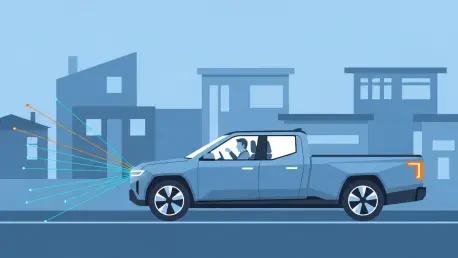
At the heart of this ambitious initiative is not a high-end sedan or a luxury SUV, but an entirely new, all-electric pickup truck conceived for the mass market. This vehicle, scheduled to begin production in 2027, is being developed on Ford’s new “Universal Electric Vehicle” platform, a versatile architecture designed to underpin a new generation of smaller, more affordable EVs. With a target price of approximately $30,000, the truck is central to the company’s strategic pivot away from large, expensive electric models toward more accessible options. By integrating its most advanced autonomous technology into a vehicle designed for widespread adoption, Ford is making a calculated gamble. The success of this strategy hinges on the company’s ability to deliver a reliable and safe Level 3 system at a price point that doesn’t alienate its target demographic. This approach directly challenges the industry convention of introducing cutting-edge features on flagship models before allowing them to trickle down to more affordable vehicles over several years.
Ford’s decision to launch this advanced technology on an affordable platform represents a significant departure from the industry’s typical trickle-down approach, which often reserves the most innovative features for luxury buyers for years. This democratization strategy could disrupt the automotive market by making high-level autonomy a key differentiator in a highly competitive segment. If successful, it could force competitors to accelerate their own development and deployment of similar systems on mainstream vehicles, ultimately benefiting consumers. However, this path is not without its risks. The immense research, development, and validation costs associated with Level 3 technology must be recouped, and balancing a low vehicle price with the expense of sophisticated sensors and software presents a formidable business challenge. The company’s ability to manage these costs and convince a broad consumer base of the system’s value and safety will be crucial in determining whether this bold vision for accessible autonomy becomes a market-defining success or a costly misstep.
The Technological Leap Forward
The forthcoming system marks a monumental leap beyond Ford’s current BlueCruise technology, fundamentally altering the driver’s role and responsibilities. BlueCruise is classified as a Level 2 “hands-free” system, which, while capable of managing steering, acceleration, and braking, still requires the driver to maintain constant visual attention on the road and be prepared to take over at a moment’s notice. Its operational scope is also limited to 130,000 miles of pre-mapped divided highways. In stark contrast, the newly announced Level 3 system will permit “eyes-off” operation, legally allowing the driver to disengage from the task of driving and engage in other activities, such as watching a movie or answering emails, under specific conditions. This advancement is powered by an in-house developed stack of hardware and software. While official specifications have not been finalized, it is widely reported that the sensor suite will incorporate lidar, a technology considered essential by many experts for providing the redundant and high-fidelity environmental perception required for safe, eyes-off autonomous driving.
Achieving true “eyes-off” capability is a far more complex engineering and safety challenge than the “hands-free” systems currently on the market. Level 3 autonomy places the responsibility for monitoring the driving environment squarely on the vehicle within its designated operational domain, a transfer of liability that carries significant regulatory and technical hurdles. The system must be able to safely handle all driving tasks and provide the driver with sufficient warning to retake control when it encounters a situation it cannot manage or when it is about to exit its operational zone. This requires a level of system redundancy and fail-safe performance that far exceeds the requirements for Level 2 assistance. Ford’s commitment to developing this technology in-house suggests a long-term strategy to control the entire technology stack, from the sensors to the decision-making software. This vertical integration could provide a competitive advantage in terms of performance, cost-efficiency, and the speed of future updates, but it also means the company bears the full weight of ensuring the system’s safety and reliability.
Navigating an Uncertain Road Ahead
Despite the groundbreaking nature of the announcement, several critical details that will determine the system’s real-world utility and accessibility remain conspicuously undefined. A key uncertainty is the scope of the system’s operational design domain. Ford has not yet clarified whether the “eyes-off” functionality will be restricted to the same divided highways as BlueCruise or if it will be expanded to include more complex environments like urban or suburban streets. An expansion beyond highways would represent a massive technological achievement and dramatically increase the feature’s value to consumers, but it would also introduce an exponential increase in complexity and potential edge cases. Furthermore, the company has remained silent on the future pricing structure for this technology. It is unclear whether it will be offered as a one-time purchase, integrated into a higher trim level, or follow the subscription-based model currently used for BlueCruise. This decision will have a profound impact on consumer adoption and the overall financial viability of Ford’s strategy to bring advanced autonomy to the masses.
Ford’s announcement at the 2026 Consumer Electronics Show ultimately positioned the company at a critical crossroads in the autonomous vehicle race. The initiative was seen as a bold attempt to redefine the market by making Level 3 autonomy an accessible feature rather than an exclusive luxury. The success of this endeavor depended not only on the technological prowess of the in-house developed system but also on the company’s ability to navigate a labyrinth of regulatory approvals, pricing strategies, and public perception. The plan to debut this technology on an affordable, all-electric pickup truck was a clear statement of intent, signaling a future where the most advanced automotive innovations were available to everyone. In retrospect, this strategic pivot was evaluated by how effectively it balanced ambition with execution. It was a move that had the potential to either cement Ford’s legacy as a leader in the future of mobility or serve as a profound lesson on the immense challenges of democratizing a technology that was still in its infancy.