
A landmark trade agreement currently being finalized between India and the European Union promises to do more than just lower tariffs; it stands poised to fundamentally re-engineer the subcontinent’s automotive industry for a new era of global competition. As the world’s largest pact of its kind for India, this Free Trade Agreement (FTA) is not merely a document of economic policy but a strategic blueprint designed to accelerate technology transfer, ignite export growth, and anchor India as an indispensable hub in the global automotive supply chain. The consensus among industry leaders is clear and optimistic: this deal could be the catalyst that propels India from a regional manufacturing power to a dominant global force.
This agreement arrives at a pivotal moment for the Indian automotive sector, which is navigating both immense opportunity and significant global headwinds. The industry has ambitious goals, aiming to elevate its component exports from $20.1 billion in fiscal year 2023 to $60 billion by 2030 and simultaneously increase vehicle exports to represent 25% of total production. The EU FTA is widely seen as the indispensable tool required to turn these ambitions into reality, offering a stable, predictable, and expansive market that can drive the next phase of industrial growth and innovation.
Europe’s Rising Star The Shift Away From American Shores
Even before the finalization of the FTA, a significant realignment in India’s automotive trade has been underway. The European Union has quietly eclipsed the United States as the single largest destination for Indian auto components, signaling a foundational shift in global sourcing patterns. Data from the Automotive Component Manufacturers Association of India (ACMA) reveals that exports to Europe reached $3.73 billion in the first half of fiscal year 2026, an impressive 11% increase from the previous year. This growth highlights Europe’s increasing reliance on the Indian manufacturing ecosystem for its quality and competitiveness.
This pivot toward Europe is contrasted by growing caution surrounding the U.S. market. Historically the largest single overseas market for Indian parts makers, the United States has become a source of uncertainty due to tariff-related pressures, including duties imposed under Section 232 and subsequent reciprocal tariffs. These trade frictions have reportedly led some American automakers to slow down on long-term sourcing commitments from India. In this context, the EU FTA offers a vital pathway for diversification, allowing Indian exporters to de-risk their operations by building deeper ties with a more stable and predictable trade partner.
Navigating a New World Order of Trade
The strategic importance of the India-EU FTA extends far beyond simple market access; it positions India as a key player in a world of reconfiguring global supply chains. As multinational corporations actively seek to diversify their manufacturing bases and reduce dependence on single-source countries, India is emerging as a compelling and reliable alternative. The agreement solidifies this “China+1” strategy by creating a more integrated and streamlined trade corridor between two of the world’s largest economies, enhancing India’s appeal as a secure and competitive hub for high-value manufacturing and engineering.
This pact provides a framework for long-term stability in an era of geopolitical uncertainty and trade disputes. By establishing clear rules, reducing non-tariff barriers, and ensuring a predictable policy environment, the FTA encourages deeper, more strategic partnerships between Indian and European firms. This stability is crucial for fostering the long-term investment needed for complex projects in areas like electric vehicle (EV) component manufacturing, advanced driver-assistance systems (ADAS), and other next-generation automotive technologies.
Unlocking the Export Superhighway to the European Union
The most immediate and tangible benefit of the FTA will be a significant surge in exports from India to the EU. With the reduction and eventual elimination of tariffs, Indian-made products, from intricate engine components to fully assembled vehicles, will become substantially more competitive in the European market. This advantage is particularly crucial for multinational automakers with a manufacturing presence in India, who will be further incentivized to use the country as a strategic export base for shipping both electric and traditional internal combustion engine (ICE) vehicles to Europe.
Several Indian vehicle manufacturers are already poised to capitalize on this enhanced market access. Companies like Maruti Suzuki, Royal Enfield, and Hero MotoCorp have been actively expanding their presence and product portfolios across the European continent, especially in the rapidly growing EV segment. The FTA will act as a powerful accelerator for these efforts, smoothing the path for Indian brands to not only enter but also compete effectively in one of the world’s most sophisticated and demanding automotive markets.
A Catalyst for Technological Leapfrogging
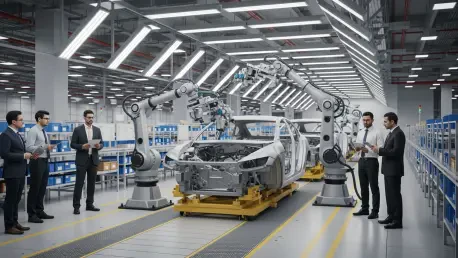
Beyond boosting trade volumes, the FTA is expected to be a powerful catalyst for technological advancement within the Indian automotive industry. As Prasanth Doreswamy, President and CEO of Continental India, has noted, the agreement will materially improve market access and accelerate the integration of Indian suppliers into complex European value chains. Lower tariffs and streamlined regulations will facilitate a more seamless flow of advanced technology, machinery, and expertise into India at a lower cost, directly enhancing the domestic industry’s manufacturing capabilities.
This deeper collaboration will empower Indian companies to move up the value chain from being simple component suppliers to becoming partners in innovation. Vinnie Mehta, Director General of ACMA, reinforces this view, stating that the pact will help Indian suppliers scale their operations globally by fostering technology partnerships and securing long-term investment. This symbiotic relationship will enable Indian firms to absorb best practices in quality control, R&D, and sustainable manufacturing, ultimately making the entire ecosystem more competitive on a global scale.
A Phased Approach to Free Trade
The implementation of the agreement is expected to be pragmatic and carefully structured to allow both industries to adapt. While complete details are still being finalized, the framework is understood to involve a system of quota-based mutual concessions for fully assembled vehicles, balancing market access with the protection of domestic industries. For the crucial auto components sector, the deal will likely implement a phased reduction in duties, providing a predictable and manageable transition for manufacturers on both sides.
This rollout is planned to occur in three distinct stages. A set of tariff reductions will become effective immediately upon the signing of the agreement, providing an instant boost to trade. A second tranche of cuts will be implemented over the medium term, followed by a final, longer-term phase spanning up to a decade. By the end of this period, duties on a wide array of components could be completely eliminated, creating a truly integrated and barrier-free trade environment for the automotive sectors of India and the European Union.
The finalization of the India-EU FTA was viewed not as an end point but as the beginning of a new chapter for India’s automotive sector. The framework provided a clear roadmap for deepening economic integration, fostering innovation, and securing a more prominent position for India in the global automotive landscape. By leveraging this transformative alliance, the industry stood ready to navigate the challenges of a dynamic global market and drive toward a future defined by growth, technological sophistication, and enhanced competitiveness on the world stage.