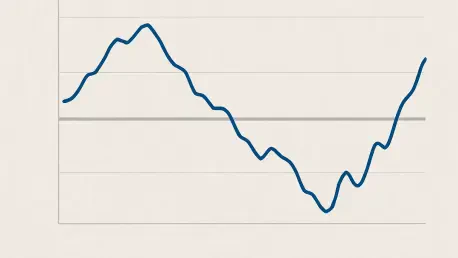

The recent upswing in manufacturing activity, reflected by positive shifts in key economic indicators like the Institute for Supply Management’s (ISM) Manufacturing Purchasing Managers Index (PMI), is being widely celebrated as a return to growth. However, for operational leaders on the facility floor, this resurgence does not signal a simple return to pre-contraction normalcy. Instead, it ushers in a far more challenging environment defined not by predictable expansion, but by intense demand variability.
The work no longer flows in a smooth, manageable stream. In today’s modern manufacturing landscape, it arrives in compressed, unpredictable waves driven by aggressive inventory replenishment cycles and persistent supply chain disruptions. This creates a volatile “stop-and-go” operational cadence where periods of frantic activity are followed by unexpected lulls. This new normal fundamentally challenges traditional, rigid operating models, particularly those reliant on fixed labor strategies, pushing them to their breaking point and creating a dangerous trap where rising revenues do not translate to proportional profitability.
Continue reading this article to explore the strategies, technologies, and operational approaches manufacturers are using to navigate unpredictable demand, minimize disruption, and turn volatility into a competitive advantage.
The Operational Friction of a Volatile Recovery
Translating macroeconomic data into tangible shop-floor challenges makes one thing clear: orders have been climbing faster than facilities can easily absorb new work, forcing plants into a reactive “chase the volume” mindset that stresses workflow and compresses planning horizons. For example, a May 2025 industry report found that manufacturing technology orders through the first 11 months of 2025 were up about 17.8 % compared with the same period in 2024, even as companies continue to face ongoing capacity constraints that limit how quickly those orders can be executed without inefficiencies.
As production activity ramps to meet elevated demand, many facilities approach effective capacity limits where additional volume doesn’t just add work, it magnifies complexity in sequencing, material staging, and uptime, creating a precarious “capacity cliff” of delays and quality issues that can erode customer trust.
Manufacturers are navigating a tough paradox: even as new and backlog orders surge, they’re still wrestling with persistent labor constraints that make hiring for growth a high-risk bet. A 2026 industry survey found that 79% of manufacturing leaders identify skilled labor shortages as the single biggest challenge, underscoring that many firms are reluctant to add permanent payroll when talent is scarce and costly to secure, opting instead for overtime and productivity gains from existing teams to keep up with demand. At the same time, supply chains are being tested by slower material deliveries, with the Institute for Supply Management noting that its supplier deliveries index rose above 50, indicating lengthening lead times, in early 2026 even as orders climbed. This dual pressure (the execution gap between rising workloads and limited staffing plus erratic supplier performance) exacerbates operational stress, raises the risk of fatigue-related errors, and strains morale across production floors that are already stretched thin.
Shifting Toward Agility and Precision
The inadequacy of fixed operational models in this volatile environment necessitates a fundamental strategic shift toward agility. The traditional trade-off, either staffing for peak demand and suffering crippling inefficiency during lulls, or staffing for average demand and relying on costly overtime during surges, is no longer viable. A more resilient approach involves creating a hybrid “Core + Flex” model. This strategy maintains a stable, highly-skilled core workforce responsible for critical functions and institutional knowledge, supplemented by a flexible layer of on-demand, qualified operators. This allows a facility’s labor capacity to scale dynamically with the actual daily workload, precisely aligning labor costs with revenue-generating activity. By breaking the binary constraints of traditional hiring, organizations can handle unexpected order surges without resorting to mandatory overtime, thereby protecting the core team, safeguarding quality, and preserving operational stability even in the face of unpredictable demand swings.
Beyond labor flexibility, achieving true operational resilience requires a deep investment in precision engineering and data-driven process control. Advanced manufacturing systems, including automated quality control with optical sensors and AI-driven analysis, can detect dimensional variations in real-time, drastically reducing inspection time while improving accuracy. Similarly, implementing computer-controlled processes for critical steps like heat treatment ensures uniform quality, resulting in components with more predictable wear characteristics and a longer operational lifespan. This commitment to quality must begin upstream with rigorous raw material analysis, preventing defective materials from ever entering the production cycle and significantly reducing scrap rates. By integrating these technologies, manufacturers can build a foundation of quality and consistency that is less susceptible to the disruptions caused by demand volatility, ensuring that increased throughput does not come at the expense of product integrity.
Taking Predictive Operations From Firefighting to Foresight
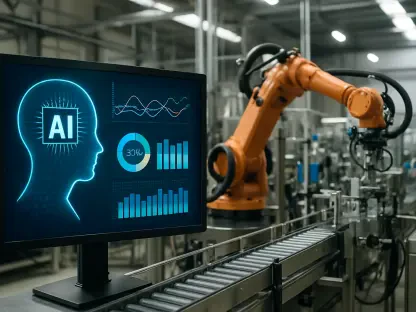
The most talked-about shift in manufacturing right now is predictive operations powered by AI-driven analytics, not just more dashboards, but fewer surprises. AI tools are increasingly used to detect maintenance risks, quality issues, and demand patterns before they disrupt production. For example, real-time data analytics in manufacturing can predict equipment failures before they occur and enable computer-vision systems to anticipate quality defects, allowing teams to intervene proactively rather than reactively.
Instead of scrambling when a machine breaks or a schedule collides with a late delivery, manufacturers are deploying models that forecast risk windows and recommend next-best actions, compressing decision time and reducing operational disruption. By shifting to an anticipatory operating posture, facilities can trade firefighting for foresight, with early alerts and optimized task prioritization helping them stay ahead of volatile demand swings.
Charting a Course for Resilient Growth
The path forward required a strategic pivot from rigid, long-term planning to a more dynamic and adaptive operational framework. By recognizing that demand volatility was not an anomaly but the new market standard, organizations were able to rethink their approach to capacity and resource management. The implementation of hybrid labor models, which blended a stable core workforce with a flexible, on-demand talent pool, proved instrumental. This approach allowed facilities to scale their operations in direct response to real-time workloads, preserving schedule integrity and protecting the core team from the strain of excessive overtime. This tactical flexibility ensured that increased revenue translated directly into improved bottom-line profitability rather than being consumed by inefficiency.
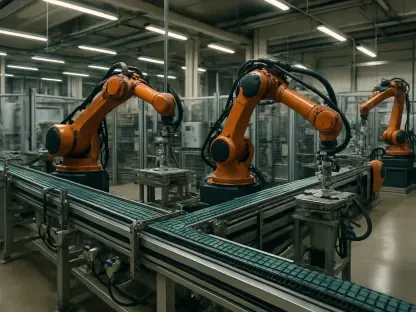
This operational agility was further enhanced by a deep commitment to process excellence and technological integration. Investments in advanced automation, real-time quality control systems, and data-driven supply chain management created a more transparent and responsive production environment. By embracing these principles, manufacturers successfully navigated the complexities of the market recovery. They built resilient systems capable of absorbing shocks and capturing growth opportunities without sacrificing stability or margins, ultimately establishing a new blueprint for success in an inherently unpredictable landscape.