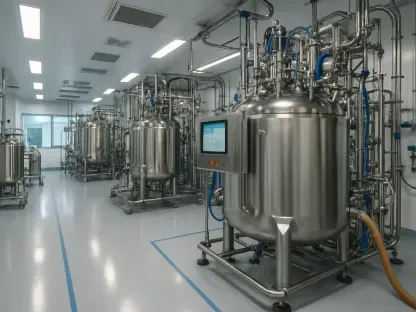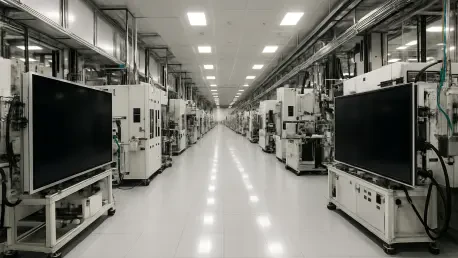

A profound and accelerating structural transformation is underway within the global display manufacturing industry, signaling the definitive end of an era for legacy Liquid Crystal Display (LCD) production. Once considered strategic assets at the heart of the consumer electronics world, aging LCD manufacturing facilities, or fabs, are now being systematically offloaded by the very companies that pioneered the technology. However, these are not distressed sales of obsolete factories. Instead, they are being eagerly acquired by semiconductor giants in what has become a modern-day gold rush. This is not a hunt for precious metals, but for a far more critical resource in the age of Artificial Intelligence: pre-existing, ultra-clean manufacturing space. The most valuable component of an old LCD fab is no longer its panel-making equipment, but the pristine, controlled environment it houses, providing a vital shortcut for an industry racing to meet the voracious demand for computing power.
An Economic Model Rendered Obsolete
The primary force driving this mass exodus from the LCD market is the complete economic collapse of the business model for older-generation fabs. These facilities are caught in a perfect storm of chronically depressed panel prices, a market saturated by hyper-efficient Chinese manufacturers, and their own high, inflexible cost structures. A significant portion of their operational expense is tied to the immense capital expenditure required for specialized machinery and, most critically, the construction and maintenance of massive cleanroom complexes. The burden of depreciation on this multi-billion-dollar equipment alone can account for as much as one-third of the total manufacturing cost. With revenue from panel sales plummeting, this fixed cost becomes prohibitive. Furthermore, with labor costs representing a negligible fraction of overall expenses, workforce reductions offer minimal financial relief, leaving these businesses with few avenues to cut costs and rendering them unsustainable without significant government subsidies or unparalleled supply chain efficiencies.
In response to these market realities, major industry players in Japan, Korea, and Taiwan are not merely downsizing; they are executing a full-scale strategic retreat from the traditional LCD sector. This is a deliberate corporate pivot away from a commoditized market to focus on higher-margin, technologically advanced products. In a landmark move, LG Display sold its majority stake in a major Chinese LCD production line and its entire module plant, using the proceeds to double down on its leadership in OLED displays. Samsung has gone even further, completely exiting the LCD panel manufacturing business and selling its last remaining plants. Even historically dominant players like Sharp are facing immense pressure, being forced to halt production at one of its key factories. In a move that is particularly symbolic of this industrial shift, Sharp’s iconic 10th-generation Sakai plant is now being shut down and repurposed into an AI data center, cementing the transition from display manufacturing to the infrastructure of advanced computing.
The Rise of the Repurposed Fab
The decline of the legacy LCD industry has created a golden opportunity for the semiconductor sector, which is facing a critical shortage of production capacity. The AI revolution has ignited an unprecedented and explosive growth in demand for advanced chips, high-performance computing, and related technologies, leading to a global scramble for fabrication and packaging capacity. Building a new semiconductor fab is an incredibly time-consuming and expensive process, with the cleanroom being one of the most complex and costly components. Older LCD fabs offer a unique and compelling solution: they provide ready-made, large-scale cleanroom environments that can be retrofitted for chip production far more quickly and cheaply than building a new facility from the ground up. What were recently considered low-demand industrial spaces during the pandemic have suddenly become one of the scarcest and most valuable industrial assets on the market today, offering a vital shortcut for chipmakers to expand their operations.
This symbiotic relationship—the decline of one industry fueling the rise of another—has turned decommissioned LCD fabs into highly coveted assets. Semiconductor giants such as TSMC, Micron, ASE, and SK Hynix are actively acquiring these facilities, not for their outdated display equipment, but for their existing cleanroom infrastructure. This trend illustrates a profound shift in how industrial assets are valued; the underlying real estate and specialized infrastructure of an LCD fab are now more valuable to a chipmaker than the display-making business itself. The volatility and opportunity of this new landscape are perfectly encapsulated by the experience of Stratacache, which acquired a fab for MicroLED production only to face significant delays in sourcing necessary equipment. The very semiconductor boom that made the fab available has also consumed the manufacturing resources needed for its new purpose, demonstrating just how profoundly AI-driven demand has altered the valuation and competition for industrial assets.
A New Global Manufacturing Map
This transformation is dramatically reshaping the global manufacturing landscape and redrawing supply chains. As pioneering firms from Japan, Korea, and Taiwan exit the market, Chinese companies like TCL CSOT are rapidly consolidating the industry. Today, over 90% of all LCD modules are produced in China by a very small number of suppliers, creating a level of market concentration not seen in other display segments and cementing the nation’s dominance in panel production. While this core manufacturing activity becomes heavily centralized, other parts of the value chain are becoming more geographically diverse. High-value activities like product design and management often remain in the traditional technology hubs of Korea, Japan, and Taiwan, while software development is frequently handled in established centers like India and Poland, reflecting a strategic global distribution of labor and expertise.
The final stage of the manufacturing process—product assembly—has been particularly affected by this realignment, with its location now largely dictated by global trade policies and tariff structures. This has led to a highly strategic geographic placement of final assembly plants to optimize costs and market access. For instance, professional displays destined for the European Union are often assembled in Slovakia, Hungary, or Poland to navigate regional trade rules. Similarly, products intended for the North American market are typically completed in Mexico. Meanwhile, monitors that do not include TV tuners, which face lower import duties in the EU, are increasingly being assembled in Southeast Asian nations such as Vietnam, Indonesia, and Malaysia. This intricate logistical map highlights how geopolitical and economic factors are shaping a new, more fragmented, and strategically complex global supply chain in the wake of the LCD industry’s historic shift.