
Confronted by a complex landscape of economic instability, volatile supply chains, and evolving workforce dynamics, manufacturers across the Asia-Pacific region are making a decisive pivot toward intelligent technologies to not only survive but also redefine their competitive edge. A recent study reveals an overwhelming consensus, with a staggering 94% of regional manufacturers planning to maintain or increase their investments in artificial intelligence and machine learning. This strategic embrace of smart manufacturing is no longer a futuristic concept but a present-day imperative, as companies prioritize advancements in quality control, cybersecurity, and operational optimization to build resilience and drive sustainable growth in an increasingly uncertain global market.
1. Leveraging AI for Quality Control and Process Optimization
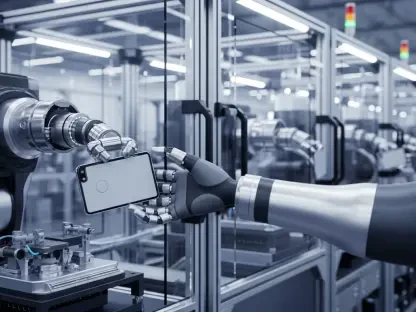
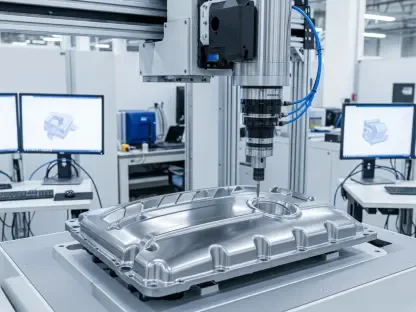
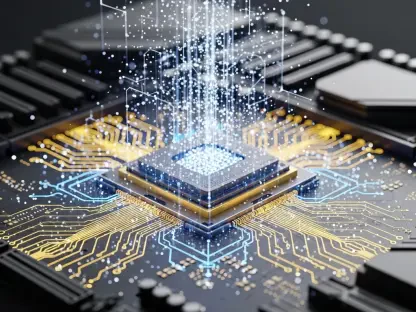
In high-stakes industries like electronics and semiconductor production, where precision is paramount, artificial intelligence is emerging as a transformative force for achieving unparalleled consistency and minimizing costly defects. Marcelo Tarkieltaub, a regional director at Rockwell Automation, highlights that AI is fundamentally changing precision manufacturing by converting vast amounts of data into a tangible competitive advantage. Manufacturers throughout Asia are now embedding AI directly into their production lines to elevate quality standards, ensure product uniformity, and enable predictive decision-making that anticipates issues before they arise. A prime example is the use of tools like FactoryTalk Analytics VisionAI, which provides real-time defect detection on the factory floor. This technology can identify minuscule imperfections, such as dents in canning operations, and automatically trigger maintenance alerts, preventing widespread quality issues and reducing waste. The core principle of this integration is not to replace human workers but to augment their capabilities. AI acts as a powerful assistant, simplifying complex decisions, improving production yields, and freeing skilled technicians to concentrate on higher-value tasks such as innovation and process improvement. This symbiotic relationship between human expertise and machine intelligence is the cornerstone of the modern smart factory.
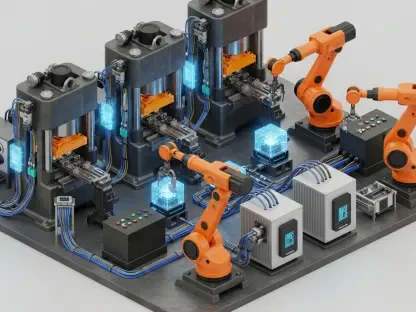
The strategic implementation of AI extends beyond simple defect detection, aiming for a structural advantage that permeates the entire value chain. Arun Biswas of IBM Consulting APAC emphasizes that leading organizations are moving to embed AI into every facet of their operations, from initial design and engineering to logistics and supply chain management. This holistic approach is supported by a foundation of modern cloud infrastructure, integrated data systems, and robust cybersecurity protocols. By doing so, companies can transition AI from a tool for incremental efficiency gains to a driver of fundamental transformation through technologies like predictive maintenance, digital twins, computer vision, and self-optimizing operational systems. To achieve this, organizations must first audit their existing data sources, with many planning to utilize current data for enhanced quality monitoring. Following this assessment, the next step involves investing in sophisticated, AI-driven systems governed by clear and strong policies. This methodical approach not only slashes rework costs and boosts product reliability but also solidifies a manufacturer’s competitive position in markets where precision and quality are non-negotiable.
2. Building Resilient Supply Chains Amid Volatility
Persistent trade uncertainties, the ongoing trend of reshoring manufacturing, and heightened geopolitical tensions have created a volatile environment that demands more intelligent and adaptive supply chain strategies. External pressures such as inflation and sluggish economic growth are now cited as the primary obstacles for a significant portion of manufacturers, compelling them to turn to artificial intelligence for its predictive analytics capabilities. Marcelo Tarkieltaub notes that resilience in modern supply chains is no longer achieved through simple redundancy but through intelligence. Across Asia, manufacturers are deploying AI to bridge the gap between insights generated on the plant floor and strategic decisions made in the boardroom. This connectivity allows them to anticipate risks more accurately and respond with greater speed and agility. By applying predictive analytics and machine learning algorithms to production and logistics data, companies can forecast potential material shortages, identify logistical bottlenecks, and proactively rebalance resources to avert disruptions before they impact operations. This data-driven foresight is becoming essential for navigating the complexities of the global marketplace.
While technology is a critical enabler of supply chain resilience, the human element remains indispensable. As automation becomes more prevalent, manufacturers are focusing on upskilling their teams to interpret AI-generated insights and coordinate complex, cross-functional decisions. AI is not replacing supply chain expertise; it is amplifying it by providing professionals with more powerful tools for analysis and planning. This view is reinforced by Arun Biswas, who advocates for scaling AI across the entire digital core of the enterprise to enhance predictive capabilities. Supporting this perspective, Raju Chellam, a prominent figure in Singapore’s IT standards community, points out that AI can be deployed for comprehensive supply chain mapping, visibility, and real-time risk monitoring. He highlights that disruptions are becoming more frequent, costing companies a substantial portion of their profits over time. To counter this, he suggests that companies focus on using AI tools to map multi-tier supply chains, implement digital twin technology with IoT sensors for end-to-end visibility, and combine AI with scenario planning to anticipate and prepare for future disruptions. By prioritizing cloud-based systems that integrate these AI tools, manufacturers can achieve the real-time visibility needed to mitigate risks and ensure smoother, more reliable operations.
3. Addressing Labor Shortages and Skills Gaps
Asia’s diverse demographic landscape, which includes aging populations in countries like Japan and South Korea alongside rapidly growing markets such as India, has intensified challenges related to labor shortages and skills gaps. In response, a significant number of businesses in the APAC region see AI and machine learning as a crucial solution, with many introducing technology specifically to create more engaging and higher-value jobs. Globally, a common strategy is to combine AI and automation to fill workforce gaps, while a vast majority of companies are now prioritizing analytical thinking and strong communication skills in their recruitment efforts. Marcelo Tarkieltaub observes that AI and automation are empowering manufacturers across Southeast Asia to address these workforce challenges by enabling their employees to work smarter and more safely. In markets contending with both talent shortages and rapid industrialization, striking the right balance between technology and human talent has become critical for sustained success.
AI is increasingly functioning as a “talent multiplier” by automating repetitive, data-intensive tasks, thereby allowing human workers to shift their focus toward more strategic roles that require problem-solving, creativity, and optimization. Technologies like digital twins, AR/VR-enabled training modules, and low-code development platforms are helping to close the skills gap by making complex industrial systems more intuitive and accessible, which in turn boosts the digital confidence of the workforce. Arun Biswas echoes this sentiment, stressing the need to evolve the workforce around a model of human-AI collaboration. He argues that the sustainable adoption of these technologies depends on robust reskilling initiatives and effective change management. As roles shift toward higher-value activities like supervision and decision support, manufacturers that invest early in AI literacy and cross-functional skills will be able to scale their operations faster and with less internal resistance. Raju Chellam complements this by recommending a focus on strategic robot deployment and AI-assisted workforce augmentation. He suggests a phased approach: first, automate the most repetitive manufacturing tasks; second, implement predictive systems for better workforce planning; and third, develop comprehensive upskilling programs centered on AI collaboration skills. This strategic approach can help bridge workforce gaps, turning potential shortages into opportunities for innovation and enhanced productivity.
4. Integrating AI Into Cybersecurity Defenses
As manufacturing operations become increasingly digitized and interconnected, the threat of cyberattacks has grown exponentially, making cybersecurity a top-tier risk for businesses globally. Within the APAC region, an overwhelming majority of manufacturers recognize the critical importance of strong cybersecurity practices. However, a notable portion still faces challenges, including an underestimation of the risk by leadership. Consequently, a significant number of regional manufacturers now view cybersecurity as a key use case for artificial intelligence. Marcelo Tarkieltaub warns that as companies connect more systems across their information technology (IT) and operational technology (OT) environments, the potential attack surface has expanded dramatically. In this new reality, AI is becoming an essential tool for building cyber resilience directly into the DNA of manufacturing operations. This technology plays a dual role in modern defense strategies. AI-driven monitoring tools can meticulously analyze network traffic, detect anomalies that may signal a threat, and initiate an automated response to contain the issue before it causes significant disruption.
Furthermore, predictive algorithms can identify unusual patterns in machine behavior or unauthorized access activity, allowing security teams to mitigate risks before they escalate into costly downtime or data breaches. However, technology alone is not a panacea. True cyber resilience must be built on a foundation of workforce readiness. Simulation-based training and real-time threat visualization dashboards empower employees to act as the first line of defense, recognizing and reporting suspicious activity. Arun Biswas reinforces this by stressing the importance of integrating cybersecurity and AI governance from the very beginning of any digital transformation initiative. As AI becomes more business-critical, a “governance-first” approach—covering data integrity, identity management, model oversight, and auditability—is essential to manage risk effectively and prevent the rise of unsecured “shadow AI” systems. Adding to this, Raju Chellam suggests implementing a layered, AI-powered defense system coupled with mandatory workforce upskilling. He advocates for deploying AI for real-time threat detection, implementing a zero-trust architecture enhanced with AI behavioral analytics, and making cybersecurity training obligatory for all staff, suppliers, and partners. By integrating AI into the core IT/OT architecture and conducting regular training, manufacturers can fortify their defenses against escalating cyber threats and ensure operational continuity.
5. A Holistic Strategy for Resilience and Growth
In today’s competitive landscape, sustainability has transitioned from a corporate social responsibility initiative to a core driver of operational efficiency. A majority of APAC manufacturers now pursue sustainability primarily to improve their bottom line by reducing emissions, minimizing waste, and lowering operating costs. This strategic alignment is further supported by AI, which plays a pivotal role in tracking emissions and optimizing resource consumption throughout the manufacturing process. For long-term success, sustained competitiveness will depend on how effectively manufacturers can connect technology, people, and purpose. The goal is to build intelligent, adaptive, and responsible operations capable of thriving in an environment of constant uncertainty. Across Asia, AI is being embedded into core production and supply chain systems, transforming raw data into actionable, real-time insights that improve quality, energy efficiency, and overall asset performance. This integrated approach, where sustainability goals are directly linked to operational improvements, is becoming a hallmark of leading manufacturers.
To secure long-term competitiveness, Asian manufacturers must treat AI not as a series of isolated pilot projects but as a comprehensive, enterprise-wide transformation. Arun Biswas outlines four key shifts necessary for this transition: scaling AI across the entire value chain, evolving the workforce to excel at human-AI collaboration, integrating cybersecurity and governance from day one, and embedding sustainability directly into operations and ecosystems. AI can optimize energy usage, reduce material waste, enhance environmental monitoring, and extend sustainability standards across supplier networks, effectively turning sustainability into a lever for both performance and growth. Raju Chellam advocates for a simultaneous integration of four pillars: AI-driven operations, workforce transformation, cyber resilience, and clear sustainability metrics. He points to trends indicating that a majority of manufacturers will soon leverage hyperscaler ecosystems to build and scale new AI solutions. By embedding AI across the value chain, prioritizing sustainability integration, and developing collaborative ecosystems, manufacturers can achieve a holistic resilience that drives sustainable growth and prepares them for the challenges of tomorrow.
6. Redefining the Human Role in a Digital-First Workforce
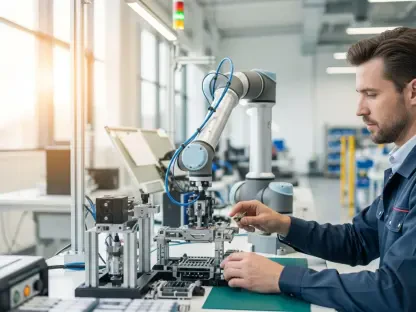
The rise of smart manufacturing has ignited a crucial conversation about the future of work, yet evidence suggests that this technological revolution amplifies human potential rather than diminishing it. Smart transformations inherently require more skilled people, not fewer, with organizations actively planning to hire new talent and retrain their existing workforce to meet the demands of a digitized factory floor. Marcelo Tarkieltaub describes this evolution as a reshaping of the relationship between people and production. AI is providing workers with better insights, faster decision-making tools, and a safer, more meaningful work environment. On the factory floor, AI now handles many of the repetitive, data-intensive tasks such as quality inspection, complex scheduling, and real-time process adjustments. This automation liberates human workers to focus on strategic functions where their judgment, creativity, and problem-solving skills remain irreplaceable, including process optimization, innovation, and proactive maintenance. This shift elevates the role of the factory worker from a manual operator to a strategic overseer of intelligent systems.
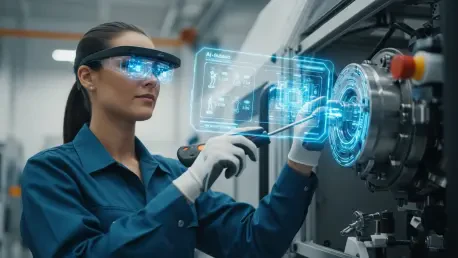
In the Asia-Pacific region, the concept of a “digital-first” workforce is taking hold, characterized by a blend of technical fluency, adaptability, and a collaborative mindset. Workers are increasingly expected to interact seamlessly with smart systems, interpret data from complex dashboards, and collaborate with a range of connected technologies. The transition to this new way of working is being facilitated by a new generation of tools, including digital twins that create virtual replicas of physical assets for training and simulation, AR-based guides for maintenance and repair, and low-code platforms that allow non-technical teams to build and deploy automation solutions. These technologies are making the transition easier and more accessible, ensuring that the benefits of smart manufacturing can be realized across the entire organization. This evolution underscores the critical need for continuous investment in human capital, ensuring that technology serves as a powerful enabler of human ingenuity rather than a replacement for it. The synergy of AI, human creativity, and strategic investment clearly paves the way for a more resilient and sustainable future in manufacturing.