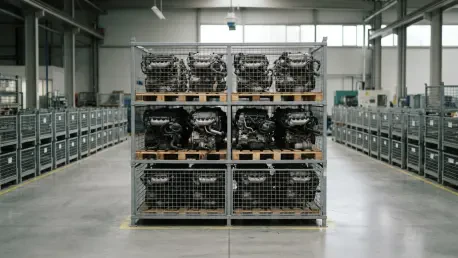

Logistics teams can now identify exactly where assets are accumulating and where shortages are likely to occur by using a continuous digital overview of inventory. This shift comes at a critical juncture for the automotive sector, which remains one of the most complex supply chain environments in 2026. Thousands of specialized load carriers—ranging from custom engine racks to standard plastic pallets—circulate through a high-velocity network of assembly plants and external suppliers. Historically, these items were managed through a chaotic mix of phone calls and spreadsheets, leading to a perpetual state of inventory uncertainty. When visibility fails, manufacturers often resort to over-purchasing equipment or suffer from production delays caused by localized shortages. The integration of Bluetooth Low Energy (BLE) tracking has fundamentally altered this landscape, providing the granular data necessary to maintain a truly synchronized flow of materials among all stakeholders in the global logistics chain.
Technical Architecture: The Hybrid Networking Model
The core of this logistical transformation is a hybrid tracking architecture designed specifically for large-scale deployment within industrial settings. Unlike traditional GPS systems, which are often too expensive to install on every single rack or container, BLE utilizes a tiered hardware approach that balances performance with cost. The system consists of compact, energy-efficient BLE beacons attached to every asset, static gateways placed at fixed points like loading docks, and a select number of mobile gateways. These mobile units act as moving hubs, collecting signals from nearby beacons and transmitting the aggregated data via cellular networks. This hybrid infrastructure creates a mesh effect that allows for continuous tracking even when assets are in transit or located at partner sites that lack permanent infrastructure. By using inexpensive beacons for the majority of the fleet, the system provides comprehensive visibility at a fraction of the cost of cellular trackers.
This tiered hardware approach ensures that the return on investment remains high even when tracking hundreds of thousands of individual assets. Static gateways at regional hubs provide chokepoint visibility, recording exactly when a load carrier enters or exits a facility, while the mobile gateways bridge the gaps during long-haul transport. Furthermore, the energy efficiency of BLE technology means that trackers can remain operational for several years without battery replacement, reducing the maintenance burden on logistics teams. This technical reliability is essential for 2026 operations, where automated assembly lines rely on the precise arrival of components. The ability to monitor asset location without the power drain of constant cellular pings has made large-scale digitization not only possible but sustainable. By leveraging existing infrastructure and low-cost hardware, automotive firms have finally moved beyond the constraints of legacy tracking systems to achieve a truly ubiquitous digital presence across their fleets.
Strategic Implementation: The Road From Pilot To Scale
Transitioning to an automated tracking system is most effective when managed as a phased rollout, allowing organizations to refine their internal processes before a global deployment. A typical implementation begins with a pilot program involving a small number of locations, such as a single manufacturing plant and two key suppliers. During this phase, a representative sample of load carriers is equipped with beacons to observe how they navigate the existing supply chain. This small-scale start allows an organization to experience the tangible benefits of the system and refine its internal processes without a massive initial investment or operational disruption. The pilot phase serves as a proof of concept, demonstrating how real-time data can replace the guesswork and firefighting associated with traditional inventory management methods. This period is also vital for technical calibration, ensuring that gateway placement and signal strength are optimized for the physical layout.
Securing internal buy-in is a critical component of this early phase, as logistics managers and floor supervisors must see their specific workflows reflected in the new digital interface. By demonstrating how the platform identifies hidden inventory or prevents the misrouting of containers, the technology gains the trust of the personnel who will use it daily. This bottom-up adoption is often more successful than top-down mandates, as it addresses the practical pain points of the workforce. Moreover, the data gathered during a pilot program provides the necessary evidence for capital expenditure approval for a wider rollout. In the 2026 landscape, where budgets are scrutinized for efficiency gains, the ability to show a direct correlation between tracker deployment and reduced asset loss is invaluable. Once the initial value is proven, organizations can move confidently toward full-scale integration, knowing that the system is calibrated to their unique operational requirements and that the staff is prepared for the digital shift.
Operational Automation: Exception Management In Practice
Once the BLE system is fully operational, it eliminates the need for manual reconciliation and provides a continuous overview of inventory levels by location. Logistics teams no longer have to search for equipment or conduct exhaustive manual audits; instead, they can see exactly where assets are accumulating in real time. This transparency enables a shift toward exception-based management, where the system uses automated triggers to alert staff only when specific issues arise that require human intervention. For instance, if a specific zone in a warehouse exceeds its maximum capacity for empty racks, the system generates an immediate notification. This approach drastically reduces the cognitive load on logistics professionals, who can now ignore the assets moving correctly and focus entirely on correcting bottlenecks. By automating the monitoring of thousands of units, the system transforms the logistics department from a reactive search party into a proactive oversight team.
These automated triggers extend to critical metrics such as dwell time violations, which notify managers if a carrier remains at a supplier site for longer than the agreed-upon duration. Such visibility prevents asset hoarding, where suppliers might keep extra containers to simplify their own shipping schedules, often at the expense of the manufacturer. Additionally, the system monitors minimum stock thresholds, flagging potential shortages before they have the chance to impact production schedules on the assembly line. The system also identifies delayed returns by tracking when a carrier leaves a supplier but fails to arrive at the plant within the expected window, allowing for rapid investigation into potential transport disruptions. These automations provide immediate operational relief, allowing the workforce to focus on high-value problem-solving rather than rote data entry. In the fast-paced environment of 2026, these minutes saved in identifying a problem translate directly into improved throughput.
Fleet Optimization: Leveraging Circulation Data For Efficiency
Beyond daily operational gains, the long-term value of BLE tracking lies in the deep circulation data it generates over months of continuous operation. By analyzing thousands of asset movements, the system reveals the true pulse of the supply chain, identifying patterns that were previously invisible to human observers. Organizations can identify the exact turnaround time between a carrier’s dispatch and its eventual return, providing a clear picture of the cycle time for different routes. These insights often reveal significant discrepancies between theoretical logistics planning and actual field performance, such as hidden bottlenecks at specific supplier sites or inefficiencies in regional transport loops. For example, data might show that a specific rack design consistently takes 20% longer to return from a specific region, prompting an investigation into local handling procedures. This level of granularity allows companies to move from estimated planning to reality-based logistics strategies.
The adoption of BLE tracking standardized the way manufacturers managed their assets and eliminated the reliance on manual data entry. To move forward, logistics leaders analyzed their existing loss rates and targeted high-velocity routes where visibility gaps were most damaging. They found that engaging with load carrier manufacturers early in the procurement process allowed for the integration of sensors at the source, ensuring units were “born digital.” This proactive approach allowed companies to reduce their total fleet size by optimizing turnaround times and identifying underutilized equipment. As these organizations moved toward a more automated future, they focused on using circulation data to drive sustainability initiatives and reduce the carbon footprint of their transport cycles. The journey toward a fully transparent network proved that real-time data was the most effective tool for navigating the complexities of modern automotive supply chains, providing a clear path to operational excellence.