
Kwame Zaire is a veteran of the manufacturing sector whose work bridges the gap between historical engineering and cutting-edge industrial innovation. As a thought leader in production management and sustainable operations, he has spent years analyzing how industrial giants like BMW manage the intricate lifecycles of their products. His expertise is particularly relevant in the realm of “heritage manufacturing,” where he explores how maintaining a catalog of 60,000 components for vehicles dating back to 1952 informs modern circular economy strategies. By examining the intersection of predictive maintenance, reverse engineering, and resource efficiency, Kwame provides a unique perspective on how the automotive industry can move toward a future that values longevity as much as innovation.
The following discussion explores the logistical complexities of managing massive vintage inventories, the role of 3D printing in reviving discontinued parts, and the shift from linear production to a “design for circularity” philosophy. We delve into the practicalities of secondary material integration and the specialized training required to maintain global quality standards across decentralized workshops.
Managing a catalog of over 60,000 components for vehicles dating back to 1952 involves immense logistical coordination. How do you balance high storage costs with the need for global availability, and what specific steps are involved in reverse engineering complex items like vintage gearboxes with original suppliers?
The logistical dance of managing 60,000 unique parts requires a sophisticated inventory management system that treats historical components with the same urgency as modern ones. We balance storage costs by using data-driven forecasting to predict the needs of collectors worldwide, ensuring that rare components are available without over-stocking. When a critical part like a BMW 328 gearbox is no longer in stock, we engage in a meticulous reverse engineering process that begins with accessing our deep archives for original technical drawings. We then collaborate closely with original suppliers, using their historical knowledge alongside our current standards to ensure the recreated part feels and functions exactly like its mid-century predecessor. It is a labor-intensive journey that transforms a museum piece back into a functional, mechanical heart for a road-going vehicle.
Utilizing 3D printing and CNC machining allows for the reproduction of discontinued components to original specifications. How do these advanced manufacturing tools facilitate a circular economy, and what are the primary quality assurance challenges when blending modern production techniques with historic automotive designs?
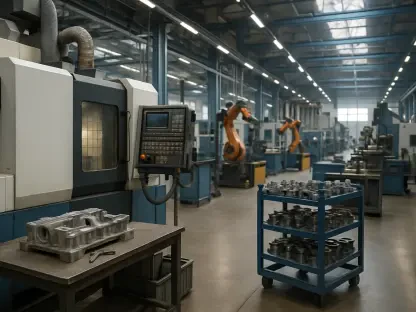
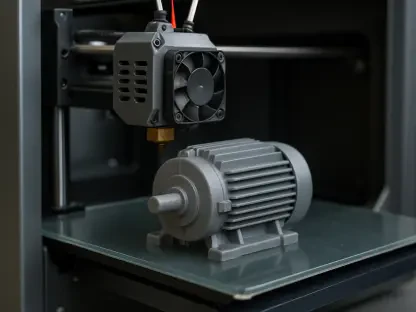
Advanced tools like 3D printing and CNC machining are the backbone of a modern circular economy because they allow us to produce parts on demand, which drastically reduces material waste and energy consumption. Instead of maintaining massive physical stockpiles of every conceivable bracket or bolt, we can digitally store the blueprints and manufacture them only when a vehicle needs them. The primary challenge in quality assurance is ensuring that a part created with 21st-century precision doesn’t feel “wrong” when installed in a vehicle from the 1960s. We have to be incredibly disciplined, using modern diagnostic equipment to verify tolerances while ensuring the material properties and finishes remain authentic to the original engineering intent. This blend of old-world design and new-world tech ensures that the vehicle’s historical value remains intact while its mechanical reliability is actually improved.
Shifting toward a model of sustainability through longevity involves extending vehicle lifecycles indefinitely. How does this approach contrast with traditional “take-make-waste” manufacturing models, and what metrics do you use to measure the resource efficiency gained by keeping decades-old vehicles roadworthy?
The traditional “take-make-waste” model relies on planned obsolescence and a constant churn of new products, which is the antithesis of what we do in heritage management. By extending a vehicle’s life indefinitely, we are essentially amortizing the original carbon and resource cost of that car over seventy or eighty years rather than just ten. We measure resource efficiency by looking at the “avoided waste” metric—calculating the raw materials saved by repairing an existing chassis versus manufacturing a new one from scratch. Every time we restore a Rolls-Royce or a MINI to roadworthy condition, we are demonstrating that the most sustainable vehicle is often the one that has already been built. This philosophy forces us to look at a car not as a disposable consumer good, but as a long-term asset that can be revitalized through smart remanufacturing.
With a goal of reaching 50% secondary material content in new vehicles, the focus is shifting toward recycling end-of-life components. What are the practical trade-offs when integrating recycled materials into production, and how do lessons from restoring historic vehicles influence current design for circularity?
Moving toward 50% secondary material content involves navigating the delicate trade-off between material purity and structural integrity, especially in safety-critical applications. Currently, many models already utilize nearly 30% recycled materials, but reaching that higher threshold requires us to rethink the entire value chain from the moment a car is designed. Our experience with historic vehicles has taught us that “design for circularity” must be intentional; if a car isn’t easy to take apart, it’s impossible to recycle or restore efficiently. We apply these lessons by advocating for modular designs in new production, ensuring that components can be easily extracted and diverted back into the supply chain. This “heritage-to-future” feedback loop ensures that the lessons we learned from fixing a 1950s engine help us build a 2025 electric vehicle that is just as durable and recyclable.
Maintaining a global network of certified workshops requires sharing technical documentation and archive access. How do you ensure quality standards remain consistent across decentralized partners, and what specific training is required for master technicians to bridge the gap between traditional craftsmanship and modern diagnostic equipment?
Consistency across a decentralized network is achieved through a rigorous certification process where we provide partners with direct access to our historical archives and the latest technical documentation. We don’t just send them a part; we provide the entire “DNA” of the repair process to ensure a workshop in Tokyo maintains the same standards as our Munich facility. Our master technicians undergo specialized training that is part historian and part high-tech engineer, learning how to use contemporary diagnostic tools to troubleshoot engines that were designed before computers existed. This training emphasizes the tactile “feel” of traditional craftsmanship—like hand-shaping metal—while utilizing digital sensors to ensure peak performance. It is this unique skillset that allows a technician to honor the vehicle’s soul while ensuring it meets modern safety and environmental expectations.
What is your forecast for the future of circular supply chains in the automotive industry?
I forecast that the automotive industry will shift from being “car sellers” to “mobility keepers,” where the primary revenue comes from the continuous maintenance and revitalization of an existing fleet. We will see the “secondary material” market become just as competitive and sophisticated as the primary raw material market, with specialized supply chains dedicated entirely to the high-tech harvesting of end-of-life components. Within the next decade, the line between “classic” and “modern” will blur as we apply remanufacturing techniques to electric drivetrains and battery packs, ensuring they stay on the road for fifty years instead of fifteen. Ultimately, the industry will realize that profit and sustainability are not at odds; rather, the most profitable companies will be those that can master the art of keeping their products in a perpetual loop of use, reuse, and renewal.