
The relentless pressure on modern manufacturing and supply chains has exposed a critical vulnerability in traditional safety protocols, which are no longer sufficient to manage the complexities of today’s high-stakes industrial environments. For decades, safety management has been a reactive discipline, focused on investigating incidents after they have already inflicted harm, caused downtime, and disrupted operations. However, a quiet revolution is underway, driven by a new generation of assistive Artificial Intelligence designed not to replace human workers but to augment their capabilities. This technological shift is enabling a profound transformation, moving safety from a compliance-driven cost center to a proactive, data-informed strategy. By leveraging AI to anticipate and mitigate hazards before they materialize, organizations are discovering that a safer workplace is inextricably linked to enhanced performance, greater efficiency, and a more resilient bottom line.
A New Playbook for Proactive Safety
From Hindsight to Foresight
Traditional safety systems are fundamentally flawed by their reliance on hindsight, operating on a model that looks backward to understand what went wrong. This reactive posture means that corrective actions are only taken after an injury, equipment failure, or costly production stoppage has occurred. The primary tools of this paradigm are lagging indicators, such as incident reports and investigation findings, which provide valuable but delayed lessons. While analyzing past failures is crucial, it does little to prevent the next unforeseen event. In an environment defined by tight production schedules and strained workforces, the margin for error is virtually nonexistent, and the cost of reacting is simply too high. This model traps organizations in a perpetual cycle of response rather than prevention, where safety improvements are driven by past mistakes instead of future possibilities, limiting the potential for building a truly resilient and fail-safe operation from the ground up.
The advent of predictive AI inverts this outdated model by empowering organizations with foresight. By integrating and analyzing vast streams of real-time data from sources like Internet of Things (IoT) sensors, camera feeds, machine telemetry, and operational metrics, AI algorithms can detect subtle anomalies and patterns that signal impending risks. These leading indicators—an imperceptibly overheating bearing, a misplaced tool in a critical pathway, or a cluster of near misses in a particular area—are often invisible to human observers until it is too late. This shift from lagging reports to leading intelligence has a dramatic and proven impact. Manufacturers leveraging AI-powered predictive systems have achieved up to a 50% reduction in downtime, a 70% decrease in equipment breakdowns, and a 25% cut in maintenance costs. This demonstrates that safety and productivity are not competing priorities but complementary goals that are achieved in tandem when an organization can see and neutralize risk before it manifests.
Building a Culture of Trust
A truly effective safety program hinges on the active participation of frontline workers, yet this is precisely where many initiatives falter. A pervasive issue is the underreporting of hazards and near misses, a problem that 79% of environmental, health, and safety (EHS) professionals acknowledge is widespread. This communication gap is often driven by a deeply ingrained fear of blame or disciplinary action, which creates a culture of silence where employees hesitate to speak up. When workers feel that reporting a potential issue might lead to scrutiny or punishment, they are more likely to remain quiet, inadvertently creating critical blind spots for the entire organization. These hidden risks can fester and grow, eventually leading to major incidents that could have been easily prevented with earlier intervention. This breakdown in communication undermines any top-down safety initiative, as management is left unaware of the real-world conditions and emerging dangers on the factory floor.
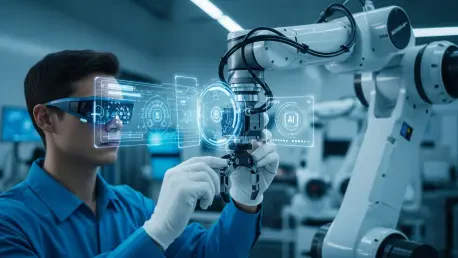
Assistive AI offers a powerful solution to bridge this cultural divide by acting as a neutral and supportive partner, fostering trust where oversight has failed. When technology is deployed as a collaborative tool rather than a surveillance mechanism, it fundamentally changes the dynamic between workers and management. For instance, a computer vision system can provide a gentle, real-time reminder for an employee to wear the correct Personal Protective Equipment (PPE), framing the interaction as helpful assistance rather than punitive enforcement. Similarly, wearable devices can non-intrusively detect signs of fatigue or ergonomically unsafe movements, offering corrective feedback directly to the worker. By removing the element of human judgment and blame from initial interactions, AI makes the reporting process frictionless and psychologically safe. This technology-driven approach creates a transparent, bidirectional dialogue where workers feel empowered to report observations, knowing their input will be used constructively.
Integrating Safety into Operations
Closing the Action Gap
One of the greatest inefficiencies in manual safety management is the significant lag between the identification of a risk and the implementation of a corrective action. Too often, safety reports, hazard observations, and near-miss alerts become isolated data points that languish in a digital or physical queue. They await manual review, prioritization, and assignment, a process that can take days or even weeks. By the time a decision is made and action is taken, the window of opportunity for prevention may have already closed, or the risk may have escalated. Furthermore, this fragmented and slow-moving process hinders organizational learning. Valuable lessons learned from an observation in one facility are rarely shared effectively or systematically across other teams or locations, meaning the same preventable risks can emerge repeatedly throughout the enterprise. This operational bottleneck turns safety management into a passive documentation exercise rather than a dynamic risk-mitigation system.
AI-powered systems resolve this inefficiency by automating the entire feedback loop, transforming safety management into a dynamic, real-time response engine. When an AI system identifies a recurring risk—such as a pattern of ergonomic hazards in a specific workstation or a series of near misses involving a particular piece of equipment—it can instantly route that insight to the appropriate team or manager. The system can then generate a recommended corrective action based on best practices and historical data, and track its implementation through to completion. This automation does not replace human oversight but rather enhances it. It ensures that no observation is overlooked and frees up human experts from administrative burdens, allowing them to focus on strategic decision-making and complex problem-solving. By prioritizing the most critical information and delivering it in an actionable format, AI creates a continuous improvement cycle where every observation strengthens the organization’s collective safety intelligence in real time.
Redefining the Bottom Line
For decades, safety has been widely perceived as a necessary but burdensome cost center—a compliance requirement to be met rather than a strategic advantage to be cultivated. This perspective is fundamentally flawed, as it ignores the deep and direct connection between operational excellence and a safe working environment. Every incident that is avoided simultaneously protects an employee, preserves machine uptime, and maintains the consistent flow of production. The financial consequences of a single safety failure are both significant and measurable, with the average cost of a workplace injury claim requiring medical attention reaching approximately $42,000. This figure, however, only represents the direct costs. It fails to capture the substantial indirect expenses, including overtime coverage for absent workers, production schedule delays, equipment repair or replacement, and the corrosive impact on team morale and productivity. When viewed through this lens, investing in safety is not an expense but a direct investment in operational stability and financial health.
AI-enabled safety intelligence allows organizations to finally quantify and integrate this value into their core business strategy. By providing a clear, real-time view of leading risk indicators, this technology gives leaders unprecedented visibility into where hazards are clustering, where training programs may be ineffective, and where process breakdowns are most likely to occur. When this rich safety data is integrated and reviewed alongside traditional key performance indicators (KPIs) like production output, quality metrics, and operational costs, it fundamentally reframes the conversation. Safety ceases to be an isolated compliance metric and becomes a critical component of holistic performance management. This integrated perspective fosters an operation that is not only more efficient and sustainable but one where protecting the workforce is recognized as a direct and powerful pathway to strengthening the bottom line and building a lasting competitive advantage.
A Symbiotic Path Forward
The future of manufacturing and supply-chain excellence was ultimately forged through human-led, AI-enhanced operations. By deploying assistive AI, organizations achieved a powerful synergy that successfully combined the pattern-recognition capabilities of advanced algorithms with the irreplaceable intuition and expertise of their human workers. The most resilient and productive enterprises were those that built their foundation on this symbiotic relationship. They trained AI on real-world operational data, empowered their workforce with real-time, actionable insights, and automated their risk management workflows. In doing so, leaders transformed safety from a reactive necessity into a proactive performance driver, establishing a culture where humans and AI worked together to protect each other. Safety became their ultimate source of competitive strength.