
Bridging the Gap: Industrial Growth and Environmental Stewardship
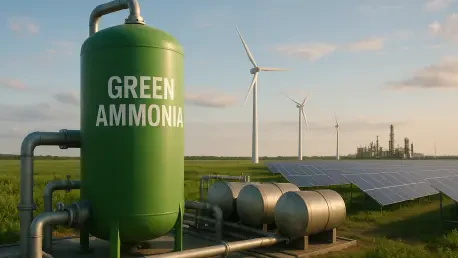
The industrial landscape across the Indian subcontinent is undergoing a seismic shift as the nation attempts to harmonize its colossal economic ambitions with a burgeoning commitment to global ecological preservation. India stands at a critical juncture where its rapid economic expansion must be reconciled with its ambitious net-zero commitments. As one of the world’s largest consumers of fertilizers and industrial chemicals, the nation has long relied on carbon-intensive processes, particularly for ammonia production. Ammonia is the lifeblood of modern agriculture, yet its traditional synthesis via natural gas contributes significantly to global greenhouse gas emissions. Transitioning to green ammonia—produced using renewable energy and water electrolysis—offers a transformative pathway to decarbonize heavy industry while bolstering national energy security.
This timeline explores the strategic evolution of India’s green ammonia sector, highlighting the shift from conceptual frameworks to massive industrial investments. By examining key milestones, including the landmark partnership between international financiers and domestic energy leaders, it becomes clear how India is positioning itself as a global hub for sustainable chemicals. This journey is not just about technology; it is about reshaping the geopolitical and economic landscape of energy in the Global South. The move toward zero-emission fuels represents a broader effort to ensure that the food supply remains stable without further damaging the atmospheric balance that sustains the planet.
A Chronological Roadmap of India’s Green Ammonia Evolution
2021. The Launch of the National Hydrogen Mission
The journey toward a green ammonia economy began in earnest when the Indian government announced the National Hydrogen Mission. This policy framework provided the necessary signal to the private sector that the country was serious about decoupling its industrial growth from fossil fuel imports. By setting the stage for green hydrogen production, the government indirectly laid the foundation for green ammonia, which serves as a vital carrier and derivative of hydrogen, making it easier to store and transport across the subcontinent. This foundational step ensured that the legal and regulatory frameworks were in place to attract both domestic and foreign interest in high-stakes clean energy ventures.
2023. The Conceptualization of Large-Scale Brownfield Conversions
During this period, the industry shifted its focus from building small pilot plants to the brownfield conversion of existing facilities. Instead of starting from scratch, energy leaders began identifying traditional ammonia and urea plants that could be retrofitted with electrolyzers powered by solar and wind energy. This strategic shift was crucial for demonstrating that the green transition could be achieved rapidly and cost-effectively by leveraging existing industrial infrastructure rather than waiting for entirely new sites to be developed. It allowed for a faster proof of concept, showing that established industrial giants could pivot toward sustainability without discarding their previous capital investments.
2024. The Breakthrough ADB and Japan Financing Agreement
A definitive turning point occurred with the formalization of a $100 million loan agreement involving the Asian Development Bank (ADB) and the Japan International Cooperation Agency (JICA) through the LEAP 2 fund. This capital was earmarked specifically for AM Green Ammonia to transform an existing facility into a massive green energy powerhouse. With a projected capacity of 1.1 million tonnes annually, this project signaled to the global market that green ammonia in India had moved from a theoretical possibility to a bankable, large-scale industrial reality. The influx of Japanese capital underscored the international confidence in India’s ability to execute massive engineering transitions while meeting strict environmental standards.
2026. The Activation of the ACCEL Initiative
The official launch of the Action for Creating Energy Security for Long-term Resilience (ACCEL) initiative marked a new era in regional cooperation. By integrating this specific green ammonia project into a broader framework of energy resilience, stakeholders ensured that the facility was not an isolated success. This period saw the formal alignment of Japanese climate finance and Indian industrial expertise, creating a blueprint for how multilateral institutions can de-risk infrastructure projects in developing economies to achieve collective climate goals. Today, the focus remains on scaling these efforts from 2026 to 2030 to ensure that a majority of the chemical sector adopts these cleaner methodologies.
Synthesizing Turning Points: The Path Toward Industrial Maturity
The evolution of green ammonia in India reveals a clear pattern of de-risking through international collaboration and policy certainty. The most significant turning point was the realization that decarbonizing the fertilizer industry is an existential necessity for both food and energy security. The transition from natural gas-based production to renewable-powered electrolysis represents a fundamental shift in industrial chemistry, proving that even the most hard-to-abate sectors can undergo rapid transformation when financial and technological resources are aligned.
One of the overarching themes in this timeline is the emergence of India as a potential net exporter of green energy derivatives. By utilizing its vast solar and wind resources, India is no longer just a consumer of global energy trends but a primary driver. However, notable gaps remain, particularly regarding the long-term cost of electrolyzers and the need for standardized global certification for green molecules. Future exploration must focus on how these large-scale projects can benefit local communities through high-quality job creation and technological spillover.
Nuances of the Green Transition and Global Competitive Factors
Beyond the financial headlines, the shift to green ammonia involves complex regional and competitive dynamics. India’s geographic advantage—abundant sunlight and wind—gives it a lower cost of production compared to many developed nations. This has sparked a competitive race, with Japan and other East Asian economies looking to India as a stable, long-term partner to secure their own green supply chains. Expert opinions suggest that this partnership is a win-win: India gains the capital and technology to modernize its industry, while Japan secures a reliable source of carbon-free fuel.
Common misconceptions often suggest that green ammonia is purely an environmental play. In reality, it is a move toward economic pragmatism. By reducing the reliance on volatile global natural gas markets, India is insulating its economy from price shocks that traditionally impact fertilizer costs and, consequently, food prices. Emerging innovations in catalyst technology and modular electrolyzer design are further lowering the barriers to entry, making it likely that the success of the AM Green project will trigger a wave of similar fuel-switching investments across the Asian continent, forever altering the global energy map. Stakeholders and researchers then focused on streamlining the certification processes for green molecules to facilitate seamless international trade. Policies were enacted to train a specialized workforce, ensuring that the labor market evolved alongside the technological shift. This proactive approach addressed potential bottlenecks in the supply chain and established a foundation for sustainable growth that prioritized both local job security and global carbon reduction targets. Moving forward, the industry prioritized the integration of modular production systems to serve smaller agricultural hubs.