
For new enterprises aiming to produce physical goods, the conventional manufacturing paradigm presents a formidable set of challenges, often requiring significant upfront capital to predict which products will capture the market’s attention, finance mass production runs, and warehouse vast quantities of stock. This traditional model inherently saddles businesses with the substantial risk of crippling inventory costs and the potential for unsellable excess if consumer demand unexpectedly wanes. In stark contrast, on-demand manufacturing fundamentally alters this dynamic by adopting a production model where the creation of a product begins only after a customer has placed a confirmed order. This responsive approach significantly mitigates financial exposure, enabling startups to enter the market with greater agility and lower risk, while also empowering established companies to more effectively manage and control their operational overhead. This exploration delves into the mechanics of on-demand manufacturing, its distinct advantages and limitations, and actionable strategies for leveraging this model to foster business growth.
1. The Core of On-Demand Production
On-demand manufacturing represents a production methodology where goods are fabricated specifically to fulfill existing, confirmed demand, a direct counterpoint to traditional manufacturing that operates on sales forecasts and bulk production. By responding directly to customer orders rather than speculating on future sales, businesses can circumvent the need to maintain large inventories, thereby dramatically reducing associated storage costs, insurance, and the risk of obsolescence. This lean operational model not only frees up critical capital but also minimizes waste, positioning it as a more sustainable alternative. A prime example can be seen in the operations of artisanal ceramics companies that cater to the hospitality industry. For a restaurant placing a large, specific order, the items are made to order, ensuring customization and freshness of the final product. This “just-in-time” approach allows for high levels of personalization, such as choosing specific clay bodies and glaze colors, which would be impossible to manage in a traditional, pre-stocked retail environment. The model is effectively a pull system, where customer demand pulls products through the production process, rather than a push system that pushes speculative inventory into the market.
This production strategy is prevalent across a diverse range of industries, largely enabled by advancements in digital and advanced manufacturing technologies. Innovations such as 3D printing (additive manufacturing), where objects are built layer by layer from digital files, and computer numerical control (CNC) machining, which uses computer guidance to precisely cut and shape raw materials, are foundational to the on-demand ecosystem. These technologies facilitate the creation of everything from highly customized apparel and complex medical devices to bespoke industrial parts and aerospace components. The power of digital manufacturing lies in its ability to support low-volume production runs—even a single unit—without incurring the prohibitive tooling and setup costs associated with traditional mass production methods. This flexibility allows businesses to offer a nearly infinite variety of products without the burden of stocking each variation, thereby meeting niche market demands and providing a deeply personalized customer experience that sets them apart from mass-market competitors.
2. The On-Demand Workflow from Order to Delivery
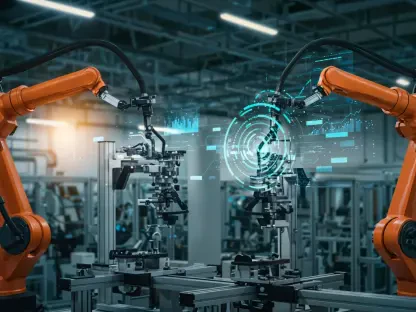
The operational success of on-demand manufacturing is contingent upon the seamless integration of a company’s customer-facing storefront and its back-end production systems, creating a highly responsive workflow. Unlike the long-range strategic planning required by traditional manufacturing, the on-demand model is architected for rapid, agile execution. The journey from a customer’s click to a delivered product begins when a confirmed order is placed, most commonly through an e-commerce platform. This initial order captures all the essential data needed for fabrication: the specific Stock Keeping Unit (SKU), material selections, color, size, and any other personalized attributes. In a modern setup, this information is instantly and automatically routed from the sales channel to the production facility. This facility could be an in-house workshop equipped with digital fabrication tools or, more frequently, a third-party on-demand manufacturing partner. This interconnected network of producers, often referred to as cloud manufacturing, allows retailers and manufacturers to share resources and infrastructure via cloud computing, enabling job tickets to be sent and received from anywhere in the world.
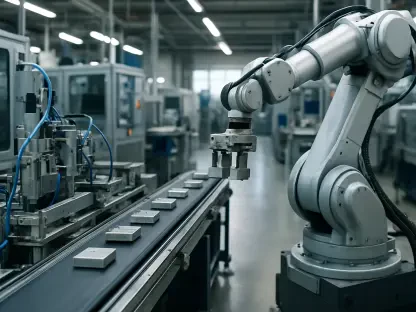
Once the digital order arrives at the production facility, it is queued in the system, and fabrication commences. For additive manufacturing processes like 3D printing, a digital design file is sent to a machine that meticulously builds the part layer by layer from materials such as polymers or metals. In the case of CNC machining, a subtractive process, a computer-controlled tool carves away material from a solid block to achieve the final, precise shape. For industries like apparel, a blank item is selected and then customized using digital printing or embroidery machines. This digital-first approach is what makes low-volume production economically viable. Even with this automation, many products require crucial post-processing steps. This stage can involve sanding, polishing, painting, or assembling multiple components to create the finished item. Quality control is paramount; instead of spot-checking a large batch, each individually produced piece must undergo rigorous inspection to ensure it meets the customer’s exact specifications and the brand’s quality standards. If any defect is detected, the item is either reworked or remade entirely before it proceeds to the final stage of the process.
3. The Strategic Advantages of a Pull System
Adopting an on-demand manufacturing model signifies a fundamental shift from a speculative, “push-based” system—where products are made in anticipation of sales—to a responsive, “pull-based” system where sales trigger production. This strategic reorientation offers compelling advantages, particularly for small businesses and e-commerce entrepreneurs seeking to minimize risk and optimize resources. One of the most significant benefits is the drastic reduction of inventory costs and associated waste. Traditional manufacturing inherently requires businesses to tie up substantial capital in physical stock, which includes not only the cost of goods but also ongoing expenses for warehousing, insurance, and inventory management. On-demand production virtually eliminates these costs by ensuring that goods are only produced once an order is secured and paid for. This frees up working capital that can be reinvested into other critical areas like marketing, research, and development. Furthermore, this lean approach carries a significant environmental benefit. Since there is no bulk production based on forecasts, the risk of overproduction is eliminated, preventing the need to liquidate or discard unsold stock and thereby reducing physical waste and the consumption of raw materials.
Beyond the financial and environmental benefits, on-demand production empowers businesses with an unprecedented level of customization and operational flexibility. Companies can offer an extensive catalog of product variations, such as different colors, materials, or personalized features, without the logistical nightmare of stocking every possible combination. This allows a business to cater directly to specific customer preferences and adapt swiftly to evolving market trends without the risk of costly write-offs associated with obsolete inventory. For new businesses and startups, this model serves as an invaluable tool for market testing and product validation. Instead of committing significant financial resources to a large-scale production run for an unproven concept, entrepreneurs can utilize rapid prototyping or low-volume production to gauge consumer interest. If a product variant sells out quickly, it serves as a clear signal of market demand, informing future production decisions without the financial penalty of unsold goods. This ability to test, learn, and iterate with minimal risk provides a crucial competitive edge in today’s fast-paced consumer landscape.
4. Navigating the Inherent Limitations
Despite its compelling advantages in risk reduction and flexibility, the on-demand manufacturing model is not a universal solution suitable for every business or product type. It introduces a unique set of trade-offs and challenges related to cost, speed, and scalability that must be carefully considered. The primary drawback is the higher per-unit production cost that results from the loss of economies of scale. Mass production allows for the amortization of setup costs, tooling, and specialized machinery over thousands or millions of units, driving down the cost of each individual item. In contrast, setting up a production process for a small batch or even a single customized item is inherently less efficient, often resulting in a higher cost per unit. While this increase is partially offset by the elimination of inventory carrying costs and waste, on-demand manufacturing is generally not the most cost-effective approach for simple, high-volume consumer goods where the low margins of mass production still dominate the market. This also means that remakes or replacements for defective items must be produced one at a time, which can add to overall costs if quality control issues arise.
Another significant challenge is the potential for longer lead times compared to traditional retail models. In an era where consumers have been conditioned by e-commerce giants to expect near-instantaneous delivery, the necessary wait time for a product to be manufactured from scratch can be a major deterrent. Even when a production timeline is clearly communicated to the customer, the delay can feel excessive and lead to lost sales to competitors who have products readily available in a warehouse. This issue is exacerbated when the manufacturer experiences unforeseen production delays, such as supply chain disruptions for raw materials, equipment malfunctions, or a sudden backlog of orders. Such problems can extend fulfillment times from merely slow to unacceptable, risking significant damage to customer satisfaction and brand reputation. Furthermore, scaling production to meet a sudden surge in demand can be exceptionally difficult. A system optimized for low-volume, custom orders can be quickly overwhelmed if a product goes viral or receives unexpected media attention. Manufacturers have finite machine capacity, a limited supply of on-hand materials, and a fixed labor force for post-processing and quality control, creating bottlenecks that can lead to backlogs and frustrated customers.
5. Best Practices for Implementation
Successfully adopting an on-demand model requires more than just access to the right technology; it demands a significant strategic and operational mindset shift. For businesses and artisans looking to make this transition, several best practices can help streamline the process and lay the groundwork for sustainable growth. One of the first principles is to focus the product offering. While the technology allows for nearly infinite customization, offering too many choices can paralyze customers and introduce unnecessary complexity into the production workflow, reducing efficiency. It is critical to identify what the business excels at and align that with market demand. Honing the product catalog to a smaller set of reliable, repeatable, and desirable items helps to streamline production, ensure consistent quality, and build a strong brand identity. This also involves being realistic about market fit. If a product is not resonating with customers, it is essential to pivot rather than continuing to invest in an offering that lacks a viable audience.
Integrating the on-demand philosophy into the company’s core values is another crucial step. By modeling operational tenets after proven lean production systems, such as those famously pioneered by Toyota, a business can create a culture that instinctively supports efficiency and continuous improvement. These values should be a central part of employee onboarding and daily operations, reinforcing principles like resourcefulness, constant iteration, and collaboration. Furthermore, it is important to move beyond the scarcity-based “drop model,” which is popular among artisans but often hinders long-term growth. While a successful product drop can validate market demand, it creates a boom-and-bust cycle of intense sales followed by an empty, sold-out storefront. This can frustrate potential new customers and prevent the steady, reliable sales needed to scale. The goal should be to make staple products consistently available, turning one-time buyers into loyal, long-term customers. This reliability is what ultimately builds a sustainable business, as an out-of-stock item is simply a missed sales opportunity.
A Strategic Shift in Production
The journey through the on-demand manufacturing landscape revealed a model built on agility and responsiveness. It became clear that its adoption was not merely a tactical choice but a profound strategic shift away from the speculative nature of traditional production. Businesses that successfully navigated this transition did so by carefully weighing the trade-offs between customization and cost, recognizing that the higher per-unit expense was often justified by the elimination of inventory risk and waste. The process, from a digital customer order to a physical product, was found to be reliant on a tightly integrated technological ecosystem, where data flowed seamlessly from the storefront to the factory floor. The most successful implementations were those that embraced this digital core while also fostering a company culture rooted in lean principles and continuous improvement. Ultimately, the decision to leverage on-demand manufacturing depended on a company’s specific goals, product complexity, and market position, proving it to be a powerful tool for scaling when applied with foresight and strategic precision.