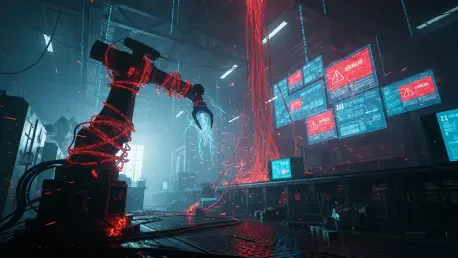

The familiar hum of a factory floor can now be silenced not by a mechanical failure or a power outage, but by a single line of malicious code executed thousands of miles away, transforming digital vulnerabilities into sudden and costly physical standstills. This new reality marks a fundamental shift in industrial risk, where the very technologies designed to boost efficiency have become the gateways for operational paralysis. As manufacturing embraces unprecedented levels of connectivity, the line between information security and plant safety has been erased. Consequently, a compromised network credential can now achieve what once required physical sabotage, shutting down production lines, disrupting supply chains, and turning a facility’s greatest assets into its most significant liabilities.
The New Factory Floor Where Digital Risks Create Physical Realities
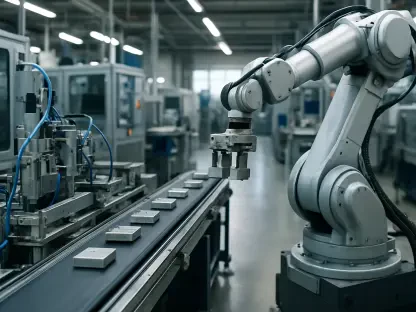
The modern manufacturing environment is a complex ecosystem of hyper-connectivity, where Information Technology (IT) and Operational Technology (OT) are deeply intertwined. Cloud-connected machinery sends real-time performance data to analytics platforms, while networked building systems manage everything from climate control to physical access. This integration of digital control over physical processes, from automated assembly lines to inventory management systems, has unlocked immense gains in productivity. However, it has also created a vast and unified attack surface where a single digital breach can have immediate and tangible consequences on the factory floor.
This expanded vulnerability has not gone unnoticed by malicious actors. The manufacturing sector is now a primary target, accounting for approximately 22 percent of all cyberattacks. The results are stark: recent industry data reveals that 55 percent of manufacturers have experienced operational outages directly linked to cyber incidents. Furthermore, 43 percent of these organizations have lost critical data or intellectual property, demonstrating that threats now target both the brains and the brawn of industrial operations. The industry’s reliance on digital infrastructure for physical production is no longer a background detail but a central point of operational risk.
At the heart of this vulnerability lie the critical systems that govern production. Industrial control systems (ICS) and their human-machine interfaces (HMIs) are the nerve centers of the factory, translating digital commands into mechanical action. Simultaneously, physical access controls like card readers and security cameras are now network devices, susceptible to the same digital exploits as any server or laptop. A compromised maintenance tablet can inject malicious firmware into a controller, a denial-of-service attack can disable access readers and trap a shift inside or outside a facility, and a ransomware attack can lock up the HMIs that operators use to manage equipment. Each of these represents a point of failure where a digital event triggers a physical shutdown.
The Rising Tide of Operational Disruption
Shifting Motives From Data Theft to Physical Sabotage
The nature of industrial cyber threats has evolved significantly. While the theft of intellectual property remains a persistent concern, attackers are increasingly shifting their focus toward causing direct operational disruption. The motive is no longer just to steal blueprints but to actively halt production, sabotage processes, and create chaos within logistics and supply chains. This trend reflects a strategic calculation by adversaries that crippling a company’s ability to produce goods can be more damaging and profitable—through extortion or other means—than exfiltrating its data.
This shift is amplified by market drivers that push manufacturers toward greater connectivity. The pursuit of efficiency, predictive maintenance, and real-time visibility has led to an explosion of networked devices and sensors on the factory floor. Each new connection, whether a sensor on a conveyor belt or a partner’s access to a logistics portal, creates a new and often unforeseen vector for physical disruption. As companies race to digitize their operations, they inadvertently build the pathways that attackers can exploit to move from the corporate network into the heart of the production environment.
Recent history is filled with cautionary tales. High-profile breaches at major automakers and tire manufacturers have provided clear evidence of these risks, leading to complete factory shutdowns that rippled across global supply chains. In these incidents, attackers successfully paralyzed production, forcing companies to halt logistics, revert to manual workarounds, and suffer millions in losses for every day of downtime. These events serve as a powerful reminder that in today’s industrial landscape, cybersecurity is no longer a back-office IT issue but a frontline production concern.
Quantifying the Impact Production Halts and Financial Aftershocks
The consequences of these cyber-physical incidents are measurable and severe. Key performance indicators now include metrics that were once unrelated to cybersecurity, such as unscheduled downtime and production output. The fact that a majority of manufacturers report operational outages from cyber events illustrates a systemic vulnerability. The loss of critical data in nearly half of these attacks further compounds the problem, as restoring operations without accurate production schedules, formulas, or quality control data becomes nearly impossible.
The financial fallout from such disruptions extends far beyond the immediate loss of revenue from halted production. The total cost of a cyber-physical incident includes a cascade of secondary expenses that can linger for months. These include penalties for failing to meet supply chain deadlines, the high cost of overtime for employees working to catch up, and the significant reputational damage that can erode customer trust and market share. As these incidents become more common, forecasting their growing financial impact is becoming a critical component of risk management for industrial organizations.
The Silo Effect How Disconnected Security Invites Disaster
A core challenge enabling these attacks is the organizational fragmentation of security functions. Traditionally, IT, OT, and physical security teams have operated in separate silos, with distinct tools, priorities, and vocabularies. IT teams monitor for network intrusions and endpoint malware, OT engineers focus on line performance and equipment uptime, and physical security manages site access and surveillance. This separation creates critical blind spots, as no single team has a unified view of a developing threat, leading to delayed and uncoordinated incident response.
This lack of integration allows a single compromised credential or device to trigger a devastating chain reaction. For example, an attacker might use stolen credentials to access a third-party vendor portal, which IT sees as an authentication anomaly. That access could then be used to disable a dispatch system, which OT experiences as an unexplained logistics failure. Finally, the attacker might disable the card readers at the loading docks to amplify the chaos, an event the physical security team sees as a localized hardware malfunction. By the time these siloed teams connect the dots, a minor intrusion has escalated into a full-blown production stoppage.
Overcoming this organizational inertia requires a deliberate effort to merge historically separate security disciplines. It involves breaking down cultural barriers and creating a shared understanding of risk. The goal is to foster cross-functional collaboration where an alert from one domain is immediately contextualized with data from the others. This requires more than just new technology; it demands new processes and a shift in mindset, where security is treated as a single, integrated function dedicated to protecting the entirety of the operation, both digital and physical.
Navigating the New Regulatory Frontier for Cyber-Physical Systems
The convergence of digital and physical threats is also reshaping the regulatory landscape. Compliance standards, which have historically treated cybersecurity and physical security as separate domains, are now being updated to address the reality of interconnected systems. This evolution is forcing organizations to bridge the compliance gap and develop security programs that recognize the direct link between a network breach and a production line failure.
Integrated compliance is becoming a necessity. New frameworks are emerging that require a unified approach, treating a denied badge scan, a suspicious network login, and an unexpected machine stoppage as potentially related events within a single incident timeline. This holistic view ensures that security controls are not evaluated in isolation but as part of a comprehensive defense strategy designed to protect the entire cyber-physical ecosystem of the manufacturing plant.
These emerging standards are having a direct impact on industry practices. Manufacturers are being compelled to rethink fundamental aspects of their security posture, from supplier access and third-party risk management to internal training and incident response drills. The new expectation is that organizations can not only prevent and detect threats across domains but also demonstrate a coordinated ability to respond and recover from incidents that traverse the digital and physical worlds.
Forging Resilience The Blueprint for a Connected Operations Model
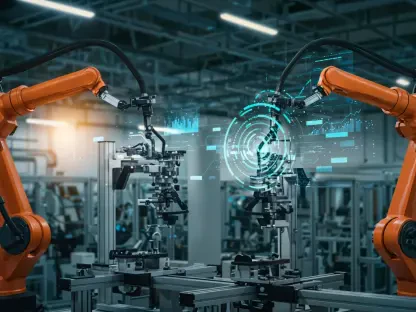
The future of industrial security lies in an integrated model where signals from all domains—IT, OT, and physical—are converged into a single, actionable view. This connected operations model moves beyond siloed monitoring to provide security teams with the context needed to understand the full scope of a threat in real-time. When an anomalous network event occurs simultaneously with a physical access alarm and an equipment malfunction in the same zone, the system should automatically correlate them into a single, high-priority cyber-physical incident.
Emerging technologies are making this vision a reality. Security Orchestration, Automation, and Response (SOAR) platforms are being adapted to unify incident intake from disparate systems, including network sensors, access control logs, and ICS alerts. These platforms can standardize response playbooks across teams, ensuring that every cyber-physical event triggers a consistent and coordinated set of actions, from isolating a network segment to dispatching a security guard.
This technological and procedural integration is best reinforced by proactive defense drills. Just as manufacturers conduct regular safety drills for fires or chemical spills, they are now beginning to simulate cyber-physical attack scenarios. These exercises, which might test the response to a ransomware attack that also disables physical access controls, are crucial for identifying weak points in the response chain and shortening recovery times. They build muscle memory, ensuring that when a real incident occurs, every team knows its role and can act decisively.
A Call to Action Integrating Technology, Process, and People
This report has established that the convergence of digital and physical threats is no longer a theoretical risk but a present reality for manufacturers, fundamentally reframing cybersecurity as a core production issue. The analysis showed that siloed security approaches are insufficient to protect hyper-connected factory floors, where a single digital compromise can cascade into a complete operational shutdown. The financial and reputational stakes are now too high for organizations to continue managing IT, OT, and physical security as separate functions.
To forge resilience, leaders adopted a unified defense model. Successful organizations standardized joint playbooks for cyber-physical incidents, ensuring a coordinated response from the moment a threat was detected. They implemented unified metrics to track detection, isolation, and recovery times across all domains, providing clear data on where to invest in improvements. A critical part of their strategy involved securing the supply chain, treating partner access with the same rigor as internal controls. Finally, they invested heavily in cross-training personnel, empowering employees at all levels to recognize and respond to the warning signs of a blended attack, thereby creating a truly resilient operational culture.