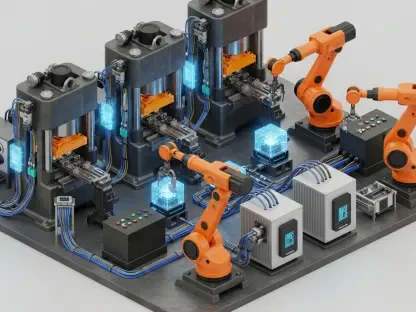

In an era defined by rapid technological advancement, a groundbreaking collaboration between logistics giant FedEx and the non-profit Pyxera Global is rewriting the narrative for discarded electronics, transforming what was once considered trash into a treasure trove of valuable resources. This innovative pilot program has established a new benchmark for corporate responsibility and supply chain innovation, demonstrating a practical and scalable pathway toward a circular economy. It represents more than just an environmental initiative; it is a strategic reimagining of waste itself, framing discarded devices not as an endpoint, but as the beginning of a new manufacturing lifecycle.
From Discarded Electronics to a New Beginning
The pilot program, launched by FedEx Supply Chain in partnership with Pyxera Global, directly confronts the growing global crisis of electronic waste, or e-waste. By developing a sophisticated reverse logistics system, the initiative successfully created a circular flow for used electronics, capturing their inherent value before they are lost to landfills. This approach establishes a vital link between the end-of-life of a product and the beginning of a new one, creating a regenerative system that benefits both the environment and the economy.
The project’s core achievement lies in its ability to turn a pervasive problem into a tangible opportunity. Rather than allowing laptops, phones, and other devices to accumulate as hazardous waste, the model channels them back into productive use. This vision reframes the logistics industry’s role from simply moving goods forward to managing their entire lifecycle, setting an engaging and hopeful precedent for a future where waste is designed out of the system.
The Global E-Waste Challenge
The urgency of this initiative is underscored by the staggering scale of the e-waste problem. According to the 2022 Global E-Waste Monitor, the world generated an astonishing 63.4 million tonnes of electronic waste, yet less than a quarter of that was formally collected and recycled. This figure not only represents a missed opportunity but also an escalating environmental threat, as improperly disposed electronics can leach toxic materials into soil and water.
Beyond the environmental toll, the economic cost is immense. Every discarded device contains a wealth of critical minerals—such as gold, copper, and cobalt—that are in high demand for new products. When these materials are lost to landfills, they must be replaced by mining new resources, a process that is both costly and environmentally destructive. This linear “take-make-dispose” model is fundamentally unsustainable, creating supply chain vulnerabilities and squandering finite natural resources.
Engineering a Circular Logistics Model
To address this challenge, the pilot program engineered and validated a comprehensive circular logistics model at a FedEx facility in Tennessee. This was not merely a theoretical exercise but a hands-on test to prove the viability of integrating reverse logistics into a major operational framework. The successful trial demonstrated that with the right processes and partnerships, e-waste can be managed efficiently and profitably, creating a new framework for the entire industry.
The model’s design focused on creating a closed-loop system where electronic products and their components are kept in circulation for as long as possible. This required a fundamental shift in thinking about logistics, expanding its scope to include collection, sorting, and redistribution of used materials. The pilot’s success served as a proof of concept, showing that a circular supply chain is not only possible but also a powerful tool for sustainable business practices.
A Blueprint for Recovery and Reuse
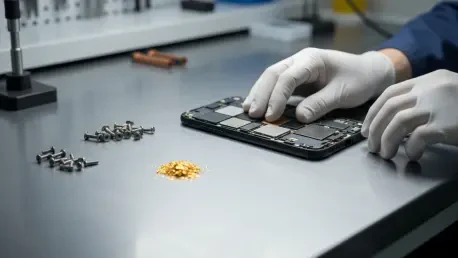
At the heart of the pilot was a meticulously designed system for intercepting e-waste and unlocking its value. The process involved collecting discarded electronics and then methodically sorting them for their highest potential use. Items that could be repaired were refurbished and returned to the market, extending their functional life. Those beyond repair were disassembled, with valuable components and raw materials carefully recovered for recycling.
This blueprint for recovery ensures that materials are reintroduced into the manufacturing supply chain, reducing the demand for virgin resources. By creating a clear, systematic pathway for everything from whole devices to individual minerals, the pilot established a replicable model for transforming a linear waste stream into a circular resource flow.
Validated by Industry Leadership
The program’s innovative approach and measurable success did not go unnoticed. Its credibility was cemented when the Sustainable Purchasing Leadership Council (SPLC) honored the pilot with its 2025 Leadership Award in the Circular Economy category. This prestigious award serves as an industry-wide validation of the model’s effectiveness and impact, distinguishing it as a leading example of sustainable innovation.
Receiving the SPLC award elevated the pilot from a successful corporate project to an acclaimed industry benchmark. It signaled to the broader business community that circular logistics is a viable and powerful strategy for achieving both environmental and economic goals, encouraging other organizations to explore similar initiatives.
A Strategy for Economic and Environmental Sustainability
The FedEx pilot offers a compelling vision of sustainability that extends well beyond environmental conservation. Its multifaceted benefits create a powerful business case for the circular economy. By recovering and reusing critical minerals from e-waste, the model helps conserve finite natural resources and reduces the environmental footprint associated with mining and processing raw materials.
Simultaneously, the program fosters economic resilience and growth. By creating a steady stream of recovered materials, it supports local remanufacturing enterprises and repair businesses, generating jobs and bolstering regional economies. This dual focus on ecological health and economic prosperity positions the circular logistics model as a comprehensive strategy for building a more sustainable and equitable future.
Scaling the Solution Across North America
Building on the pilot’s resounding success, Pyxera Global has launched the Circular Supply Chain Coalition (CSCC) to expand the model’s reach. This new organization is dedicated to scaling the principles of circular logistics across North America, creating a collaborative network of businesses, recyclers, and community partners focused on resource recovery.
With new funding from FedEx Cares, the CSCC is already taking concrete steps to broaden its impact. The coalition is establishing demonstration hubs in the U.S. Southeast and Rocky Mountains, which will serve as regional centers for implementing and refining the circular supply chain model. These hubs will adapt the pilot’s blueprint to local contexts, accelerating the transition toward a nationwide system for e-waste recovery and remanufacturing.
Reflection and Broader Impacts
The pilot’s influence is poised to reshape not only the logistics industry but also global supply chains at large. Its success provided a tangible demonstration of how reverse logistics can be a cornerstone of the circular economy, offering a practical solution to one of the modern world’s most pressing environmental challenges.
Reflection
The circular logistics model developed by FedEx and Pyxera Global demonstrated remarkable strengths, including its proven operational viability and its inherent scalability. It confirmed that a major logistics network could effectively integrate reverse flows of materials, creating value from what was previously considered waste. However, broader implementation presents challenges, such as navigating complex regulatory landscapes for e-waste and fostering widespread consumer participation in take-back programs. Overcoming these hurdles will require continued collaboration across public and private sectors.
Broader Impact
The future implications of this model are profound. Its widespread adoption could significantly advance global resource conservation efforts, decreasing reliance on virgin materials and mitigating the environmental damage of extraction. Furthermore, by creating localized loops of material recovery and remanufacturing, this model promises to stimulate local economic development and create more resilient, self-sufficient supply chains. Ultimately, it represents a critical step in the global transition toward a truly circular economy.
Building a Future Without Waste
The FedEx pilot program and the subsequent launch of the Circular Supply Chain Coalition marked a pivotal moment in the fight against e-waste. They proved that with innovative thinking and strategic partnerships, it was possible to design a system that transforms waste into a valuable asset. The initiative not only provided a successful blueprint for circular logistics but also inspired a broader movement toward a more sustainable and regenerative economic model.
This work laid the foundation for a future where products are designed for longevity, repair, and recycling, and where materials are continuously cycled back into the economy. The journey from a single pilot in Tennessee to a growing North American coalition demonstrated the immense potential to build a global system that eliminates waste and supports a thriving, circular economy for generations to come.