
After a demanding year spent reacting to widespread global trade disruptions, companies now find themselves at a crucial crossroads, entering a new phase defined by a more proactive and strategic approach to transformation. This newfound readiness, however, is being rigorously tested by a confluence of persistent geopolitical volatility, mounting economic uncertainty, rapid technological evolution, and complex workforce challenges that demand immediate attention. Industry leaders widely agree that success in this environment will be determined not just by resilience, but by an organization’s ability to recognize critical inflection points early and translate that foresight into swift, decisive action. The path forward requires more than just adaptation; it demands a fundamental reshaping of operations to build a supply chain that is not only robust enough to withstand shocks but also agile enough to capitalize on emerging opportunities in a landscape that remains in constant flux. The stakes are higher than ever, and the strategies deployed now will separate the leaders from the laggards in the years to come.
Geopolitical Fragmentation and the Push for Diversification
The continuation of geopolitical instability remains a primary driver of supply chain strategy, forcing a significant departure from traditional long-term planning. The wide-ranging tariff regime established by the United States continues to be a central source of volatility, making multi-year structural planning an exceedingly difficult, if not impossible, task. According to Dustin Burke, co-leader for manufacturing and supply chain at Boston Consulting Group, this ongoing risk compels companies to constantly reassess their trade strategies, moving away from fixed, long-term models. In response to this pervasive unpredictability, many business leaders have adopted shorter-term, more agile tactics. Suketu Gandhi, a partner at Kearney, highlights this strategic shift, noting that executives are now operating in condensed planning cycles, often in six-month increments, because the political landscape can change on a daily basis. This reactive posture, while necessary for survival, underscores the need for more deeply embedded flexibility within the operational core of global businesses.
This environment necessitates a move beyond the temporary measures seen in 2025, such as the frontloading of cargo to get ahead of tariff deadlines. While these tactics helped maintain inventory strength, experts like Jess Dankert of the Retail Industry Leaders Association expect a normalization of these flows as the focus shifts toward more fundamental, long-term strategic adjustments. A critical event on the horizon is the summer review of the United States-Mexico-Canada Agreement (USMCA), a moment that Per Hong, a partner at Kearney, identifies as pivotal, with the potential to further fragment the global economy. He suggests that the era of large, unified trading blocs is giving way to a more complex and fractured network of bilateral trade deals, which significantly increases operational complexity. Consequently, the consensus viewpoint is that businesses must proactively reevaluate their supplier networks, enhance visibility across all tiers, and aggressively pursue strategies of diversification and regionalization to build lasting resilience against these powerful fragmenting forces.
Economic Headwinds and Supplier Viability
A murky economic outlook adds another layer of significant pressure on supply chains, creating challenges that extend far beyond simple demand forecasting. While consumer spending demonstrated a degree of resilience in the previous year, a projected deceleration driven by persistent affordability concerns and a softening labor market is expected to test the planning and pricing strategies of companies across the board. This pressure will not be confined to retailers and consumer goods companies; it will ripple upstream, impacting sectors like packaging and chemicals that are closely tied to consumer demand. Furthermore, the sluggish housing market continues to cast a long shadow over the economy. As noted by Rick Jordon of FTI Consulting, this slowdown creates a powerful trickle-down effect, dampening demand for essential commodities like lumber as well as a wide range of household goods, thereby affecting their respective manufacturing and distribution supply chains in profound ways.
Beyond these demand-side pressures, a more insidious and systemic risk is emerging on the supply side: the deteriorating financial health of suppliers. Per Hong of Kearney points to rising global debt levels as a critical concern, fundamentally shifting the focus from managing singular operational crises to assessing the “overall viability” of partners throughout the supply chain. He advises that companies must now proactively stress-test their suppliers for refinancing risks, redesign inventory strategies to account for vulnerabilities related to payment terms, and actively diversify away from logistics corridors that may prove financially fragile. This signifies a paradigm shift in risk management, where comprehensive financial risk assessment becomes just as critical as operational risk management in ensuring true end-to-end supply chain stability and preventing unforeseen disruptions stemming from a partner’s financial collapse.
A Renewed Imperative for Cost Optimization
The combined pressures of trade uncertainty and persistent economic headwinds are expected to drive up operational costs, making rigorous and strategic cost optimization a top priority for businesses in 2026. This imperative will compel companies to undertake deep, structural reviews of their entire operational footprint. Dustin Burke of BCG anticipates that many organizations will meticulously scrutinize their global manufacturing and distribution networks to identify and eliminate underutilized capacity that is no longer cost-competitive in the current economic climate. This strategic reassessment could translate into significant corporate moves, including targeted plant closures and the consolidation of sprawling distribution networks to create a leaner, more agile, and ultimately more efficient operational structure. Such decisions, while difficult, are becoming essential for maintaining profitability and competitive advantage in a high-cost environment.
On the logistics front, transportation costs will be placed under a microscope as companies search for every available efficiency. Matt Stekier, a principal at Plante Moran, emphasizes that organizations should now treat their transportation contracts with the same diligence as they would car insurance, advising that they be “quoted out every couple years” to ensure they are not overpaying in a highly fluctuating market. Complementing this tactical approach is the growing need for greater modal flexibility. Mike Short, president of global forwarding at C.H. Robinson Worldwide, highlights this as a critical tool for maintaining both cost control and operational resilience. He advocates for a dynamic strategy where companies are prepared to fluidly shift between ocean, air, and combined sea-air or less-than-container-load (LCL) consolidation strategies. This ability to adapt logistics in direct response to changing market conditions allows businesses to optimize not only for cost but also for service levels, ensuring deliveries remain on track without incurring unnecessary expenses.
The Pragmatic Recalibration of AI Expectations
While artificial intelligence continues to be a major area of investment and discussion, 2026 is projected to be a crucial inflection point where the initial, often lofty, hype confronts the practical realities of implementation. Abe Eshkenazi, CEO of the Association for Supply Chain Management, observes a significant disconnect that has become increasingly apparent: while corporate investment in AI is substantial and growing, the promised return on that investment (ROI) has not yet materialized for many organizations. This gap between expenditure and tangible results is leading senior leaders to recalibrate their timetables and reset their expectations for the technology’s large-scale impact. The conversation is shifting away from revolutionary promises and toward a more grounded, pragmatic approach focused on identifying specific, achievable use cases that can deliver measurable value in the near term.
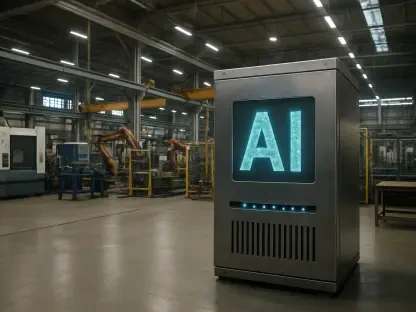
Despite this necessary reset of expectations, the push for AI deployment will not stop. The declining cost of the technology, coupled with its rapid pace of innovation, continues to make it an attractive proposition for solving complex supply chain challenges. Experts are now identifying specific areas of high potential where AI can make a significant difference. Agentic AI, with its sophisticated applications in advanced demand planning, forecasting, and automated decision-making, is seen as particularly promising. Meanwhile, generative AI is already proliferating rapidly, with a recent West Monroe report indicating that 91% of mid-market manufacturers are using it in some capacity. However, the core challenge remains that the industry is still in the very early stages of effective utilization. Per Hong of Kearney warns that a “breaking point” is approaching because the fundamental operating models of supply chains are not evolving as quickly as the technology itself. Therefore, the focus will shift from pure experimentation to responsible scaling, which involves building robust data foundations, developing the necessary workforce skills, and establishing clear governance to finally translate AI’s vast potential into measurable, scalable business results.
Navigating the Complex Workforce Challenge
The final critical trend centers on the profound and multi-faceted challenges facing the supply chain workforce. Companies in 2026 must contend with a perfect storm of converging issues: an aging leadership demographic nearing retirement, persistent labor shortages in key operational roles, and an urgent, unmet need to cultivate new skill sets that are aligned with rapid technological advancements. According to Per Hong, factors such as continued corporate investment in automation and the effects of shifting immigration regulations are creating a “deep divergence in labor availability, costs, and productivity.” This complex dynamic is transforming labor from what was once a stable, predictable input into a significant “strategic constraint” that must be carefully and proactively managed to avoid becoming a bottleneck to growth and innovation.
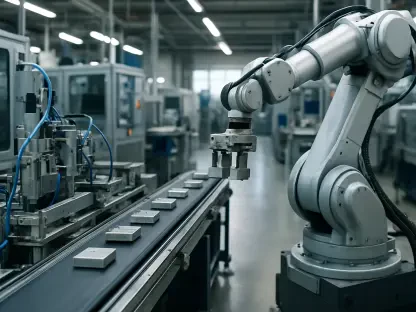
In response to this pressing situation, companies are accelerating investments in automation not only to boost productivity but also to make their core processes as lean and efficient as possible, as noted by Matt Stekier. Simultaneously, a much greater emphasis is being placed on developing, retaining, and upskilling existing employees to ensure they can work effectively alongside these new technologies. However, a critical skills gap persists and threatens to undermine these efforts. Abe Eshkenazi points out the inherent danger of having powerful, sophisticated technological systems operated by a workforce that may lack the advanced critical thinking and problem-solving abilities required to properly interpret and act upon the vast amounts of data these systems generate. The crucial takeaway is the urgent call for a balanced approach: the corporate investment in human talent, through comprehensive training and development programs, must be “commensurate with” the investment in technology to unlock the full, synergistic potential of both and build a truly future-ready workforce.
A Blueprint for Future-Proof Operations
The analysis of these converging trends revealed a clear path forward for supply chain leaders. It became evident that organizations which thrived had moved beyond a defensive posture and embraced a holistic strategy rooted in proactive diversification, rigorous financial scrutiny of their entire partner ecosystem, and a relentless pursuit of operational efficiency. They understood that geopolitical shifts were not temporary disruptions but a new, permanent feature of the global landscape, and they re-engineered their networks accordingly. Furthermore, these leading companies approached technology not as a panacea but as a powerful tool that required a corresponding investment in human capital. By recalibrating their AI expectations to focus on scalable, practical applications and simultaneously upskilling their workforce, they built a symbiotic relationship between people and technology. Ultimately, the successful navigation of this complex environment was defined by an integrated approach that treated these distinct challenges not as separate problems to be solved, but as interconnected variables in a single, dynamic equation for building a resilient and agile supply chain for the future.