
The global aerospace industry is currently navigating an era of unprecedented transformation, driven by relentless pressure to enhance operational efficiency, reduce environmental impact, and build more resilient supply chains against a backdrop of increasing global uncertainty. In a significant move to address these challenges head-on, GKN Aerospace Norway announced on December 8, 2025, a landmark strategic agreement with the Norwegian Catapult Manufacturing Technology center. This pivotal partnership is set to dramatically accelerate the adoption and industrialization of additive manufacturing, also known as 3D printing, at GKN’s advanced engine component facility in Kongsberg. More than a simple business collaboration, this initiative aims to establish a national center of excellence, creating a shared infrastructure of cutting-edge equipment, deep expertise, and collaborative knowledge. The vision is to build a national platform that will serve as a catalyst, propelling advanced and sustainable manufacturing from niche applications into the mainstream of Norway’s industrial landscape.
A Strategic Alliance for Technological Advancement
Forging a National Platform for Innovation
The collaboration between GKN Aerospace, a major tier-one global supplier, and Norwegian Catapult Manufacturing Technology, a national center dedicated to helping businesses implement advanced production processes, represents a foundational effort to construct a robust national ecosystem for innovation. The explicit goal is to create a “national platform for advanced and sustainable additive manufacturing,” which signifies a departure from siloed corporate research and development. Instead, this model promotes a shared infrastructure designed to lower the barrier to entry for other companies and accelerate the learning curve across the entire Norwegian industrial sector. By pooling resources, knowledge, and state-of-the-art equipment at the Kongsberg facility, the partners are laying the groundwork for a collaborative environment where new techniques can be developed, tested, and certified for industrial use far more rapidly than would be possible for any single entity acting alone, thus driving the transition of these technologies into mainstream production.
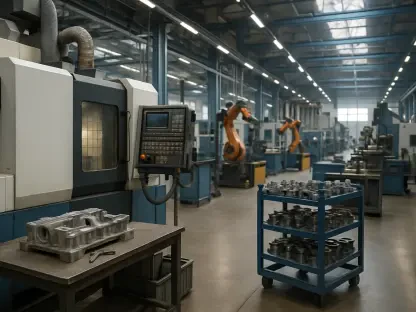
At the heart of this strategic alliance is GKN’s engine component facility in Kongsberg, which is now positioned to become a national beacon for advanced manufacturing. This facility will not only enhance GKN’s internal production capabilities but will also function as a center of excellence, serving as a powerful catalyst for technological adoption throughout the country. By providing access to advanced additive manufacturing systems and the specialized expertise required to operate them, the center will empower small and medium-sized enterprises to explore and integrate these technologies into their own operations. This initiative directly supports Norway’s national ambition to establish itself as a global leader in sustainable industrial development and next-generation production technologies. By focusing on producing “critical components for many of the world’s leading aerospace engines,” the partnership underscores the high-stakes nature of this endeavor, solidifying Kongsberg’s role as a vital hub in the future of aerospace manufacturing.
The Transformative Benefits of Additive Manufacturing
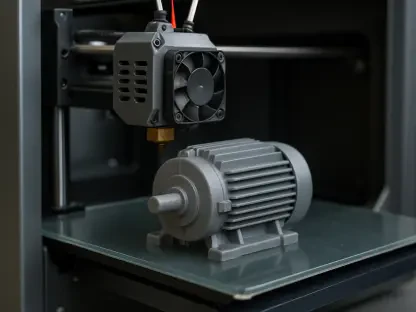
One of the most profound advantages driving the aerospace industry’s shift towards additive manufacturing is the monumental reduction in material waste it enables. Traditional subtractive manufacturing methods, which often involve machining a complex component from a large, solid block of metal, can be incredibly inefficient, with a significant portion of the expensive raw material being cut away as scrap. In contrast, additive manufacturing constructs a part layer by meticulous layer, using only the precise amount of material required for the final product. This “near-net-shape” process is particularly impactful in aerospace, where components are frequently made from high-performance and costly materials like titanium and nickel-based superalloys. The resulting decrease in material consumption not only leads to substantial cost savings but also aligns with the growing imperative for resource conservation and more sustainable manufacturing practices across the industry.
Beyond material efficiency, additive manufacturing fundamentally redefines the structure of supply chains, making them shorter, more agile, and significantly more resilient. The technology facilitates a powerful shift towards localized, on-demand production, breaking the long-standing reliance on complex global networks for forged or cast parts that are often subject to long lead times and logistical vulnerabilities. Manufacturers can now print components closer to the point of assembly, which drastically reduces transportation costs and increases the ability to withstand the kinds of supply chain disruptions that have become a major concern for global industries. These operational benefits are intrinsically linked to a lower environmental impact. Conserving precious materials and shortening supply routes directly reduces the carbon footprint associated with long-distance transport, offering the aerospace sector a tangible and effective pathway to achieving its ambitious sustainability goals.
Integration into a Global Corporate Vision
A Coordinated Global Footprint
The strategic agreement in Norway is not an isolated event but a carefully calculated and integral part of GKN Aerospace’s overarching global strategy to lead the industrialization of additive manufacturing. This initiative is described as the “latest step” in a deliberate, worldwide expansion of the company’s 3D printing capabilities, following very closely on the heels of similar major investments in its key facilities in Sweden and the United States. This distinct pattern reveals a coordinated, multi-faceted approach to embedding this transformative technology across its most important operational hubs. The primary strategic motivations behind this global push are threefold: to significantly increase overall production capacity to meet escalating market demand, to accelerate the pace of technological innovation by partnering with industry leaders like Norwegian Catapult, and to strategically position advanced manufacturing centers closer to its primary customer base of the world’s leading engine manufacturers.
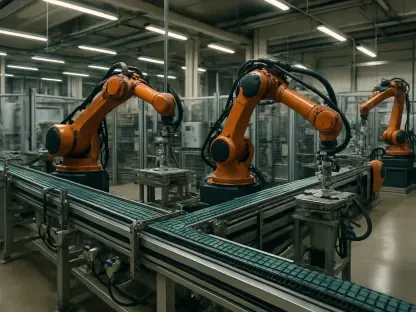
This global network of additive manufacturing centers of excellence is designed to create a powerful synergistic effect, fostering a culture of continuous improvement and rapid innovation across the entire organization. By establishing interconnected hubs in key regions, GKN Aerospace can facilitate seamless knowledge sharing, standardize best practices, and ensure that a technological breakthrough developed in one facility can be quickly validated and deployed across its global operations. This integrated approach builds a highly robust, flexible, and technologically advanced manufacturing ecosystem capable of adapting to the dynamic and demanding requirements of the global aerospace market. It transforms the company from a collection of individual sites into a unified production network, enhancing its competitive edge and its ability to deliver cutting-edge solutions to its customers with greater speed and efficiency than ever before.
Industrializing Innovation for Market Leadership
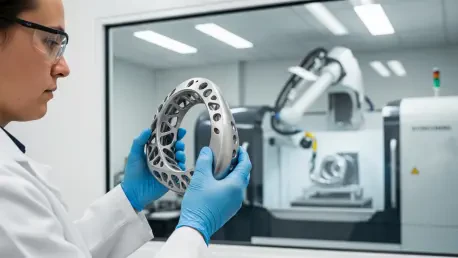
The profound strategic importance of this technological shift was powerfully articulated by Sébastien Aknouche, GKN Aerospace’s Senior Vice President for Material Solutions, who stated that additive manufacturing is “central to the company’s vision for the future of aerospace.” His crucial emphasis on the need to “fully industrialise additive technology” signals a monumental objective that goes far beyond its use for prototyping or small-batch production. To “fully industrialize” this technology means to transform it into a robust, repeatable, and fully certified method for manufacturing flight-critical components at scale. This involves mastering every aspect of the process, from material science and process control to quality assurance and certification, ensuring that 3D-printed parts meet the uncompromising safety and performance standards of the aerospace industry. It represents a fundamental paradigm shift in manufacturing philosophy, moving towards a future where complex, high-performance components are digitally designed and additively built.
This strategic investment ultimately served as a cornerstone of GKN’s technology roadmap, designed to meet the rising demand from engine manufacturers who were themselves seeking innovative designs and materials to improve fuel efficiency and reduce emissions. The collaboration strengthened GKN’s position as a critical supplier in the production of next-generation aerospace engines, ensuring the company remained at the forefront of technological innovation and sustainable manufacturing practices. By mastering additive manufacturing, GKN enhanced its ability to produce lighter, more intricate, and more efficient components that were previously impossible to make. This move not only fortified its market leadership but also significantly bolstered Norway’s standing in the global high-tech industrial landscape, demonstrating how a targeted partnership could drive both corporate and national ambitions forward.