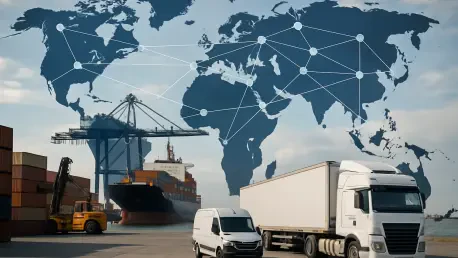

The modern supply chain is no longer a silent background operation but a high-tech engine driving the global economy through an intricate web of real-time data and automated logistics. As of 2026, the global fleet management sector has reached a pivotal valuation of $32.2 billion, yet this is merely the baseline for an era of unprecedented industrial scaling. Projections indicate the market will skyrocket to $153.7 billion by 2036, representing a massive compound annual growth rate of 16.9%. This expansion is not just about adding more vehicles to the road; it is a fundamental reimagining of how mobile assets are monitored, maintained, and optimized. The convergence of fifth-generation (5G) telecommunications, sophisticated artificial intelligence, and a permanent shift in consumer purchasing habits toward e-commerce has created a perfect storm for technological adoption. For businesses operating today, the transition from legacy manual oversight to a fully integrated, “intelligent” digital ecosystem is no longer a strategic advantage—it has become the primary requirement for operational survival.
Technological Evolution and Infrastructure
Innovations in AI Telematics: Moving From Reactive to Proactive
The integration of artificial intelligence into telematics has fundamentally changed the internal logic of fleet operations by shifting the focus from historical data to predictive foresight. In the past, fleet managers relied on “ping-and-map” GPS systems that only provided a vehicle’s current location and a record of where it had been. Today, AI-enhanced platforms process millions of data points every second, including engine diagnostics, driver behavior patterns, and even external environmental factors. These systems use machine learning algorithms to identify subtle anomalies in engine performance that would be invisible to the human eye, allowing for predictive maintenance schedules. By addressing a potential mechanical failure before it results in a roadside breakdown, companies are seeing a drastic reduction in unplanned downtime. This reliability translates directly into higher customer trust and retention, as delivery windows become more precise and service interruptions become a rarity rather than an expected operational hazard.
Beyond mechanical health, AI telematics are revolutionizing the way driver safety and performance are handled across large-scale commercial networks. Modern systems utilize edge computing to analyze live video feeds from in-cab cameras, identifying signs of fatigue, distraction, or aggressive driving in real time. Rather than waiting for a monthly report to coach a driver, the system provides immediate, haptic, or auditory feedback to correct risky behavior as it happens. This real-time intervention is a significant leap forward in risk management, helping to lower insurance premiums and protect the brand’s reputation. Furthermore, these platforms can aggregate data across an entire fleet to identify systemic inefficiencies, such as excessive idling or suboptimal fuel consumption. The result is a highly granular view of the business where every mile driven is scrutinized for its contribution to the bottom line, ensuring that the fleet operates as a lean, data-driven machine.
5G Connectivity: The Backbone of Real-Time Logistics
The widespread deployment of 5G infrastructure serves as the essential nervous system for the modern fleet, providing the high-speed, low-latency connectivity required for truly autonomous and semi-autonomous operations. Unlike previous cellular generations, 5G allows for a massive density of connected devices, meaning thousands of sensors on a single vehicle can transmit data simultaneously without clogging the network. This level of connectivity is what enables “dynamic route optimization,” where a central management hub can reroute an entire fleet in seconds based on a sudden traffic accident or a flash weather event. In the high-stakes world of logistics, where every minute of delay can ripple through the supply chain and incur significant financial penalties, the ability to make split-second adjustments is invaluable. Cloud-based fleet infrastructure has achieved a level of reliability where 99.99% uptime is the standard, protecting companies from the devastating costs of system outages that can exceed hundreds of dollars per minute.
This connectivity revolution also facilitates a deeper level of vehicle-to-everything (V2X) communication, allowing trucks to interact with smart city infrastructure such as traffic lights and toll booths. As 5G continues to mature throughout 2026 and beyond, we are seeing the rise of “platooning,” where multiple trucks travel closely together, synchronized via high-speed data links to reduce wind resistance and fuel consumption. This technology relies entirely on the near-instantaneous data transfer rates of 5G to ensure that if the lead vehicle brakes, the following vehicles respond in milliseconds. Moreover, the high bandwidth of 5G allows for the seamless transmission of high-definition video telematics, giving remote dispatchers a literal bird’s-eye view of any situation on the road. This technological layer does more than just track assets; it creates a transparent, responsive, and highly coordinated environment that maximizes the utility of every vehicle in the fleet, regardless of its geographic location.
Compliance and Market Demand
Regulatory Mandates: The Push Toward Digital Accountability
The rapid adoption of digital fleet management tools is being accelerated by a global wave of government regulations designed to improve road safety and labor transparency. The most prominent of these is the Electronic Logging Device (ELD) mandate, which has effectively outlawed the traditional paper logbook in favor of automated, tamper-proof digital records. These devices are hardwired into a vehicle’s engine to automatically record driving time, ensuring that operators adhere strictly to hours-of-service regulations. While initially viewed by some as a hurdle, these mandates have forced a much-needed digital transformation across the industry. Companies that once resisted technology now find themselves with a wealth of data that they can use to improve driver wellness and reduce fatigue-related accidents. This regulatory “floor” has created a massive, non-negotiable demand for integrated software solutions, as any business failing to comply faces heavy fines or the total loss of their operating licenses.
Moreover, the scope of regulatory oversight is expanding into the realm of environmental accountability and cargo security. In many jurisdictions, fleets are now required to provide detailed reports on their carbon emissions and fuel efficiency as part of broader “green” initiatives. Advanced management software simplifies this complex reporting process by automatically calculating CO2 outputs based on fuel consumption and mileage data. Simultaneously, safety standards are being raised through the integration of video telematics as a standard requirement for many insurance providers. By maintaining a digital “black box” of video and sensor data, fleet operators can provide objective evidence in the event of a collision, protecting themselves from fraudulent claims and reducing legal liabilities. This environment of high accountability means that the software used to manage a fleet is no longer just a tool for efficiency; it is a critical piece of legal infrastructure that protects the long-term viability of the business.
The E-Commerce Surge: Managing the Last-Mile Challenge
The permanent shift in consumer behavior toward online shopping has placed an unprecedented strain on last-mile delivery networks, making sophisticated fleet management tools essential for modern retailers. Last-mile logistics—the final leg of a product’s journey from a distribution center to the customer’s doorstep—is notoriously the most expensive and inefficient part of the supply chain. To combat these challenges, fleet operators are heavily investing in geofencing and real-time tracking technologies, which currently represent nearly half of the total market demand. Geofencing allows managers to draw virtual boundaries around warehouses, delivery zones, or high-risk areas. When a vehicle crosses these boundaries, the system automatically triggers notifications to the customer or alerts the dispatcher to prepare for arrival. This automation removes the guesswork from delivery windows and significantly reduces the time vehicles spend idling or waiting for loading docks to clear.
This heightened demand for transparency is also driving a “consumerization” of professional fleet tools, as end-users now expect the same level of tracking for their packages that they see with ride-sharing apps. Fleet managers are responding by integrating their back-end telematics with front-facing customer apps, providing real-time maps and precise arrival times. This transparency not only improves the customer experience but also reduces the number of failed delivery attempts, which are a major drain on profitability. As e-commerce volumes continue to grow, the complexity of urban delivery routes increases, requiring AI algorithms to constantly recalculate paths to avoid school zones, construction, or peak traffic hours. The ability to navigate these “micro-logistical” challenges efficiently is what separates market leaders from their competitors. In this environment, a fleet management system is the primary engine for maintaining high turnaround times and ensuring that the final mile remains a profitable venture.
Economic and Environmental Dynamics
Software Trends: The Rise of the Subscription Model
The economic structure of the fleet management market is undergoing a significant transition as the focus shifts from one-time hardware purchases to ongoing software-as-a-service (SaaS) relationships. While the physical components—such as GPS trackers, sensors, and telematics control units—remain essential, they are increasingly viewed as the “entry price” for accessing high-value data analytics. In the current 2026 landscape, hardware still holds a slight majority of market share because of the sheer volume of new vehicles being connected to the grid for the first time. However, the true long-term value lies in the software platforms that interpret the data these devices collect. Subscription-based models are becoming the industry standard because they allow providers to offer continuous updates, ensuring that fleet operators always have access to the latest security patches, feature sets, and regulatory compliance modules without needing to replace their physical equipment.
This shift toward a software-centric approach has profound implications for company profitability and customer loyalty. For software providers, a subscription model creates a stable, recurring revenue stream that is much more resilient to economic fluctuations than hardware sales. From the perspective of the fleet operator, SaaS provides a lower barrier to entry, as they can scale their software needs up or down based on their current fleet size without massive upfront capital expenditures. Furthermore, the competitive edge in the software space is now defined by the speed of innovation; leading developers are pushing out updates at a much higher frequency than legacy providers to stay ahead of evolving cybersecurity threats and changing environmental laws. This dynamic environment encourages a “sticky” ecosystem where, once a fleet is integrated into a specific software platform, the costs and complexities of switching to a competitor become a major deterrent, leading to lower churn rates and higher lifetime value for the service providers.
The Shift to Electrification: Green Logistics as a Standard
Environmental sustainability has moved from a corporate social responsibility (CSR) talking point to a core operational objective, driving a massive wave of electrification across commercial fleets. This transition to Electric Vehicles (EVs) introduces a new set of management challenges that traditional fuel-based systems are not equipped to handle. Consequently, fleet management platforms are being rapidly redesigned to include specialized modules for battery health monitoring, state-of-charge tracking, and sophisticated charging station integration. Managers now need to know not just where their vehicles are, but also which ones have enough charge to complete a specific route and where they can plug in without disrupting their schedule. The integration of “smart charging” algorithms allows fleets to charge their vehicles during off-peak hours when electricity prices are lowest, directly contributing to a lower total cost of ownership compared to internal combustion engines.
Beyond the vehicles themselves, the push for “green” logistics is being realized through the optimization of every possible operational variable. For fleets that are still transitioning away from fossil fuels, software is used to implement eco-driving programs that reward drivers for reducing rapid acceleration and excessive braking—behaviors that significantly impact fuel consumption and emissions. Route optimization also plays a critical role in sustainability by minimizing empty miles and ensuring that every trip is as direct as possible. Organizations are increasingly using these data-driven insights to meet net-zero emission targets and comply with the growing number of “low-emission zones” in major metropolitan areas. This holistic approach to sustainability ensures that environmental goals are met not through sacrifice, but through the increased efficiency and intelligence of the fleet itself.
Geographic Growth and Competitive Strategy: A Unified Global Market
The expansion of the fleet management market is a global phenomenon characterized by distinct regional strategies and intense competition between established tech giants and specialized startups. In markets like India, the growth is being propelled by massive government investment in physical infrastructure and the implementation of safety standards like AIS-140, which mandates tracking for all public transport and commercial vehicles. In contrast, China’s growth is deeply tied to its dominance in 5G deployment and its status as a manufacturing hub for the hardware that powers these systems. Meanwhile, the United States and Europe are focusing their efforts on the “software-defined vehicle,” where fleet management capabilities are built directly into the vehicle’s operating system at the factory. This trend toward “OEM-embedded telematics” allows businesses to activate fleet management services with a software license rather than an aftermarket hardware installation, simplifying the rollout for large-scale operators.
To maintain their dominance in this crowded field, major players are engaging in a wave of strategic acquisitions and partnerships, aiming to provide a “single pane of glass” experience for their users. The goal is a unified dashboard where a manager can oversee everything from vehicle location and driver safety to payroll, maintenance schedules, and carbon reporting. By integrating these disparate data streams, companies can uncover hidden correlations, such as how specific maintenance patterns might be affecting fuel efficiency or how driver turnover impacts overall fleet safety. This move toward total integration is also seeing fleet management companies partner with insurance firms to offer “usage-based insurance,” where premiums are adjusted in real-time based on the actual risk profile of the fleet. As the market moves toward 2036, the winners will be those who can offer the most comprehensive, easy-to-use platforms that turn the overwhelming flood of logistical data into a clear, actionable roadmap for business growth.
Conclusion: Strategic Implementation and Future Readiness
The evolution of fleet management into a $153.7 billion industry by 2036 signals a permanent shift toward a world where physical movement is entirely optimized by digital intelligence. To remain competitive in this high-stakes environment, organizations must move beyond simple tracking and begin viewing their fleet as a data-generating asset that requires constant optimization. The first actionable step for any fleet operator is to audit their current technological stack to ensure it is compatible with 5G connectivity and capable of integrating AI-driven predictive analytics. Investing in platforms that offer open APIs (Application Programming Interfaces) will be crucial, as this allows for the seamless exchange of data between fleet software and other business systems like CRM or ERP tools. By breaking down these data silos, companies can achieve a truly holistic view of their operations, identifying efficiencies that were previously hidden by fragmented reporting.
Furthermore, businesses should proactively prepare for the “electrification cliff” by integrating EV-ready management tools long before the majority of their fleet actually makes the switch. This involves not only selecting the right vehicles but also training staff on the nuances of energy management and charging logistics. The transition to a green fleet should be viewed as an opportunity to modernize the entire operational workflow, rather than a mere compliance exercise. Finally, the focus must remain on the human element; using technology to empower and protect drivers rather than simply monitoring them will be key to addressing the ongoing labor shortages in the logistics sector. Those who successfully synthesize these technological, regulatory, and environmental trends will not only survive the coming decade of transformation but will define the next era of global commerce. Adopting a forward-leaning, software-first mindset today is the most effective way to ensure long-term resilience and profitability in an increasingly automated world.