
The promise of cell therapy to treat and potentially cure some of the most challenging diseases has long been tempered by a formidable barrier: the immense difficulty of manufacturing these personalized medicines at scale. As a groundbreaking presentation at the Biotech Showcase™ in San Francisco details, a novel microbubble technology is poised to dismantle this obstacle, offering a pathway to mass-produce hundreds of thousands of cell therapy doses annually. This innovation arrives at a critical juncture, where the therapeutic potential of treatments like CAR-T is undeniable, but their high cost and complex, time-consuming production workflows limit their availability to a small fraction of eligible patients. By addressing the core bottlenecks of cell separation and processing, this buoyant technology aims to fundamentally reshape the logistics and economics of advanced therapies, potentially unlocking their benefits for broad indications such as solid tumors, autoimmune diseases, and diabetes. The shift from a bespoke, lab-scale process to a streamlined, industrial-scale operation could be the key to making these life-saving treatments a standard of care.
A New Paradigm in Cell Separation
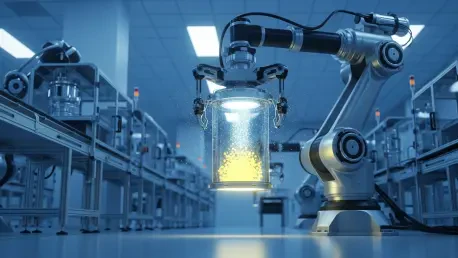
At the heart of this manufacturing evolution is a patented buoyant microbubble system that reimagines the process of isolating therapeutic cells. Traditional methods often involve harsh magnetic-based separation or complex, multi-step procedures that can stress the very cells they are meant to harvest, potentially compromising their viability and therapeutic efficacy. In stark contrast, this new platform employs a negative selection workflow that is both elegant and exceptionally gentle. Unwanted cells are targeted and attached to microscopic bubbles, which then use their natural buoyancy to float to the surface of the processing container. These non-target cells are then easily removed, leaving behind a highly pure, untouched population of the desired therapeutic cells. This “hands-off” approach for the target cells is a critical advantage, as it minimizes handling and environmental stress, thereby preserving the health and potency of the final therapeutic product. By fundamentally changing the physics of separation from pulling cells down to floating them away, the technology offers a more efficient and biologically friendly alternative.
The practical implications of this refined separation method extend far beyond improved cell quality, directly tackling the pervasive issue of time in cell therapy manufacturing. Current industry-standard processes can be notoriously slow, creating significant delays in a field where patients often cannot afford to wait. The microbubble platform dramatically accelerates this crucial step, significantly reducing the overall processing time required to prepare a patient’s dose. This increase in speed is not merely an incremental improvement; it represents a leap forward in operational efficiency. By simplifying what has traditionally been one of the most complex and time-intensive stages, manufacturers can increase their throughput without a corresponding increase in infrastructure or personnel. This enhanced velocity aligns with the urgent industry goal of reducing “vein-to-vein” time—the total duration from when a patient’s cells are collected to when the final therapy is infused. Ultimately, faster processing translates directly into faster delivery of potentially life-saving treatments to patients.
Redefining the Economics of Advanced Therapies
A key barrier to the widespread adoption of cell therapies has been their astronomical cost, a factor driven largely by the intricate and resource-intensive manufacturing process. The microbubble platform is positioned to directly challenge this economic reality by delivering an estimated 40% overall cost savings compared to conventional magnetic separation techniques. These substantial savings are realized across multiple operational domains. Firstly, the streamlined workflow reduces the need for highly skilled labor and minimizes hands-on time, lowering personnel costs. Secondly, the technology’s compact footprint and efficiency decrease the demand for expensive, specialized GMP (Good Manufacturing Practice) cleanroom space. Finally, it obviates the need for significant capital investment in costly magnetic separation equipment. This trifecta of savings creates a superior return on investment for developers and manufacturers, altering the financial calculus of cell therapy production and making it a more commercially viable enterprise for a wider range of companies.
The economic and logistical efficiencies introduced by this technology could catalyze a market expansion, enabling cell therapies to move beyond rare cancers and into the treatment of more common diseases. The potential for large-scale, cost-effective manufacturing makes it feasible to develop therapies for broad indications like autoimmune disorders, solid tumors, and diabetes, which affect millions of patients worldwide. Lower production costs and simplified logistics also pave the way for a crucial shift in care delivery from specialized inpatient hospital centers to more accessible outpatient settings. This transition would not only enhance patient convenience but also reduce the overall burden on healthcare systems. By making the production process more affordable and scalable, the microbubble platform supports a future where these advanced, personalized medicines are no longer a niche option for a select few but a mainstream therapeutic modality available to the broader population.
Pioneering a Path to Widespread Access
The practical power of this technology was underscored through a strategic partnership with Kure Cells, a company focused on achieving single-day cell therapy manufacturing. David Wald, the CEO of Kure Cells, endorsed the platform for its ability to drastically simplify a complex and critical step in the CAR-T production workflow. This collaboration demonstrated how the microbubble system could enable greater speed, consistency, and scalability without any compromise in the final quality of the therapeutic cells. It provided tangible proof that the technology was not merely a theoretical improvement but a functional solution that could be integrated into real-world manufacturing pipelines to achieve ambitious production goals. The success of this joint effort highlighted a clear pathway toward making CAR-T therapies significantly more accessible and affordable, directly aligning with the mission to bring these powerful treatments to more patients in need. This validated application represented a pivotal step in transforming the operational landscape of cell therapy.