
The current geopolitical landscape has shifted dramatically as the localized friction involving Iran transformed into a comprehensive blockade of the world’s most vital maritime and aerial corridors. While military analysts traditionally focus on the tactical movements within the Persian Gulf, the broader economic fallout is now being felt in assembly lines from Munich to Detroit and on pharmacy shelves across the globe. The Strait of Hormuz, often described as the world’s jugular vein for energy, has effectively ceased to function as a reliable passage for merchant shipping, forcing a total reconsideration of global logistics. This crisis is no longer just about the fluctuating price of a barrel of crude oil; it has become an existential threat to the “just-in-time” manufacturing model that defines modern commerce. As cargo remains stranded and air routes are diverted, the international community faces a period of unprecedented scarcity and sharp inflationary pressure that challenges the very foundations of global trade.
Gridlock on the High Seas and in the Skies
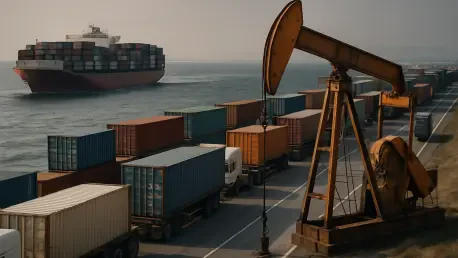
The strategic geography of the Middle East makes it an indispensable hub for international trade, yet the onset of recent hostilities has brought this machinery to a grinding halt. Current data from maritime research institutions indicates that over 3,200 vessels, representing nearly 4% of total global shipping tonnage, are currently idling in the waters surrounding the Persian Gulf. This is not merely a regional delay; it creates a profound domino effect throughout the entire international logistics network, as ships waiting in limbo near the United Arab Emirates and Oman cannot reach their next destinations. Logistics experts frequently compare the global supply chain to a massive, interconnected train where a single derailed car—in this case, the major ports within the Gulf—causes delays that reverberate through every subsequent car. Consequently, ports thousands of miles away are experiencing sudden congestion as schedules are discarded, leaving manufacturers and retailers struggling to predict arrival times.
Parallel to the maritime paralysis is the systematic disruption of air cargo routes that typically bridge the gap between Asian production centers and European markets. Major Middle Eastern transit hubs, including those in Qatar, Bahrain, and Kuwait, have seen their airspace restricted or entirely shuttered due to the elevated risk of kinetic engagement. While air freight accounts for a small fraction of global tonnage, it carries approximately 35% of the world’s trade value, primarily consisting of high-priority, perishable, and expensive goods like semiconductors and essential medical supplies. The closure of these hubs has forced major carriers like Emirates and Etihad to ground significant portions of their cargo fleets or seek alternative, circuitous paths across the Asian continent. These detours often require additional fuel stops and significantly increase transit times, making the delivery of time-sensitive electronics and pharmaceutical components both more difficult and vastly more expensive for end-users.
Critical Vulnerabilities in Technology and Healthcare
The reach of the conflict into the high-tech sector is particularly alarming because Asia remains the primary producer of the world’s most advanced semiconductors and high-capacity batteries. These components are the lifeblood of modern industry, powering everything from the latest smartphones and electric vehicles to sophisticated national defense systems. Under normal circumstances, a significant volume of these components travels through Middle Eastern corridors to reach Western markets. With these routes compromised, the threat of stalled manufacturing lines has become a reality for many global corporations. Any sustained delay in the delivery of microchips or lithium-ion batteries not only drives up the cost of consumer electronics but also threatens to slow the transition to green energy technologies. As inventories dwindle, the competition for available stock is expected to intensify, leading to a period where high-value technology becomes a luxury that many businesses and consumers can no longer easily afford.
Beyond the realm of consumer electronics, the crisis has introduced a dangerous bottleneck in the pharmaceutical and agricultural sectors that could have dire humanitarian consequences. India, often recognized as the primary provider of generic medications to the world, relies heavily on Middle Eastern air and sea routes to distribute its products to international markets. Disruptions to these logistics channels do not just result in financial losses; they pose a direct threat to public health if life-saving drugs fail to reach patients in a timely manner. Similarly, the Middle East is a major source of petrochemical feedstocks and nitrogen-based fertilizers that are essential for global food production. A sustained shortage of these foundational materials would likely lead to decreased agricultural yields and a subsequent spike in food prices, placing an immense burden on developing nations and vulnerable populations. This intersection of logistics and basic survival underscores the gravity of the current geopolitical instability.
The Staggering Financial Toll and Logistics Resilience
Navigating the logistical hurdles created by the conflict has proven to be an incredibly expensive endeavor, with these rising overheads eventually reaching the average consumer. Many shipping giants, including Maersk and MSC, have been forced to reroute their massive container ships around the southern tip of Africa via the Cape of Good Hope. This detour adds between ten and fourteen days to a vessel’s journey and incurs an additional $1 million in fuel costs per ship, a staggering sum when multiplied across an entire fleet. To mitigate these expenses and the skyrocketing premiums for “war risk” insurance, shipping companies are implementing a series of emergency surcharges. The air cargo sector is seeing a similar trend, where reduced capacity and heightened demand for alternative routes are driving freight rates to levels not seen in years. The volatility in oil prices further compounds these issues, as the rising cost of jet fuel and marine diesel inflates every aspect of moving goods across the globe.
Despite the overwhelming challenges, the global logistics industry has demonstrated a surprising level of resilience, largely due to the lessons learned during the major supply chain shocks of the recent past. Industry veterans have noted that the modern freight system now essentially “runs on disruption,” having developed the agility needed to pivot operations in response to regional conflicts or closed borders. While the scale of the Iran conflict is unique in its strategic severity, the mechanisms for rerouting goods and diversifying transport modes are already in place and being utilized. This adaptability ensures that while trade may become significantly more expensive and slower, it is unlikely to stop entirely. The synthesis of these factors—higher fuel costs, insurance premiums, and manufacturing delays—points toward an unavoidable period of inflation, but the industry’s ability to maintain some flow of goods provides a small measure of stability in an otherwise volatile environment.
Strategic Responses: The Path to Stability
To address the immediate threat to maritime trade, international powers have proposed a series of strategic interventions aimed at stabilizing the most critical transport routes. The United States has explored utilizing the International Development Finance Corporation to provide political risk insurance to commercial tankers, a move designed to calm a volatile insurance market where premiums have reached prohibitive levels. Furthermore, the deployment of naval escorts for merchant shipping remains a central tactical option, with destroyers and littoral combat ships stationed in the region to protect commercial interests in the Strait of Hormuz and the Red Sea. These military and financial measures represent a coordinated attempt to reassure shipping companies that their assets and crews can be protected. However, the success of these interventions depends on the continued cooperation of regional allies and the ability to de-escalate tensions sufficiently to allow for a predictable flow of commerce through these contested waters.
The resolution of this logistical crisis required a fundamental shift toward supply chain diversification and the adoption of more robust risk-management frameworks. Organizations prioritized localized manufacturing and the expansion of alternative trade corridors to reduce their dependence on single chokepoints like the Middle East. Policymakers and industry leaders collaborated to establish strategic stockpiles of semiconductors and pharmaceutical precursors, ensuring that future disruptions would not lead to immediate shortages of life-saving goods. Moving forward, the focus must remain on investing in redundant infrastructure and digital logistics platforms that provide real-time visibility into global cargo movements. By institutionalizing the lessons learned from this period of instability, the global community strengthened its ability to withstand geopolitical shocks. The transition to a more fragmented but resilient trade network became the primary objective for the coming years, ensuring that essential supplies continued to move even in the face of persistent regional conflict.