
Kwame Zaire is a veteran manufacturing expert who has dedicated his career to the intersection of production management, electronics, and industrial safety. As a thought leader in predictive maintenance and operational resilience, he understands that the modern factory floor is no longer just a collection of machines, but a sophisticated web of interconnected digital systems. In this conversation, he shares his insights on how manufacturers can move beyond basic data backups to build a robust framework for production continuity in an era of increasing digital complexity.
When shifting from basic data restoration to full production continuity, how do you determine which platforms, such as ERP or MES, take priority? What specific metrics or operational markers should a facility use to ensure their recovery sequence matches actual production realities?
Determining priority requires a shift from IT-centric thinking to an operational-first mindset where we look at what actually keeps the line moving. We evaluate platforms by identifying which ones coordinate the immediate flow of production scheduling and supplier collaboration versus those that handle long-term reporting. A facility should look at “revenue-priority logic,” where systems tied directly to high-value SKUs or customer-facing commitments are moved to the front of the line. We track the time-to-impact for each system; if an ERP failure stops supplier communication within an hour, it takes precedence over a quality management system that might have a four-hour buffer. This ensures that the recovery sequence isn’t just about turning on servers, but about restoring the pulse of the manufacturing floor.
Modern plant floors rely on integrated layers like SCADA networks, PLCs, and industrial IoT sensors. What are the risks of restoring these systems out of sequence, and how can teams create a step-by-step roadmap to align plant-level recovery with enterprise IT failover?
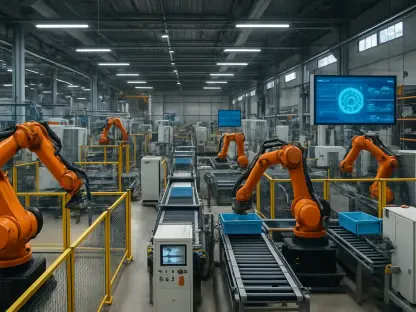
The primary risk of an out-of-sequence restoration is the propagation of errors, where a mid-cycle PLC restart without proper SCADA oversight can lead to corrupted batch records or even physical safety hazards. If we restore enterprise IT but the plant-level OT sensors are still offline, the data mismatch can cause automated systems to fail immediately upon reconnection. To avoid this, teams must map the technical dependencies between the cloud-connected production systems and the physical controllers on the floor. We create a roadmap by documenting the exact flow of data—from the sensor to the MES to the ERP—and then testing that sequence in reverse during disaster recovery drills. It’s about ensuring that the digital infrastructure and the physical machinery are speaking the same language before we flip the switch.
Operational exposure often exists at the product or SKU level rather than just with a general vendor. How can manufacturers effectively map the relationships between their digital platforms and specific revenue streams? What practical steps help identify these single points of failure before a disruption occurs?
Many organizations make the mistake of looking at vendor risk through a purely financial or cybersecurity lens, but the real danger lies in “revenue concentration risk” at the SKU level. To map this effectively, we perform a “disruption calculus” that connects specific production cells and enterprise systems to the products they produce. We start by identifying our top-earning SKUs and then work backward to see which cloud services, specialized tools, or single-source suppliers are essential for those items. By documenting these relationships, we can see if a single cloud outage at one supplier could potentially halt 50% of our production volume. This granular visibility allows us to diversify our digital dependencies and create redundancies where they matter most for the bottom line.
AI-enabled analytics can now identify hidden patterns and dependencies across complex supplier systems. How does this data-driven visibility improve decision velocity during an active crisis? Please walk us through how a triage playbook uses this information to reduce the time between system impact and aligned action.
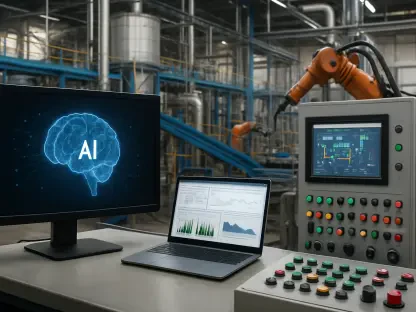
In the heat of a crisis, decision velocity—the speed at which you move from impact to insight to action—is everything. AI-enabled analytics allow us to move beyond static documentation by processing live data from ERP and MES systems to pinpoint exactly where a failure is propagating. A triage playbook uses this AI insight to automatically trigger predefined responses, such as shifting production to a different facility or adjusting scheduling based on constrained capacity. Instead of spending hours in a conference room trying to understand the scope of a cloud outage, the system provides an immediate view of which orders are at risk and which lines can keep running. This reduces the “fog of war,” allowing management to take aligned action in minutes rather than days, significantly mitigating operational loss.
Achieving resilience requires moving beyond static documentation to dynamic, data-driven risk assessment. How do inventory buffer thresholds and customer communication triggers integrate into a modern disaster recovery strategy? What anecdotes or examples demonstrate the impact of having these predefined triggers in place?
Modern resilience is a living strategy that integrates physical realities, like inventory buffer thresholds, directly into the recovery plan. For example, if a cyber incident halts a production line, the system should automatically check if we have a 3-day or 10-day buffer of finished goods before triggering an urgent customer delay notification. I’ve seen cases where having these predefined triggers saved a company’s reputation; because they knew their inventory levels exactly, they could provide customers with precise delivery updates within two hours of a system failure. We also use data platforms to track incident costs and recovery timing, creating a feedback loop that adjusts our buffer requirements based on past performance. It turns disaster recovery from a reactive “break-glass” manual into a proactive, data-driven management tool.
What is your forecast for the future of digital resilience in manufacturing?
I believe we are moving toward a future where resilience is no longer a separate IT function but is baked into the very DNA of the production process. We will see the rise of “self-healing” supply chains where AI doesn’t just identify a failure, but autonomously reroutes logistics and reconfigures production schedules in real-time to maintain continuity. The distinction between IT and OT will continue to blur, making coordinated recovery strategies the standard rather than the exception. Ultimately, the most successful manufacturers will be those who treat resilience as a competitive advantage, using their ability to withstand and recover from digital disruptions as a key selling point to their global customers.