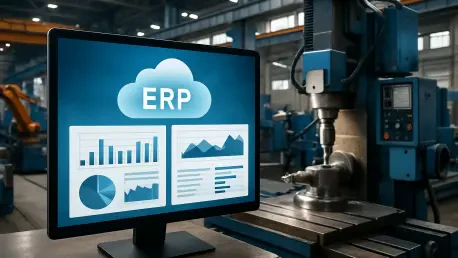

Manufacturers today find that losing margin is rarely the result of a shop floor that cannot build products, but rather the consequence of disconnected tools that turn every order change into a manual reconciliation drill. When purchasing, production, inventory, and finance run on fragmented systems, the resulting operational drag prevents companies from responding to the volatility that has become the standard in the current industrial landscape. Cloud enterprise resource planning (ERP) systems have evolved to solve this specific challenge by replacing isolated applications with a shared operating model that unifies planning, handoffs, and costing on a single data platform. As of 2026, the shift toward cloud-based infrastructure has matured, with a significant majority of manufacturers either fully migrated or in the final stages of implementation to ensure they are working from a singular source of truth. The decision is no longer about whether to modernize, but how to execute the transition without causing significant disruptions to active production lines or compromising delivery commitments to a demanding customer base.
The current market for cloud ERP solutions has reached a sophisticated peak where event-driven integrations keep ecommerce, execution, and financial reporting in perfect synchronization. When a customer modifies an order through a digital storefront, a modern ERP immediately recalculates material requirements, adjusts the production schedule, and updates the financial margin in real time. This capability represents the fundamental difference between reactive operations and adaptive ones, allowing teams to protect their bottom line without the need for emergency meetings or manual data entry. By leveraging a system that runs on the vendor’s servers, manufacturers also offload the heavy lifting of security patches, software upgrades, and hardware maintenance, allowing their internal IT resources to focus on innovation rather than basic infrastructure support. Choosing the right partner in this environment requires a deep understanding of how these systems fit alongside specialized tools like manufacturing execution systems (MES) and warehouse management systems (WMS) to create a cohesive digital ecosystem.
1. Document Operational Workflows: The Foundation of Digital Transformation
Before a manufacturer begins evaluating software vendors, it is essential to perform a comprehensive audit of every internal process a product or dollar follows through the organization. This mapping exercise should identify manual handoffs where employees are forced to type data from one screen into another, as well as the “shadow” spreadsheets often used to track inventory that the current legacy system ignores. By documenting the plan-to-produce workflow in its entirety, decision-makers can pinpoint specific stages where orders typically stall or where data integrity issues begin to surface. This level of clarity is vital because many manufacturers underestimate the complexity of their own operations until they see the hidden workarounds their staff has developed to bypass aging technology. A failure to capture these nuances during the initial documentation phase often leads to selecting a system that looks good in a boardroom presentation but fails to handle the messy, high-speed realities of the actual factory floor.
The mapping process must also account for regulatory requirements and industry-specific compliance standards, such as those governing electronic signatures or detailed audit trails for sensitive materials. When workflows are clearly defined, they serve as a benchmark for evaluating how a potential cloud ERP will handle unique business processes, such as complex quality inspections or specific machine-time tracking. This stage is also the ideal time to identify which departments are most affected by data silos, ensuring that the new system addresses the friction points between sales, procurement, and production. Moving forward with a transformation project without a detailed process map is a primary reason why implementations exceed their budgets or fail to deliver the expected return on investment. A well-documented operational foundation ensures that the software is selected to fit the business, rather than forcing the business to conform to a rigid software architecture that might limit future growth or flexibility.
2. Create a Focused Vendor List: Matching Capabilities to Production Styles
The search for the ideal cloud ERP partner should begin by categorizing software providers based on their ability to support specific manufacturing environments, such as discrete or process manufacturing. Discrete manufacturers require a system with robust functionality for complex assemblies, multi-level bills of materials, and engineering change orders that can be tracked throughout the product lifecycle. In contrast, process manufacturers must prioritize vendors that offer specialized tools for formulation management, yield calculations, and potency tracking where the final product cannot be easily disassembled into its original parts. If an organization operates a mixed-mode facility that combines both styles, the shortlist must be restricted to platforms that handle these diverse logic sets natively. Choosing a vendor that specializes in the wrong production style often results in expensive custom coding that creates technical debt and complicates future software upgrades.
Beyond production style, the evaluation criteria must include the vendor’s track record with modern integration standards and their ability to connect seamlessly with an existing technology stack. Many organizations find that integration complexity is a major barrier to success, making it necessary to prioritize platforms that offer stable, documented APIs and proven connectors for common sales and logistics tools. It is also important to consider the fulfillment model, whether it be make-to-order, make-to-stock, or engineer-to-order, as each requires different logic for material planning and resource allocation. A vendor that lacks deep experience in a specific fulfillment model will struggle to provide the necessary insights for inventory optimization and available-to-promise accuracy. By filtering the initial pool of candidates through these specific operational lenses, a manufacturer can focus its energy on a few high-quality options that have a demonstrated ability to solve their unique industrial challenges.
3. Execute Demos with Practical Scenarios: Testing Real-World Performance
Once a shortlist of vendors has been established, the demonstration phase must move beyond generic feature tours and into the realm of scripted, reality-based scenarios. Manufacturers should provide vendors with a specific set of challenges that reflect the daily pressures of their shop floor, such as managing a sudden engineering change order mid-production or handling a massive rush order that conflicts with existing schedules. Observing how the system manages revision control, work-in-process rework, and the resulting cost variances provides a clear picture of its practical utility. A demonstration that focuses only on user interface aesthetics without showing the underlying data logic can be misleading, as the most critical functions often happen behind the scenes in the calculation engines. This phase is the best opportunity to see if the software can actually handle the volume and complexity of the organization’s data without requiring excessive manual intervention.
Lot traceability and quality management should also be front and center during these scripted demonstrations, particularly for those in regulated industries where safety is a primary concern. The vendor should be able to follow a specific material lot from its arrival at the receiving dock, through various production stages, and finally to the end customer, while maintaining a complete forward and backward genealogy. This includes showing how the system handles quality holds, automated notifications, and the generation of compliance documentation required for audits. If a system appears clunky or requires multiple workarounds to perform these essential tasks during a controlled demo, it is highly likely that it will cause significant delays in a live production environment. Testing these “stress points” ensures that the chosen cloud ERP is not just a digital filing cabinet, but a dynamic tool that actively supports the speed and precision required for modern manufacturing excellence.
4. Confirm Integration Stability: Ensuring Seamless Data Flow
In the current interconnected industrial landscape, a cloud ERP must function as the central nucleus of a larger digital ecosystem, making integration stability a non-negotiable requirement. Manufacturers need to verify how a potential system handles high-volume data exchanges, specifically looking at API performance and the vendor’s strategy for managing rate limits during peak activity. A system that uses modern protocols like GraphQL or event-driven webhooks is generally more reliable than one relying on older, batch-based processing methods that can lead to data lag and inventory discrepancies. Ensuring that the ERP can communicate instantly with storefronts, shipping carriers, and third-party logistics providers is crucial for maintaining accurate available-to-promise data and meeting customer expectations for real-time order tracking. Without this level of connectivity, the factory remains an island, disconnected from the very demand signals it needs to operate efficiently.
The technical evaluation should also extend to the vendor’s discipline regarding software versioning and the long-term stability of their integration hooks. Because cloud providers push updates on a regular schedule, it is vital to understand how these changes will affect existing connections to specialized tools like manufacturing execution systems or warehouse management platforms. A reliable partner will have a documented process for deprecating old code and providing a clear path for migrating to new API versions without breaking critical business workflows. This prevents the “version lock” that plagued older on-premise systems, where organizations were unable to upgrade because their custom integrations were too fragile to survive a software update. By prioritizing a platform built on a modern, flexible architecture, manufacturers can ensure that their technology stack remains agile and capable of adopting new innovations as they emerge in the coming years.
5. Calculate Total Investment and Timelines: Managing the Financial Commitment
Determining the true cost of a cloud ERP implementation requires looking far beyond the initial subscription fees to account for the total cost of ownership over several years. Manufacturers must budget for the intensive data-cleaning process that almost always precedes a successful migration, as migrating “dirty” data into a new system is a guaranteed way to undermine its effectiveness. Additionally, the investment should include the costs of training staff, purchasing any necessary hardware for the shop floor, and paying for third-party integration services that may be required to bridge gaps between systems. Many projects exceed their original budgets because these peripheral but essential activities were not properly accounted for during the planning phase. A realistic financial model provides the necessary buffer to handle unexpected challenges without forcing the project to be scaled back in ways that compromise its ultimate value to the organization.
Timeline expectations must also be grounded in reality, with the understanding that a successful enterprise-level deployment typically spans several months rather than weeks. The median implementation time in the current market is approximately nine months, a duration that reflects the complexity of moving critical business functions to a new platform while maintaining ongoing operations. Rushing this process to hit an arbitrary deadline often leads to poor user adoption and technical errors that can take years to correct. Manufacturers who set realistic milestones and dedicate sufficient internal resources to the project are far more likely to see a rapid return on their investment through improved inventory accuracy and reduced operational overhead. By treating the ERP transition as a strategic long-term investment rather than a one-time software purchase, leadership can ensure that the organization is financially and operationally prepared for the journey ahead.
6. Essential Modules for Success: Core Functions of a Unified System
For a cloud ERP to truly transform a manufacturing business, it must include a suite of core modules that address the specific friction points of production, such as material planning and shop floor execution. The material requirements planning module should offer sophisticated demand forecasting and scenario modeling tools that allow planners to see the impact of supply chain disruptions before they result in stockouts. When these planning tools are unified with real-time inventory data, the system can provide automated replenishment suggestions that balance the need for safety stock with the desire to minimize working capital. On the shop floor, the execution module must replace paper travelers with digital instructions and provide immediate feedback on labor hours, scrap rates, and machine downtime. This level of visibility allows managers to react to production issues as they happen, rather than waiting for end-of-day reports to identify problems.
Beyond production, the financial management and costing modules are what tie the entire operation together by providing a direct link between physical activity and the general ledger. A modern ERP tracks work-in-process value in real time, capturing labor and material costs as they are consumed so that finance teams always have an accurate picture of production margins. This integration eliminates the need for manual month-end reconciliations and allows for more precise analysis of variance between standard and actual costs. Security and compliance modules round out the essential features by providing role-based access controls and comprehensive audit trails that are necessary for protecting intellectual property and meeting industry regulations. When these functional areas work in harmony, the ERP becomes more than just a reporting tool; it acts as a strategic asset that drives efficiency and profitability across every department in the company.
7. Strategic Implementation: Moving Toward an Integrated Future
The transition to a cloud-based ERP model was successfully completed by organizations that recognized the move as a fundamental shift in business philosophy rather than a simple technology upgrade. These companies prioritized the alignment of their internal processes with the capabilities of the new system, ensuring that the software supported a more agile and data-driven approach to manufacturing. By focusing on the removal of data silos and the automation of manual handoffs, they were able to reduce operational drag and improve their ability to respond to market shifts. The most effective implementations were those where leadership remained actively involved, providing the necessary support for cultural change and ensuring that staff members were properly trained to utilize the new tools. This proactive approach allowed manufacturers to avoid the common pitfalls of technical debt and fragmented reporting that often hinder long-term growth.
Looking toward the future of industrial operations, the key takeaway from the recent wave of modernizations has been the importance of choosing a platform that can grow alongside the business. The move to the cloud was not a final destination, but the beginning of a cycle of continuous improvement where updates and new features are adopted with minimal disruption. Manufacturers have discovered that having a scalable and integrated system of record is the primary prerequisite for adopting advanced technologies such as predictive maintenance and artificial intelligence. The actionable next step for any organization still operating on legacy infrastructure is to initiate a thorough internal audit to identify the specific areas where disconnected systems are currently costing the business money. By addressing these gaps through a systematic selection and implementation process, manufacturers can secure their competitive position in an increasingly digital and volatile global marketplace.