
The recent announcement that Apple has expanded its American Manufacturing Program through a substantial four hundred million dollar investment marks a significant shift in how domestic production capacities are being leveraged for global technology distribution. This initiative is not merely a financial commitment but a strategic pivot aimed at revitalizing the domestic supply chain by integrating world-class engineering firms into a unified ecosystem. By partnering with Bosch, TDK, Cirrus Logic, and Qnity Electronics, the focus remains on harnessing American ingenuity to develop sophisticated materials and high-tech components through 2030. These collaborations represent a direct response to the increasing demand for resilient hardware architectures that can withstand global market fluctuations. The move signals a broader trend of reshoring critical industrial processes to ensure that precision engineering remains at the heart of technological progress within the United States, effectively setting a new standard for localized high-performance manufacturing.
Localized Production of High-Tech Sensors and Circuits
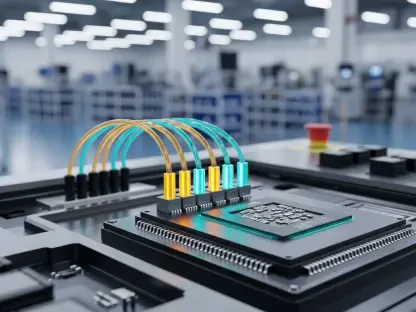
This expansion introduces several localized production milestones that highlight the technical sophistication of the new partners involved. For instance, TDK is set to manufacture advanced tunnel magnetoresistance sensors on American soil for the first time, which are critical for the optical image stabilization systems found in modern smartphone cameras. Parallel to this, a three-way collaboration between Apple, Bosch, and TSMC is establishing a specialized production line in Camas, Washington. This facility will focus on integrated circuits that power essential safety and fitness features, such as activity tracking and the sophisticated Crash Detection algorithms used across various portable devices. Meanwhile, in Malta, New York, the partnership with Cirrus Logic and GlobalFoundries is driving the development of next-generation semiconductor process technologies for mixed-signal solutions. These innovations are vital for the continuous refinement of biometric authentication systems like Face ID and other sensing hardware.
Advancing Semiconductor Materials for Future Innovation
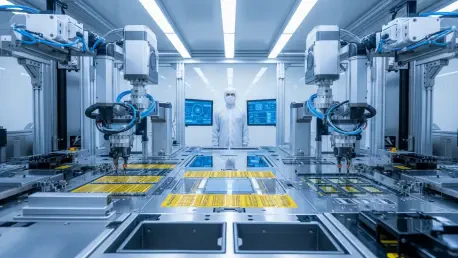
The integration of Qnity Electronics and HD MicroSystems further bolstered the domestic manufacturing landscape by providing the specialized materials necessary for complex semiconductor fabrication. These organizations focused on delivering the raw chemical and physical components required for advancements in artificial intelligence and high-performance computing. By joining existing industry leaders such as Samsung, Corning, and Texas Instruments, these new members solidified an overarching trend of reshoring critical technology manufacturing to protect national interests. This consolidated effort ensured a more resilient supply chain and advanced American leadership in sensing hardware and semiconductor fabrication. Stakeholders recognized that these strategic investments laid the groundwork for a unified ecosystem where next-generation consumer electronics could be conceived and built within the same borders. Future considerations pointed toward expanding these localized hubs to include emerging battery technologies and sustainable material processing by 2028.