
The food and beverage industry finds itself at a critical juncture, navigating a complex landscape where traditional packaging methodologies are rapidly becoming obsolete. Mounting pressure from impending government regulations, the rollout of extended producer responsibility programs, and a powerful societal movement to phase out single-use plastics have created a challenging operational environment. These converging forces compel businesses to fundamentally re-evaluate their packaging strategies, demanding a decisive pivot from conventional methods toward solutions that are not only innovative but also environmentally responsible. Within this context, the Australian market, with its characteristic openness to adopting new technologies, has become a fertile ground for pioneering systems. A strategic partnership between Esko Australia and Greek machinery provider Alfa Machine has introduced an advanced Form-Fill-Seal technology that promises a tangible pathway for manufacturers seeking to overcome these modern packaging dilemmas and build a more resilient future.
Understanding the Shift to FFS Technology
The Inevitable Move Toward Sustainability
The industry-wide transition toward sustainability is no longer a matter of preference but a fundamental business necessity, driven by a combination of stringent legislation and evolving consumer expectations. The collaboration between Esko Australia, a specialist in comprehensive manufacturing systems, and Alfa Machine, a seasoned expert in packaging machinery, is positioned as a pivotal force to guide businesses through this complex evolution. As industry experts note, this shift requires more than minor adjustments; it demands significant upgrades to existing equipment. While the original deadlines for phasing out single-use plastics have encountered delays due to the scarcity of viable, scalable solutions and concerns over initial investment costs, the transition itself is considered inevitable. The most strategic approach for manufacturers is proactive adoption. Those who invest early in cleaner, more efficient, and fully compliant systems will not only meet future regulations but also secure a distinct competitive advantage, effectively future-proofing their operations. The core principle is to implement the right equipment and design from the very beginning, avoiding the costly and inefficient process of retrofitting or correcting poorly chosen systems down the line.
The strategic imperative to adopt future-ready technology underscores a broader change in manufacturing philosophy, moving from reactive problem-solving to proactive, long-term planning. The hesitation to invest in new systems, often driven by short-term cost analysis, overlooks the substantial long-term risks associated with non-compliance and outdated technology. As regulatory frameworks tighten and consumer demand for sustainable products intensifies, companies relying on legacy packaging methods will face increasing operational friction, potential fines, and damage to their brand reputation. The approach championed by Esko Australia and Alfa Machine encourages businesses to view equipment upgrades not as an expense but as a strategic investment in operational resilience and market leadership. By focusing on integrated systems that are designed for sustainability and efficiency from the ground up, manufacturers can build a robust foundation that supports innovation, satisfies regulatory requirements, and aligns with the values of the modern consumer, ensuring their continued relevance and profitability in a rapidly changing industry.
The Core Advantages of an Integrated System
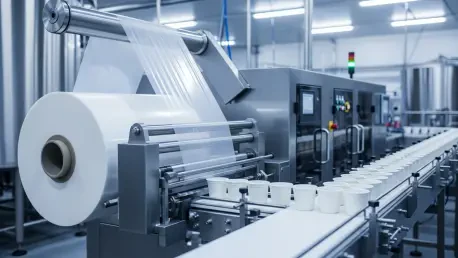
The Form-Fill-Seal process represents a paradigm shift away from the fragmented and often inefficient traditional packaging workflows. It is a highly automated and integrated system that consolidates the entire packaging operation into a single, continuous production line, fundamentally altering the manufacturing process. The technology begins with a roll of flat film stock, in this case, polypropylene, which the FFS machine expertly forms into the desired container shape, such as a cup or a tray. Immediately following this forming stage, an integrated filling system dispenses the product into the newly created container with high precision. In the final step, the filled container is securely sealed, typically with a lidding film from a separate roll, completing the package. This entire sequence unfolds within a compact and meticulously controlled environment, streamlining production and minimizing the potential for error. The most significant departure from conventional methods is the elimination of reliance on procuring, transporting, storing, and handling bulky, pre-made containers, which introduces multiple points of potential contamination and significant logistical costs.
This integrated approach yields substantial benefits that extend across operational efficiency, food safety, and financial performance. From a hygiene perspective, the FFS process is exceptionally effective. By creating the package just moments before it is filled and sealed within a controlled atmosphere, the system dramatically reduces the risk of contamination associated with manual handling and the storage of pre-formed containers. Furthermore, the continuous and automated nature of the operation ensures a high degree of quality consistency and impressive throughput, making it perfectly suited for the high-volume production of goods like dairy products, sauces, dips, and ready-to-eat meals. An often-overlooked financial advantage, as highlighted by industry experts, lies in the significant cost savings achieved by eliminating the logistics of pre-made cups. The expenses tied to transportation, warehouse storage, and internal handling of these empty containers are completely removed, contributing directly to a lower cost per unit and an improved bottom line for the manufacturer.
A Closer Look at the Alfa Machine FRS-L Series
Engineered for a Circular Economy
The Alfa Machine FRS-L series stands as a prime example of technology engineered specifically to meet the demands of a circular economy. Its design is centered on operating exclusively with polypropylene, a versatile and widely recycled polymer that serves as the foundation for its sustainable credentials. A pivotal innovation within the FRS-L series is its integrated In-Mould Labelling system. This advanced feature applies a biaxially oriented polypropylene label directly onto the container during the forming stage. By ensuring that the cup, the label, and the lidding material are all made from the same PP-based material, the machine produces a mono-material package. This homogeneity is crucial for recycling streams, as it eliminates the need for separating different materials, a common barrier to effective recycling. The resulting package is 100 percent recyclable, aligning perfectly with the principles of a circular economy where materials are kept in use for as long as possible. This design philosophy directly addresses one of the industry’s most pressing challenges: creating packaging that is not only functional and appealing but also genuinely sustainable at the end of its life.
The selection of polypropylene as the primary material for the FRS-L series also grants the machine remarkable application versatility, making it a flexible solution for a diverse range of food products. This material is well-suited for various filling conditions, including standard ambient temperature filling for products like dips and sauces, as well as demanding hot-filling applications at temperatures up to 95°C. This capability makes it ideal for items that require pasteurization during packaging, such as cream cheese, fruit purees, and tomato pastes. Furthermore, the robustness of PP allows it to be used in retort packaging applications, a high-heat sterilization process for creating shelf-stable products like processed meats, vegetables, and wet pet food. This extensive flexibility is supported by Alfa Machine’s vast global experience, with over 380 successful installations worldwide. These machines are currently used to package everything from Greek yogurt and jams to sauces and ready-to-eat meals, demonstrating the technology’s proven reliability and adaptability across a wide spectrum of the food and beverage industry.
Precision, Hygiene, and Efficiency by Design
At the core of the Alfa Machine FRS-L series is a commitment to precision engineering that ensures both efficiency and quality. The machine incorporates a sophisticated servo-driven symmetric volumetric filling system, which guarantees an exceptionally high degree of filling accuracy across various product viscosities. This system allows for the production of different cup volumes, up to 360ml, on the same machine with minimal adjustments, offering manufacturers significant production flexibility. This precision is further enhanced by the inclusion of effective nozzles and closing valves designed to facilitate a drip-free filling process. This feature is critical not only for minimizing product waste but also for maintaining the cleanliness of the production line and, most importantly, ensuring the integrity of the sealing surface. A clean seal is essential for product safety and shelf life. In addition to its filling capabilities, Alfa Machine’s innovative cutting technology enables the production of both single-serve cups and multipacks in configurations of two, four, six, or eight, all connected with easy-to-snap connections that cater to diverse consumer preferences and retail formats.
Recognizing the uncompromising hygiene standards of the food industry, all Alfa Machines are constructed to meet the most stringent requirements. The FRS-L series is built from high-grade 316L stainless steel, a material known for its superior corrosion resistance and cleanability. To further ensure product safety, the machines offer options for fully automated Clean-in-Place and Sterilization-in-Place systems, which provide effective, reliable, and repeatable cleaning cycles without extensive manual intervention. The FRS-L model is designated as an Ultra-Clean hygienic version, achieving a Class IV rating according to VDMA standards, a testament to its advanced sanitary design. A key feature of this model is its special Clean-Air tunnel, which creates a protected, positive-pressure environment that extends from the film unwinding and forming area all the way through to the final sealing station. This enclosed system effectively shields the product and packaging from airborne contaminants throughout the most critical stages of the process, ensuring the highest level of product integrity and safety for the consumer.
The Path Forward: Collaboration and Market Adoption
A Partnership-Driven Implementation Model
The successful adoption of this advanced FFS technology is fundamentally rooted in a highly collaborative partnership model. Esko Australia provides the essential local engineering expertise required to ensure that each Alfa Machine system is integrated seamlessly into a client’s unique and existing production environment. This process is far from a one-size-fits-all transaction; it involves a deep, collaborative engagement between the customer, Esko’s local team, and Alfa Machine’s engineers. Together, they work to develop a custom-built solution meticulously tailored to the specific volume, design, branding, and operational requirements of the final product. This high level of customization is made possible by Alfa Machine’s impressive vertical integration, as the company manufactures over 95 percent of its machine components in-house. This control over the manufacturing process affords them the remarkable flexibility to integrate innovative and bespoke features, ensuring that the final system is perfectly aligned with the client’s strategic goals and production needs, rather than forcing the client to adapt their processes to a standard machine.
The market’s reception to this technology has been overwhelmingly positive, underscoring a significant and growing appetite within the industry for solutions that deliver on both sustainability and performance. At the recent FoodTech PackTech event in New Zealand, the Alfa Machine FFS system was recognized as a finalist in the prestigious Sustainability Awards, a powerful testament to its innovative and environmentally conscious design. The interest from industry professionals was substantial, with reports indicating that approximately 50 percent of visitors to the Esko stand made specific inquiries about the FFS technology. This strong feedback confirms that manufacturers are actively seeking high-efficiency, sustainable machinery that reduces waste without compromising on quality or throughput. Looking ahead, the technology is scheduled to be demonstrated at the prominent Interpack trade fair in May 2026, providing another major platform for industry engagement. The core lesson for businesses is the importance of maintaining an open mind in an era of rapid change, as a new technology could prove to be a transformative turning point.
Reflecting on a Paradigm Shift in Packaging
The widespread interest and initial adoption of integrated Form-Fill-Seal systems marked a definitive turning point for the packaging industry. It represented a strategic pivot away from the limitations of fragmented supply chains, where manufacturers were dependent on external suppliers for pre-made containers, and toward a model of holistic, in-house manufacturing control. This transition proved that the goals of enhanced sustainability and improved operational efficiency were not mutually exclusive pursuits. Instead, businesses discovered that these objectives could be achieved in concert through strategic investment in advanced, automated machinery. This technological shift did more than just solve immediate regulatory challenges; it fundamentally equipped businesses with the resilience and adaptability required to navigate the complex and ever-evolving consumer-driven landscape that had come to define the modern market. The move toward FFS technology was ultimately a move toward a more self-sufficient, cost-effective, and environmentally responsible future.