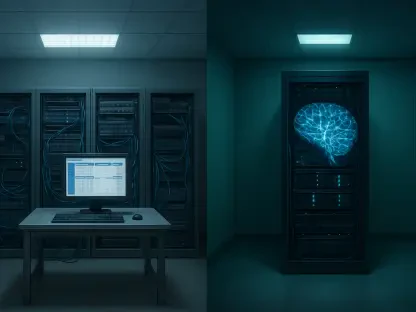

Understanding the Growing Divide Between IT Ambition and Reality
The 2026 State of IT Maturity Report, recently published by enterprise asset management provider EZO, offers a sobering look at the operational health of modern IT departments. As digital transformation accelerates, a profound maturity gap has emerged, separating the strategic goals of leadership from the day-to-day realities of technical teams. While organizations are under immense pressure to bolster security and manage increasingly complex infrastructure, they are often anchored by fragmented systems and outdated workflows. This article explores the findings of the report, analyzing why many firms struggle to bridge the gap between legacy processes and the agile, automated future required for enterprise resilience.
The Evolution of IT Operations and the Legacy of Fragmentation
Historically, IT departments functioned as reactive cost centers, tasked primarily with maintaining hardware and ensuring basic connectivity. Over the last decade, however, the rapid shift toward cloud computing, remote work, and decentralized software ecosystems has fundamentally altered the landscape. Despite these technological shifts, the foundational methods used to track and manage these assets have not always kept pace. The current operational environment is a byproduct of years of incremental growth, where disparate tools were adopted to solve specific problems in isolation.
Understanding this historical context is vital; the siloed nature of modern IT is not a deliberate choice but a consequence of rapid, uncoordinated expansion that now hinders the ability to achieve high-level maturity. As firms attempt to integrate newer technologies, they often find that their underlying data architecture is too brittle to support modern demands. This legacy of fragmentation continues to haunt decision-makers who must now reconcile dozens of different data streams to gain a clear picture of their operational health.
Critical Barriers to Operational Excellence
The Visibility Crisis: Persistence of Manual Tracking
A primary takeaway from the research is the alarming lack of real-time visibility into IT environments. According to the report, a mere 21% of organizations possess full, automated visibility across their entire infrastructure. The reliance on disconnected systems remains the single largest hurdle to operational maturity. Surprisingly, 16% of organizations still utilize manual spreadsheets to track critical assets. This reliance on static documentation in a dynamic environment creates significant blind spots, making it nearly impossible for teams to respond quickly to threats or optimize resource allocation.
The Reconciliation Burden: The Automation Paradox
While automation is frequently cited as a top strategic priority, the report reveals a disconnect between aspiration and implementation. Only 15% of organizations operate within a fully unified platform, while 46% struggle with limited integrations that require constant manual updates. This creates what experts call a reconciliation burden—a scenario where IT professionals spend a disproportionate amount of time manually aligning data across different tools. Instead of focusing on high-value tasks like proactive risk management or performance optimization, skilled staff are bogged down by administrative upkeep.
Audit Readiness: The Cost of Compliance Fragmentation
The maturity gap is perhaps most evident during compliance and governance cycles. The report indicates that more than half of IT teams require between one and three weeks to gather the necessary data for audit evidence. This labor-intensive process is a direct result of the absence of unified data flows. In an era of tightening regulatory requirements, such as GDPR or SOC2, the inability to produce instant, accurate reports is more than an inconvenience—it is a significant business risk. Organizations that lack integrated asset management find themselves in a perpetual state of audit panic.
Future Trends: The Shift Toward Unified Governance
Looking ahead, the role of IT leadership is shifting from technical oversight to core business strategy. With 44% of IT leaders now acting as final decision-makers for major investments, the focus is turning toward platforms that offer holistic governance rather than niche functionality. We are seeing a move toward Autonomous IT, where AI-driven insights and automated workflows handle the bulk of asset lifecycle management. Furthermore, as cybersecurity becomes inseparable from asset management, the integration of security tools with ITAM platforms will become a standard requirement.
Strategic Recommendations: Closing the Maturity Gap
To overcome these operational deficiencies, organizations must prioritize integration over isolated upgrades. The first step toward maturity is the elimination of manual spreadsheets in favor of automated discovery tools that provide real-time data. Businesses should aim for a unified platform approach, reducing the reconciliation burden by ensuring all ITSM and ITAM tools share a common data layer. Additionally, leadership must view IT maturity not as a destination, but as a continuous improvement process. Implementing robust asset management practices can provide immediate ROI and free up the budget needed for larger transformation projects.
Conclusion: Bridging the Gap for Long-Term Resilience
The analysis of current operational data suggested that technical debt was no longer just an IT problem, but a fundamental business vulnerability. As regulatory pressures intensified and infrastructure became more distributed, the ability to maintain a cohesive, automated framework defined the leaders of the digital economy. Closing the maturity gap required a strategic commitment to breaking down silos and embracing a unified vision for governance. Ultimately, the path to resilience lay in transforming IT from a manual gatekeeper into an automated engine of enterprise growth that thrived on precision rather than reaction.