
The evolution of the manufacturing industry offers more than just a parallel trend for construction; it provides a direct playbook for navigating the imminent future, making it clear that the era of digital experimentation has decisively concluded, paving the way for an age of widespread, practical implementation. The forces shaping modern manufacturing, from the deployment of autonomous artificial intelligence to the re-architecting of global supply chains, are not distant theoretical concerns but immediate, tangible realities that are fundamentally reshaping how construction firms must operate to remain competitive and achieve sustainable growth. This transformation is driven by four deeply interconnected pillars that form a holistic roadmap for industrial change. The operationalization of smart technology is revolutionizing efficiency and decision-making, while the urgent imperative for supply chain resilience is redefining logistics from the ground up. Simultaneously, strategic capital investments are illuminating where future opportunities lie, and a profound workforce transformation is reshaping the very nature of skilled labor and human-machine collaboration. For leaders in the construction sector, understanding and acting upon these pillars is no longer an academic exercise but a critical strategic necessity for survival and success in an increasingly complex and data-driven landscape.
The Rise of Intelligent Operations
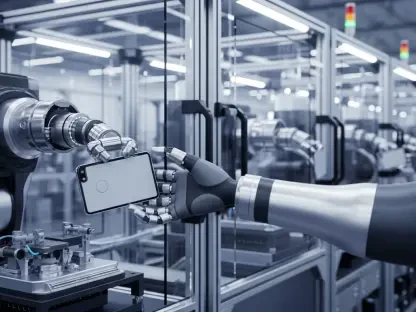
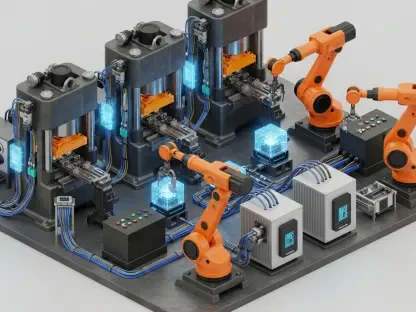
The most significant shift underway in the industrial landscape is the maturation of artificial intelligence from a passive analytical tool into an active, autonomous agent capable of making real-time operational decisions on the factory floor. Advanced systems, often described as “agentic AI,” have transcended their former roles as data crunchers and can now engage in complex reasoning and independent action. In manufacturing environments, this materializes as machines that dynamically adjust production settings to optimize quality, predictive systems that preempt equipment failures with remarkable accuracy, and intelligent grids that manage energy consumption without direct human intervention. This leap from hype to reality marks a new chapter in industrial automation, where technology is not just assisting human operators but is becoming a collaborative partner in the production process. For the construction sector, this translates into a powerful opportunity to move from a historically reactive operational model to a proactive one, particularly in the realm of asset and equipment management. The advent of predictive maintenance, powered by smart sensors embedded in heavy machinery, allows firms to anticipate mechanical failures before they occur. By continuously monitoring critical metrics such as vibration, temperature, and performance data, equipment can effectively self-diagnose impending issues. This foresight enables repairs to be scheduled during planned downtime, thereby eliminating the costly and disruptive impact of unexpected breakdowns that routinely derail project timelines and inflate budgets.
Beyond simply preventing equipment failure, artificial intelligence is rapidly becoming the central intelligence hub for optimizing the intricate workflows of large-scale construction projects. These advanced systems are capable of analyzing a vast and complex web of variables—including dynamic weather forecasts, fluctuating material delivery schedules, real-time labor availability, and equipment capacity—to recommend the most efficient sequencing of construction activities. This level of sophisticated, multi-variable analysis far surpasses human capabilities, leading directly to compressed project timelines, significantly reduced operational costs, and more predictable and reliable project outcomes. This intelligence extends to the very planning and monitoring of the job site itself. AI-powered algorithms now analyze topographical surveys, subsurface utility maps, and logistical constraints to optimize the physical layout of a construction site, ensuring the most efficient and safe placement of heavy equipment, material staging areas, and temporary facilities. Concurrently, computer vision systems, often deployed via drones or fixed cameras, continuously monitor the progress of construction against digital plans like Building Information Modeling (BIM) models. These systems automatically identify deviations from the plan, flag potential quality control issues, and detect safety hazards in real-time, enabling project managers to take immediate and precise corrective action before minor issues can escalate into major problems.
Forging Resilient Supply Chains
Years of unprecedented global disruption have cemented a hard-learned lesson across all industries: supply chain volatility is the new operational norm, not a temporary anomaly to be waited out. Persistent trade tensions, extreme material cost fluctuations, and persistent logistical bottlenecks are now considered standard business challenges. In response, leading manufacturers are fundamentally re-architecting their entire supply networks, strategically moving away from the fragile, lean, and single-source models that once prioritized minimal cost above all else. The new paradigm focuses on building flexible, resilient, and digitally transparent systems that can absorb and adapt to shocks. At the heart of this new approach is real-time, end-to-end visibility, which has transitioned from a competitive advantage to a non-negotiable cornerstone of modern supply chain strategy. Companies are investing heavily in sophisticated digital platforms that provide a single source of truth, tracking materials meticulously from the supplier’s warehouse to the final point of use on the factory floor. These intelligent systems not only provide instant alerts for any disruption in the chain but can also autonomously model and suggest alternative sourcing options or shipping routes, effectively turning a potential crisis into a manageable logistical adjustment.
The implications of this strategic shift are immediate and profound for the construction industry, where material costs and timely availability are primary drivers of project success or failure. Firms that embrace and invest in digital supply chain solutions gain a crucial strategic advantage in a volatile market. These tools allow them to anticipate potential shortages of critical materials like steel, concrete, and lumber, proactively identify and vet alternative suppliers, and leverage data analytics to make far more informed decisions about the timing of material procurement. This enables them to lock in favorable prices and, more importantly, ensure the project continuity that is essential for maintaining schedules and profitability. Furthermore, construction companies are beginning to adopt sophisticated logistics strategies that were pioneered and perfected in advanced manufacturing environments, such as “just-in-sequence” delivery. This highly coordinated approach ensures that specific materials arrive at the job site precisely when they are needed for a particular construction phase, which dramatically reduces the need for large, cluttered on-site storage areas. The benefits are manifold: it minimizes the risk of material theft and weather-related damage, declutters the active work area to improve safety and workflow, and ultimately improves overall project efficiency.
Following the Capital to Future Proof the Industry
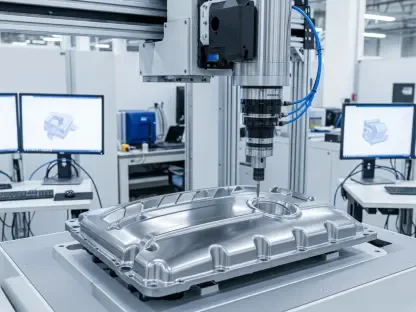
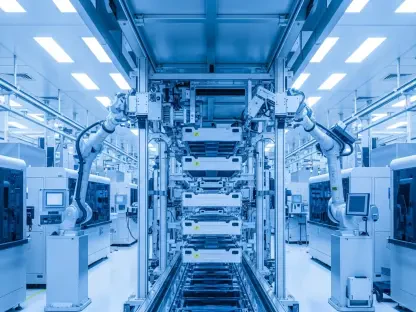
The capital investment patterns emerging within the U.S. manufacturing sector serve as a reliable bellwether, offering a clear forecast for the future of the construction and industrial equipment markets. Current spending is overwhelmingly flowing into three key domains: advanced machinery and robotics, the infrastructure for domestic semiconductor manufacturing, and the digital operational technologies that connect and optimize these assets. This powerful wave of investment creates a dual impact for construction firms, generating both significant direct opportunities for growth and a clear mandate for internal transformation. First and foremost, it is creating a surge in demand for highly specialized industrial construction services. Building advanced facilities like semiconductor fabrication plants (“fabs”), automated distribution centers, or “smart” factories is a far more complex undertaking than traditional industrial projects. These endeavors require deep, specialized expertise in areas such as cleanroom environmental standards, stringent vibration isolation for precision equipment, the management of massive power density requirements, and the integration of incredibly complex mechanical, electrical, and plumbing (MEP) systems. Construction firms that strategically cultivate these niche capabilities are exceptionally well-positioned to capture high-value contracts, a trend that is further fueled by ongoing policy incentives supporting the reshoring of critical manufacturing.
Second, these investment patterns send an unmistakable signal regarding the necessary evolution of the construction industry’s own equipment fleets. Heavy equipment manufacturers are mirroring the technological investment patterns of the broader manufacturing sector, producing a new generation of machinery that is increasingly integrated with advanced technology. Features that were once considered futuristic, such as sophisticated telematics for granular data collection, autonomous or semi-autonomous operational capabilities, efficient electric powertrains for sustainability, and seamless connectivity with digital project management platforms, are rapidly becoming standard. Construction firms that delay upgrading their fleets to incorporate these innovations risk falling dangerously behind their competitors. A significant productivity and efficiency gap is widening between firms that can leverage this new technology to operate more efficiently, use less fuel, generate more valuable project data, and reduce direct labor costs, and those that continue to rely on legacy equipment. In this new landscape, a modern, intelligent fleet is no longer a luxury but a fundamental component of a competitive business strategy.
Redefining the 21st Century Workforce
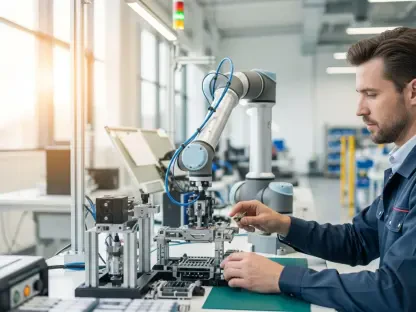
Perhaps the most nuanced and critical finding relates to the human element of this industrial transformation, decisively refuting the simplistic narrative of machines simply replacing human workers. Instead, the current evolution is fundamentally reshaping job roles, centering on a new and collaborative model of human-machine partnership. As artificial intelligence and automation technologies become more adept at handling repetitive, physically demanding, and data-intensive tasks, the value of human workers is shifting toward higher-level functions that machines cannot yet replicate. These include complex problem-solving, creative and critical thinking, adaptive decision-making, and the systems-level management of integrated technological ecosystems. This profound evolution is creating significant skills gaps, as the capabilities required for success in the modern industrial environment are changing at an unprecedented pace. Manufacturing operators are now expected to work alongside collaborative robots (“cobots”), interpret the insights generated by complex AI systems, and manage digital workflows, demanding a new skill set that emphasizes data literacy, proficiency with digital tools, and adaptive problem-solving.
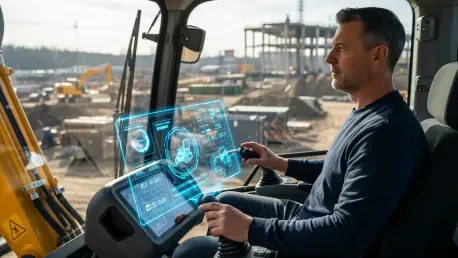
The construction industry faces a parallel and compounding challenge, as its long-standing skilled trades shortage is now being exacerbated by this rapid technological shift. Traditional trade skills in carpentry, electrical work, and machinery operation remain essential, but they are no longer sufficient on their own to meet the demands of the modern job site. Electricians now need to understand and integrate building automation systems and IoT devices. Heavy equipment operators can maximize their effectiveness by learning how to use telematics data to optimize performance and respond to predictive maintenance alerts from their machines. Project managers must possess robust data analytics skills to harness the torrent of information generated by smart job sites and translate it into actionable, data-driven decisions. To address this widening chasm, forward-thinking firms are moving beyond traditional, sporadic training and are investing in comprehensive, continuous reskilling and upskilling initiatives. This includes partnering with technical colleges to co-develop curricula that blend trade fundamentals with digital competencies and creating robust internal training programs that help experienced workers transition into new, technology-augmented roles where their deep domain expertise is enhanced, not made obsolete.
Charting a Course for Strategic Adaptation
The trends shaping the manufacturing landscape provided a critical framework for construction and industrial firms, acting as both a mirror reflecting their own imminent challenges and a map charting a clear course for future success. The analysis made it evident that strategic inaction was no longer a viable option in an industry undergoing such rapid transformation. The companies that were poised to thrive in the coming years would be those that moved decisively and strategically to adapt to this new reality. The path forward was defined by four clear strategic imperatives. First was the prioritization of investment in AI and predictive tools, elevating them from “nice-to-have” options to core operational priorities. Second was the systematic building of supply chain resilience through dedicated investment in digital visibility and the strategic diversification of supplier bases. Third was a firm commitment to continuous workforce development, treating talent strategy as a C-suite priority backed by sustained investment in formal skills gap analyses and modern recruitment. Finally, there was a significant long-term growth opportunity in developing specialization in advanced manufacturing construction to serve high-tech sectors. The competitive gap between early adopters and laggards was already widening, and the firms that embraced these manufacturing-led trends were best positioned to lead the industry into a more efficient, data-driven, and sophisticated future.