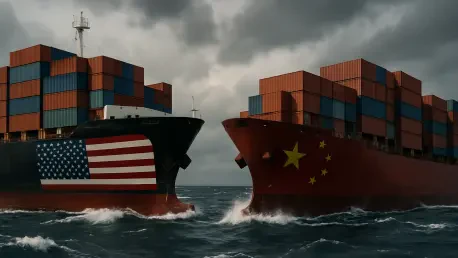

The sudden invalidation of a multi-billion dollar tariff framework by the highest court in the United States has plunged international supply chains into an unprecedented state of legal and economic volatility. This landmark decision effectively dismantling the extensive protectionist regime established by the executive branch creates a vacuum of uncertainty just as Washington and Beijing were attempting to stabilize their complex relationship. By challenging the legal foundation of these duties, the Court has forced a fundamental re-evaluation of how trade policy is conducted in an era of heightened geopolitical competition. This shift suggests that the mechanisms of global commerce are no longer solely at the discretion of the presidency, introducing a new layer of judicial scrutiny that will define the next phase of the trade war.
The Evolution: Protectionism and Executive Authority
To understand the weight of this ruling, it is necessary to examine the rapid expansion of executive trade powers over the last several years. Historically, the presidency utilized broad statutory authorities to impose tariffs under the guise of national security and economic fairness, framing these measures as essential components of a strategy to counter rising military and economic influence from overseas. These fiscal tools were transformed into geopolitical weapons, allowing for the rapid implementation of duties without the traditional legislative oversight that once governed American trade relations.
However, the Supreme Court’s intervention signals a significant judicial check on these powers, suggesting that the era of unilateral tariff implementation now faces strict constitutional scrutiny. This historical pivot matters because it threatens to strip the executive branch of its primary leverage right before high-stakes diplomatic summits. The transition from a period of unchecked administrative authority to one of legal accountability changes the calculus for both domestic producers and international exporters who have built their business models around the previous status quo.
The Strategic Response: Navigating Judicial Intervention
Executive Workarounds: The Resilience of Protectionism
Despite the legal setback, the consensus among trade analysts is that the White House is unlikely to abandon its protectionist agenda. Instead, the administration is expected to pivot toward alternative legal frameworks, such as emergency economic powers or specific trade compliance investigations, to maintain pressure on Beijing. This “Plan B” strategy aims to re-impose duties under different statutory justifications, ensuring that the economic walls remain intact while appearing to comply with the letter of the law. The challenge for the government lies in crafting these new measures to be “court-proof” while simultaneously convincing domestic industries that their protections are not in permanent jeopardy.
Beijing’s Calculated Restraint: Strategies Amidst Legal Victory
While the Supreme Court ruling provides a moral and legal boost to China, officials in Beijing are approaching the victory with strategic caution. There is an underlying fear that if China moves too aggressively to exploit this legal opening, it could provoke a more volatile response from Washington, potentially collapsing the fragile trade truce currently in place. Chinese leadership appears focused on “managed friction,” preferring to use the ruling as a talking point in negotiations rather than a catalyst for a renewed trade offensive. This cautiousness highlights the delicate balance China must strike between asserting its rights and avoiding a total rupture with its largest trading partner.
The Intertwining: Trade Policy and National Security
The complexities of this ruling extend beyond simple import duties, as trade policy has become deeply linked with non-economic issues like the fentanyl crisis. The United States has frequently used the threat of tariffs as a tool to gain cooperation on the regulation of chemical precursors. With the legal standing of those tariffs now in question, the administration faces a complication in its broader security objectives. Furthermore, regional allies like Japan are watching with growing apprehension; for these nations, American trade volatility is not just a market concern but a security risk that complicates their own regional agreements and defense postures.
Future Projections: From the Courtroom to the Summit
The future of trade relations is now moving toward a period of legal circumvention where the executive branch asserts its authority through new administrative maneuvers. Experts predict that the upcoming presidential summit in late March will serve as the true barometer for the relationship, likely overshadowing the judicial proceedings. We are witnessing a trend where the legislative branch continues to push for bipartisan measures to hold international competitors accountable, potentially codifying previous executive orders into permanent law. The technological and economic competition between the superpowers is expected to intensify, with a shift toward targeted restrictions on emerging technologies rather than the broad, blunt-force tariffs used in the past.
Navigating the Landscape: Managed Friction for Stakeholders
The major takeaway for businesses and professionals is that while the legal mechanisms have changed, the underlying tension remains constant. Stakeholders should prepare for an environment of high tariffs that may simply exist under different legal names or administrative categories. It is recommended that companies maintain diversified supply chains to mitigate the risks of sudden executive reassertions of power. Furthermore, staying informed on administrative “Plan B” deployments will be more critical than monitoring the courts, as the executive branch seeks to retain its role as the primary architect of trade policy.
Conclusion: A Persistent State of Economic Tension
The Supreme Court’s ruling introduced acute legal uncertainty, yet it did not fundamentally alter the competitive trajectory of international trade. The core drivers of the conflict—national security concerns, trade deficits, and technological rivalry—remained as potent as ever. As both nations moved from the courtroom back to the negotiating table, the significance of the moment rested in the realization that trade peace was not a matter of law, but of political will. Businesses found that the most effective actionable step involved the creation of flexible logistics networks that could survive sudden regulatory shifts. Long-term stability depended on whether the superpowers could continue their delicate dance of truce and tension without triggering a total economic decoupling. Future considerations must now focus on legislative pathways that provide more predictable frameworks for international commerce.