
The global perception of India as a perpetual buyer of foreign military technology has officially been dismantled by a staggering surge in domestic production and high-tech exports. For decades, the nation remained the world’s primary importer of arms, a position that often left its strategic interests vulnerable to external supply chain disruptions and shifting geopolitical tides. However, the current landscape reveals a radical departure from this legacy, as the “Atmanirbhar Bharat” initiative evolves from a visionary policy into a tangible industrial engine. This transformation is not merely about replacing foreign labels with domestic ones; it represents a fundamental recalibration of national security and economic sovereignty that is now being felt across the international defense market.
The significance of this shift extends far beyond the assembly lines of state-owned enterprises. By localizing the production of sophisticated hardware, India is effectively insulating its defense posture from global volatility while simultaneously stimulating a high-tech manufacturing ecosystem. As the fiscal milestones for the 2024–2026 period come to light, it is clear that the integration of private innovation and public infrastructure is creating a resilient foundation for long-term growth. The emergence of specialized regional hubs suggests a strategic move to decentralize production, ensuring that the country’s industrial might is distributed across various economic zones.
Metrics of Success: Analyzing the Growth of Indigenous Production
Record-Breaking Fiscal Performance and Export Momentum
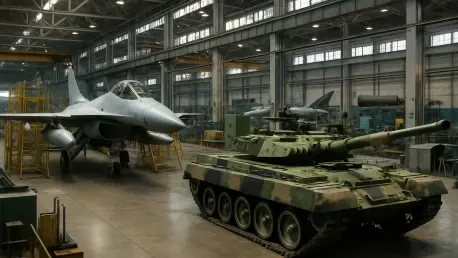
The recent data regarding the 2024-25 fiscal year marks a watershed moment for the industry, with total defense production reaching a historic ₹1.51 lakh crore. This milestone is not an anomaly but the result of a deliberate, multi-year strategy to streamline procurement and encourage private sector participation. Such a massive injection of capital into the domestic market has accelerated the modernization of aging facilities and the creation of new specialized labs. Moreover, this fiscal strength provides the necessary buffer for the government to commit to long-term projects without the constant fear of currency fluctuations or foreign trade barriers.
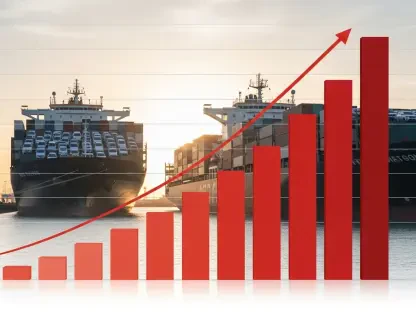
In contrast to previous eras where Indian defense products were largely restricted to the domestic market, the 2025-26 financial year saw exports soar to ₹38,424 crore. This record-breaking momentum indicates that “Made in India” defense technology is now being viewed as a viable, high-quality alternative by the international community. Countries that once looked exclusively toward traditional Western or Russian suppliers are now considering Indian-made missiles, naval vessels, and aerospace components. This surge in global trade validates the success of the self-reliance initiative and serves as a powerful catalyst for the national economy, bringing in foreign exchange and cementing India’s reputation as a reliable security partner.
Strategic Industrial Nodes and Localized Manufacturing
The development of dedicated “Defense Nodes” in cities like Lucknow, Agra, and Kanpur has proven to be a masterstroke in regional industrial planning. These hubs are designed to function as self-contained ecosystems where design, manufacturing, and testing happen in close proximity. By concentrating specialized labor and resources in these areas, the government has reduced logistical overhead and fostered a culture of innovation. This strategy has successfully revitalized the industrial belt of northern India, turning historical trade centers into high-tech corridors that attract top-tier engineering talent and global investment.
A prime example of this strategy’s efficacy is the recent induction of Lucknow-produced BrahMos supersonic cruise missiles into the Indian Army. The fact that such a complex and lethal weapon system can now be manufactured and delivered from a regional node demonstrates a high level of technological maturity. Furthermore, this ecosystem is not limited to heavy machinery; it encompasses a vast network of small and medium-sized enterprises that supply critical components and specialized software. This bottom-up growth ensures that even the smallest parts of the defense supply chain are rooted in domestic soil, creating a truly comprehensive military-industrial complex.
Strategic Leadership and the Integration of National Policy
The transition toward global production leadership has been guided by a clear and assertive vision from the Ministry of Defense. Defense Minister Rajnath Singh has frequently emphasized that self-reliance is no longer an option but a necessity in a world defined by unpredictable alliances. Under this leadership, the narrative has shifted from mere “import substitution” to “global dominance,” where the goal is to set the standard for defense innovation rather than just keeping pace. This top-down commitment has provided the political stability required for major industrial players to make significant long-term investments in research and development.
Moreover, the success of this initiative relies heavily on the seamless alignment between the central government and state-level leadership. The collaboration between the union government and the administration of Uttar Pradesh exemplifies how policy can be localized to drive rapid execution. Beyond the technical and fiscal aspects, there is a concerted effort to build public support through events like “Shaurya Smriti.” These cultural commemorations serve to bridge the gap between industrial progress and national pride, fostering a collective consensus that domestic manufacturing is a pillar of sovereign strength and a tribute to the nation’s military heritage.
The Road Ahead: Potential and Challenges of Global Leadership
As the nation looks toward the horizon, the primary objective remains the maintenance of a sophisticated, self-sufficient military-industrial complex that can compete with the world’s most advanced powers. The move away from foreign vendors provides India with unparalleled strategic autonomy, allowing it to pursue its own foreign policy objectives without the risk of technology embargoes or restrictive end-user agreements. However, staying at the top requires a relentless focus on next-generation technologies like artificial intelligence, quantum computing, and advanced materials. The challenge lies in ensuring that R&D investment remains consistent and that the bureaucracy of procurement does not stifle the speed of innovation.
Furthermore, the global arms market is notoriously competitive and dominated by established players with deep diplomatic ties. For India to expand its footprint, it must move beyond being a provider of affordable hardware to being a leader in high-end technological mastery. This will involve not only selling products but also engaging in joint development projects and technology transfers with allied nations. The current trajectory suggests that the country is well-positioned to navigate these hurdles, provided that it continues to refine its manufacturing processes and maintains its focus on quality and reliability.
Conclusion: Strengthening Sovereignty Through Industrial Might
The rapid evolution of the defense sector provided a clear blueprint for how a nation could pivot from dependency to industrial dominance within a single decade. Strategic investments in regional nodes and the successful production of high-tier assets like the BrahMos missile proved that the domestic industry was capable of meeting the most rigorous military standards. These achievements were further bolstered by record-breaking export figures that placed the country on the map as a serious contender in the global arms trade. The integration of national policy with local execution ensured that the benefits of this growth were felt at both the macro and micro levels.
Looking forward, the focus must now shift toward institutionalizing these gains through continuous workforce training and the expansion of private sector incentives. Policymakers should prioritize the creation of more specialized incubators for defense startups, as these agile firms are often the source of the most disruptive technologies. Additionally, establishing stronger diplomatic frameworks for defense cooperation will be essential for opening new markets in the Global South. By treating defense manufacturing as a long-term strategic asset rather than a series of isolated projects, the nation solidified its path toward becoming a primary exporter of security and technological stability on the world stage.