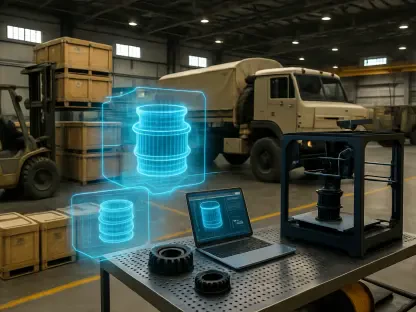

The fusion of artificial intelligence, robotics, and digital twins within modern manufacturing facilities has unlocked unprecedented levels of productivity, yet this technological leap has also forged a vast and constantly expanding digital attack surface. This transformation presents a critical challenge, as the manufacturing sector has consistently been the most cyber-attacked industry globally for four consecutive years. Compounding this issue, the Cybersecurity and Infrastructure Security Agency (CISA) has issued warnings about the heightened risks facing this critical sector. This analysis explores the evolving threat landscape, examines the dual role of AI in both operations and cyberattacks, and outlines a strategic path forward for securing the modern manufacturing edge.
The Expanding Attack Surface and Evolving Threats
The rapid integration of digital technologies into industrial environments is fundamentally reshaping the security paradigm. As factories become smarter, they also become more vulnerable, demanding a deeper understanding of the new risks that accompany this progress. The convergence of information technology (IT) and operational technology (OT) has blurred traditional security boundaries, creating a complex ecosystem where threats can propagate with alarming speed.
Data and Statistics The Rising Tide of Cyber Risk
Statistical evidence paints a stark picture of the current security climate in manufacturing. For the fourth year in a row, the sector has held the unfortunate distinction of being the primary target for cyberattacks worldwide. This trend is no longer just an observation by security firms; it has gained official recognition from governmental bodies. CISA’s specific warning about the heightened risk to critical manufacturing underscores the severity of the situation, signaling that these attacks pose a threat not only to individual businesses but to national infrastructure and supply chains.
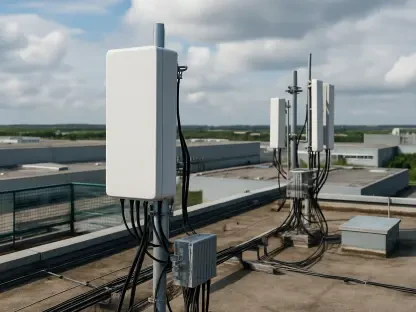
This surge in risk is directly attributable to the burgeoning attack surface created by the convergence of OT with the Industrial Internet of Things (IIoT). This digital transformation exposes legacy equipment, often designed without modern security considerations, to internet-facing threats. Simultaneously, a proliferation of new connected sensors, controllers, and systems introduces countless new potential entry points for malicious actors, creating a complex and difficult-to-defend environment.
Real World Scenarios AI as a Threat Accelerator
The theoretical risk of AI-powered attacks has become a tangible reality. A recent, sobering example involved cybercriminals using Anthropic’s Claude Code to automate between 80% and 90% of a sophisticated cyber espionage campaign. The attackers needed to make only a few critical decisions, demonstrating how little human intervention is now required to execute complex attacks that once demanded deep technical expertise. This case highlights a disturbing trend where the same technologies driving industrial innovation are being weaponized against it.
Moreover, the widespread availability of open-source Large Language Models (LLMs) is democratizing cybercrime. These powerful tools are effectively lowering the barrier to entry for threat actors, enabling individuals with minimal expertise to orchestrate attacks. By simply querying a malicious or unguarded LLM, an attacker can receive a detailed roadmap for compromising sensitive OT environments, mapping out attack paths that exploit vulnerabilities in connected industrial systems.
Industry Insights on Outdated Defense Mechanisms
Security experts increasingly agree that traditional, perimeter-based defense strategies are fundamentally inadequate for the modern smart factory. Security tools like Virtual Private Networks (VPNs) and other remote access software, once considered staples of corporate security, have ironically become common vectors for intrusion. Threat actors actively target these technologies, knowing they provide a direct pathway into an organization’s core network.
This creates a significant dilemma for manufacturers. The very connectivity required for progress—linking OT systems to the cloud for data analytics, predictive maintenance, and process optimization—is what exposes them to the greatest risk. This operational necessity directly conflicts with the limitations of legacy security models, which were designed to protect a contained, on-premises network. As a result, these outdated defense mechanisms are not just insufficient; they are becoming obsolete in the face of today’s distributed and interconnected industrial landscape.
A Forward Looking Security Blueprint for Smart Factories
The manufacturing attack surface will inevitably continue to grow as facilities become more connected and integrated with emergent technologies. In response, a strategic shift in security thinking is not just recommended but essential for survival. This pivot requires addressing long-standing challenges while embracing new architectural solutions to future-proof factory operations against increasingly sophisticated threats.
The central challenge lies in managing the security blind spots created by expensive, long-lasting legacy equipment that was never designed for network connectivity. The primary benefit of a modernized security approach is the ability to thwart advanced attacks and secure revenue-critical data without impeding the high-speed, high-availability demands of the factory floor. This new blueprint is built on three core developmental pillars.
Development 1: Foundational Asset Visibility The critical first step toward securing a smart factory is knowing what needs protection. This involves creating and maintaining an accurate, real-time inventory of every OT asset, controller, sensor, and connected system within the environment. This comprehensive visibility eliminates the dangerous blind spots that attackers exploit and provides the foundational knowledge required to implement effective security controls.
Development 2: Zero-Trust Partner Access Modern manufacturing relies heavily on a network of third-party vendors for equipment maintenance and remote monitoring. Securing this access is paramount. A zero-trust model must be applied, subjecting all remote users and their devices to strict security protocols. This includes robust intrusion prevention, comprehensive Transport Layer Security (TLS) inspection, and mandatory device posture checks to ensure that any third-party system connecting to the network meets the organization’s security standards.
Development 3: Adopting Modern Architectures The final piece of the blueprint involves moving away from vulnerable, perimeter-based tools. Transitioning from VPNs to a Secure Access Service Edge (SASE) platform provides a far more secure and scalable solution for remote access. A SASE architecture unifies networking and security services into a single cloud-native platform, significantly reducing the outward-facing attack surface and overcoming the visibility limitations inherent in older, proxy-based solutions.
Conclusion: Building a Resilient and Secure Manufacturing Future
The analysis shows that the smart factory’s expanding, AI-driven threat landscape has rendered traditional security ineffective, demanding a fundamental overhaul of defensive strategies. The convergence of OT and IIoT, coupled with the weaponization of AI by cybercriminals, creates a clear and present danger that can no longer be ignored. Building a resilient and secure manufacturing future requires a proactive and strategic approach. The path forward is clear: manufacturers must create a comprehensive asset inventory, secure all partner networks with a zero-trust mindset, and adopt a unified SASE architecture to protect the factory of tomorrow before it becomes the next data breach headline.